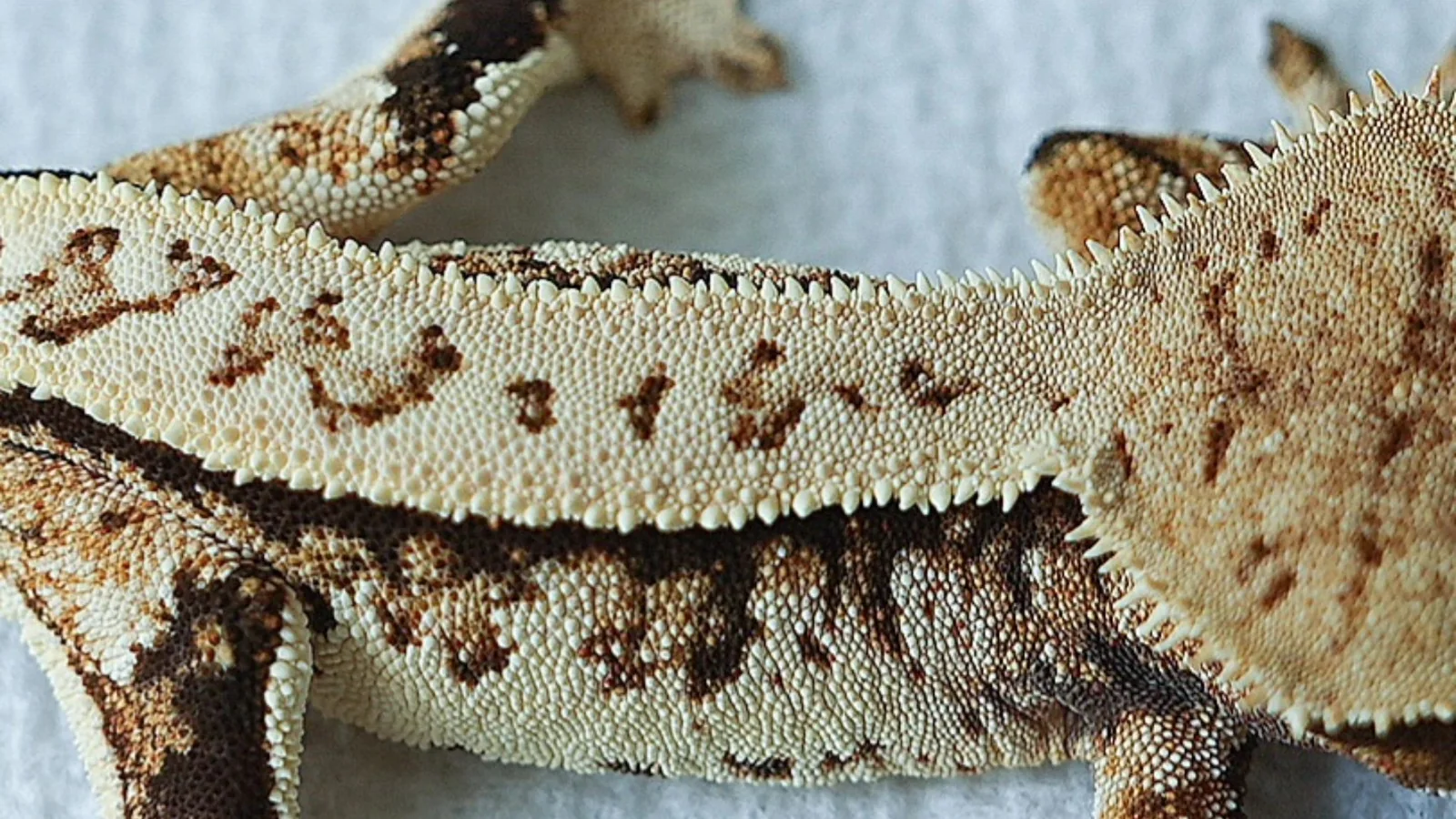
Few things cause faster disappointment among crested gecko keepers than misleading photos: a sales album displays glowing crimson flames against jet-black contrast, only for daylight unboxing to reveal muted cinnamon and pale butter cream.
Most distorted listings are not even produced in Photoshop—they come from smartphone auto-white-balance (AWB) shifts, dim-room computational HDR boosting, colored grow lights, and specular glare off freshly misted skin. Four repeatable lighting and framing habits let any modern phone capture honest, color-accurate photos.
Four Ways Phone Cameras Warp Gecko Pigment
Modern smartphones optimize shots for human skin tones and vivid landscapes. Pointing a phone lens at a small lizard indoors creates predictable distortions:
- White-Balance Overcorrection & Color Spill: Setting a gecko on bright green turf or a red cloth causes camera firmware to flood the frame with compensating magenta or cyan while tinted reflections bounce onto pale belly scales.
- Low-Light HDR & Saturation Inflation: In dim bedrooms, phones crank shadow darkness and orange/red saturation sliders to hide sensor noise, turning tan buckskin bases into false brick-red.
- Wet-Skin Flash Glare & Purple Plant LEDs: Firing direct phone flash over water-coated scales or shooting beneath purplish plant/UV lamps produces artificial pitch-black contrast and cool color casts.
- Missing Fired-State Context: Many geckos stay deep charcoal for only twenty minutes after evening stimulation and spend most hours fired down in soft taupe. One peak photo without context misleads buyers on true baseline contrast.
4 Standards for Honest Morph & Health Records
Whether tracking juvenile progression, comparing subtle lines like Axanthic, Hypo, Pied, or Lilly White, or requesting verification shots before purchase, stick to four clear benchmarks:
| Photo Element | Reliable Practice | Common Distortion Error | Why It Holds Up |
|---|---|---|---|
| 1. Lighting | Indirect window daylight or a continuous CRI 95+, 5000K–5600K daylight LED panel | 2700K warm room lamps, purple grow LEDs, or harsh direct flash | High-CRI 5000K–5500K daylight renders reds, yellows, creams, and dark melanin accurately |
| 2. Surface & Backdrop | Matte neutral gray card, clean white paper towel, or dry natural cork bark | Bright turf, colored cloth, or glossy colorful plastic | Neutral matte backgrounds anchor white balance and include an instant white reference |
| 3. Dry Skin & Dual States | Wait 20–30 minutes after misting until skin returns to dry suede; show both Fired-Up and Fired-Down views | Shooting soaking-wet scales under flash and omitting fired-down appearance | Dry matte skin reveals true pigment density and the realistic day-to-day color range |
| 4. Four Standard Angles | Left flank, right flank, top-down dorsal/crest/tail shot, plus vent pore macro or digital scale reading | Tightly cropping one flank while hiding dorsal, crest structure, or tail kinks | Whitewall, harlequin flank coverage, and Pied markings are often asymmetrical |
Reliable phone studio layout: diffused 5500K daylight source, matte neutral gray/white backdrop with white reference edge, and consistent left/right/dorsal angles.
Two Phone Tweaks That Prevent Blown Whites & Fake Saturation
- Include White Paper at the Edge & Lock AE/AF: Keep a strip of plain white paper towel near the edge of the frame, press and hold on the gecko’s torso for two seconds for AE/AF Lock, and nudge exposure down slightly so cream dorsal bands keep crisp scale detail instead of blowing out.
- Disable Vivid Filters & Use Side-by-Side Comparisons: Shoot in standard natural profile with AI scene beautifiers off. For delicate cool tones or depigmented patches like Axanthic, Hypo, or Pied outcrosses, placing a standard wild-type or high-yellow comparator in identical frame light shows true pigment loss better than any solo close-up.