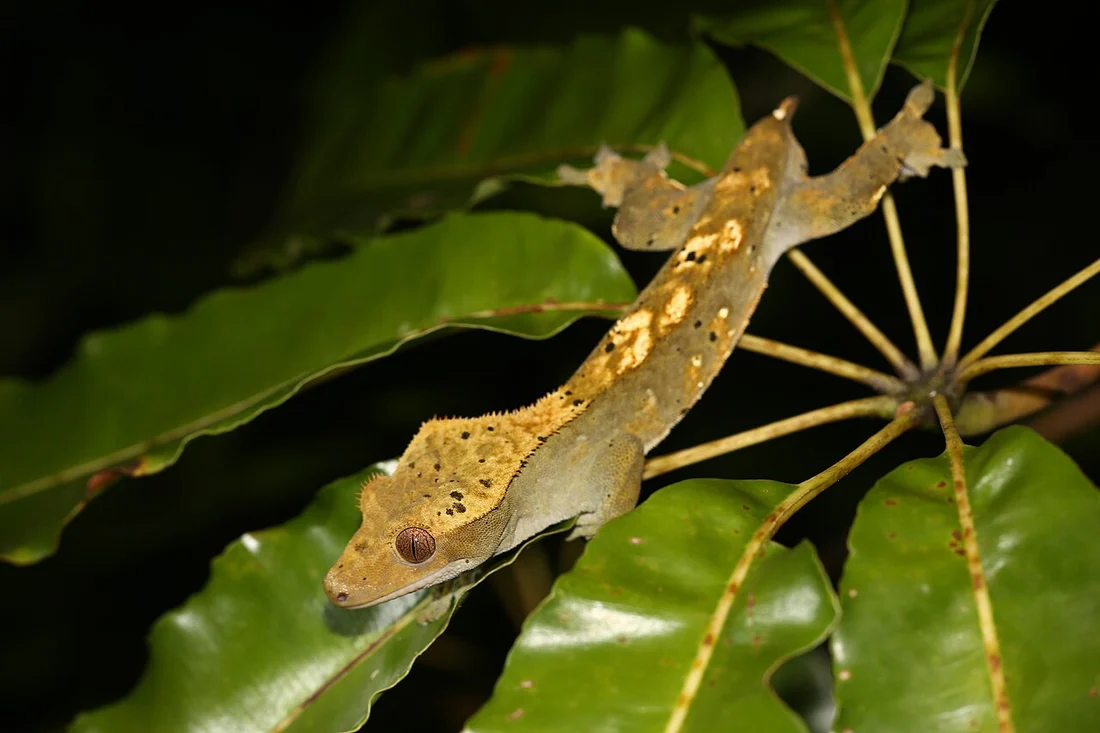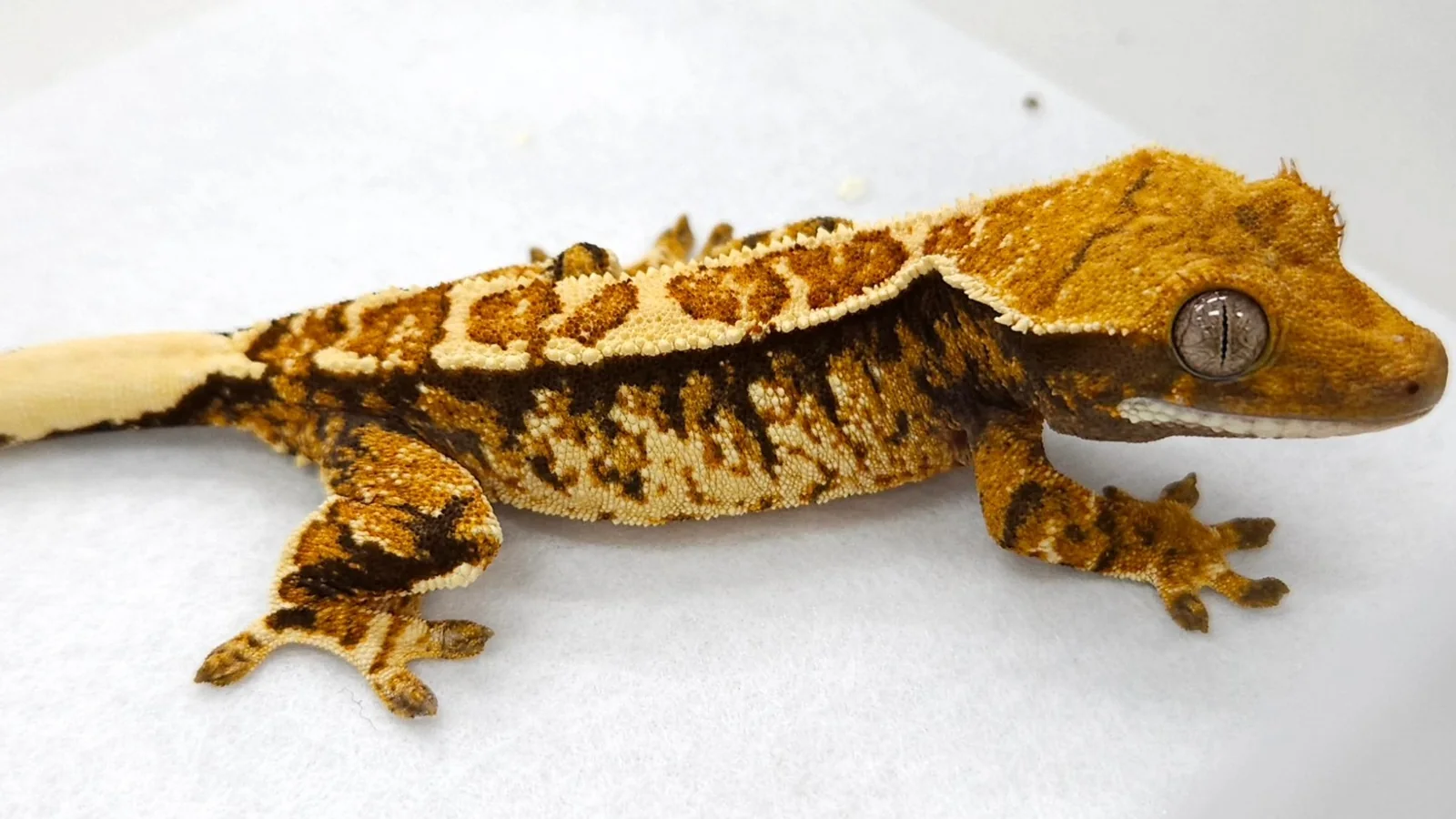
Browse classifieds for thirty minutes and pricing feels dizzying: two listings both read “Tri-color Harlequin” or “Lilly White,” yet one costs $100 while the next sits at $1,500. How do experienced keepers spot genuine breeder quality versus inflated word labels?
Smart valuation separates visible pattern and head structure, verified single-gene or line genetics, confirmed sex and gram weight, and documented breeder lineage.
5 Measurable Pillars Behind Real Gecko Pricing
Remove seasonal hype and genuine price differences boil down to five verifiable criteria:
| Valuation Pillar | Entry Pet-Grade Animal | Select / Breeder-Grade Specimen | What to Check Before Paying |
|---|---|---|---|
| 1. Underlying Genetics | Everyday polygenic mixes (flame, tiger, low-expression harlequin, sparse spots) | Verified single genes, high-consistency lines & combos (Visual Axanthic, Sable, extreme Lilly White, Pied, Frappuccino, Luwak, Super Sable) | Never pay a genetic surcharge (Hets, Pied, combos) without parent pairings and clutch provenance |
| 2. Saturation, Coverage & Contrast | Muddy background tone, broken pinstripes, scattered side marks | High white walls, 100% solid quad-stripes, crisp clean red/yellow bases, sharp tri-color contrast | Inspect natural-light photos shot both fired up and fired down |
| 3. Crown & Bone Structure | Narrow snout, modest floppy crests, slight legs | Broad crowned skull, thick flared crests cascading down the neck, stout limbs, straight unwarped tail | Verify with a top-down crown photo and clean profile jawline check |
| 4. Weight & Confirmed Sex | Unsexed 2–4 g neonate (eventual adult look and sex still uncertain) | Settled 18–35+ g subadults/adults, especially verified females (high-quality females typically carry a 30%–80% market premium over males) | Confirm recent digital gram scale shot and clear macro vent/pore view |
| 5. Lineage Consistency & Biosecurity | Flipped unknown hatchlings lacking hatch dates or tub histories | Individually tracked animals from selective multi-generation projects with transparent quarantine & feeding notes | Look at full adult shots of older full siblings from the exact same pairing |
Everyday Polygenic vs High-Coverage Selective Lines
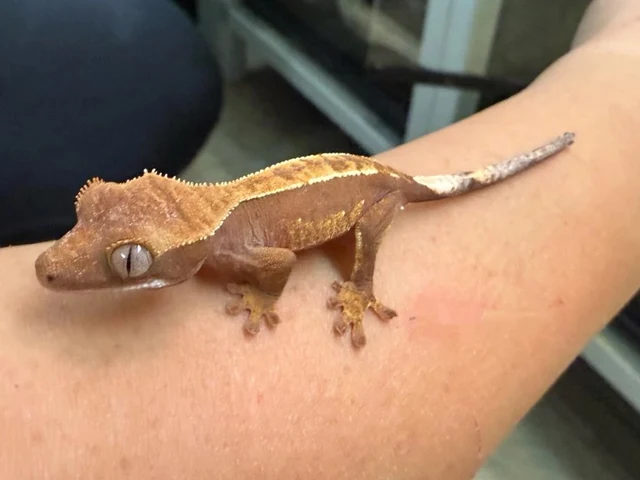
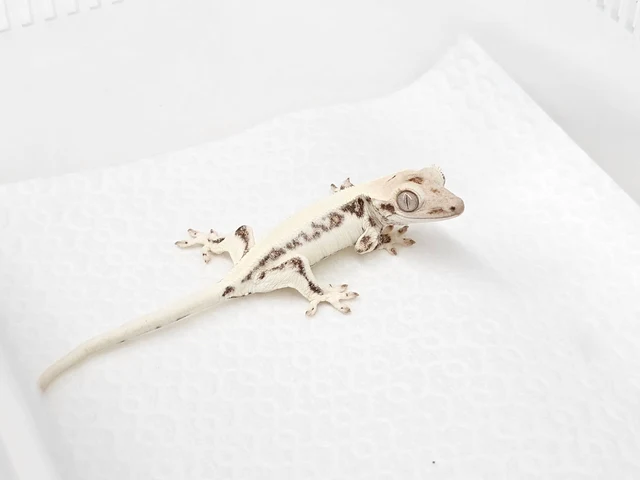
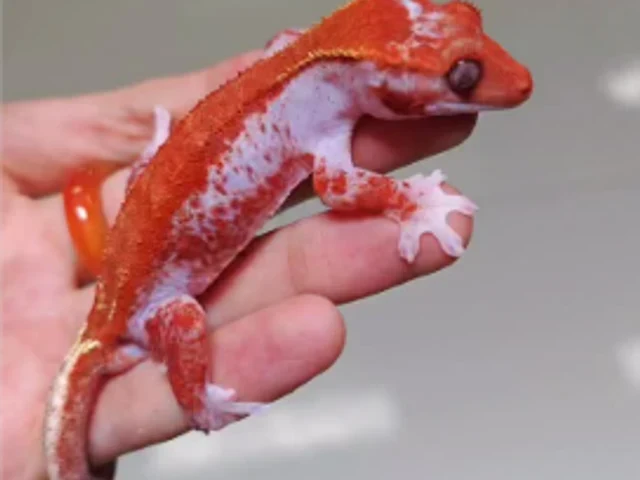
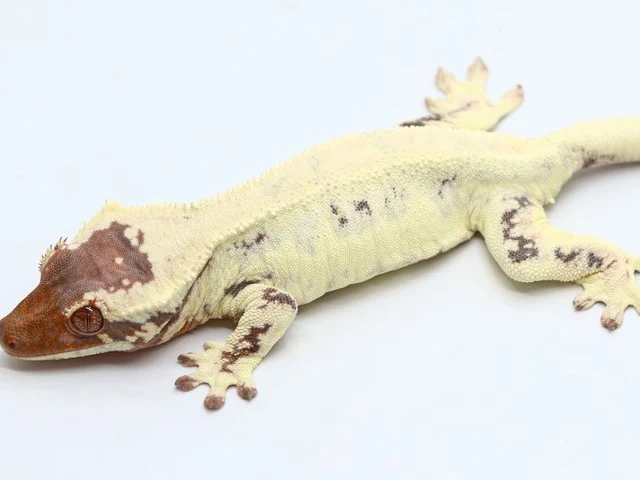
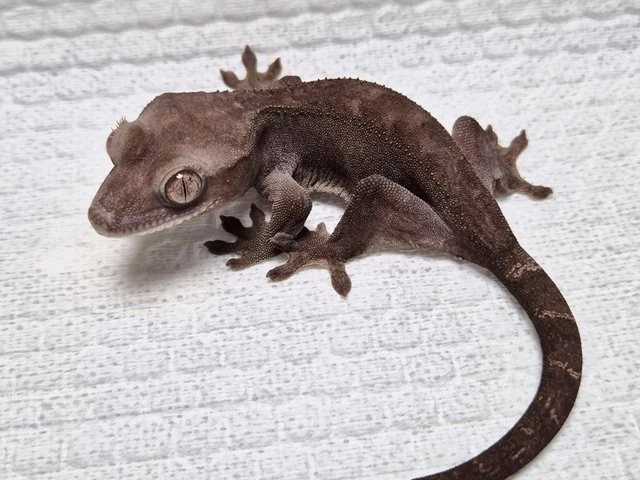
Even under the same broad label, average scattered patterns differ sharply from multi-generation high-contrast white walls and balanced symmetry.
Verified Single Genes & Signature Combinations
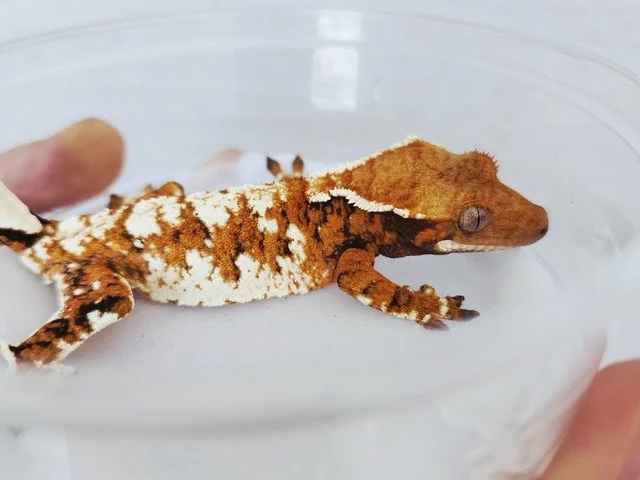
True heritable mutations and traceable projects—such as Lilly White, Pied, Frappuccino, and Luwak—justify provenance verification on top of plain look-alikes.
4 Pricing Traps to Sidestep in Listings
1. Inflated “Word-Salad” Titles on Average Polygenic Geckos
Adding ten hype adjectives onto a brown flame with three dots does not turn it into a showpiece. For polygenic traits, pay strictly for the coverage, contrast, and structure visibly present on the gecko right in front of you.
2. Unproven “Pos Het” Recessive Add-Ons
Visual recessives like Axanthic and Phantom look normal when heterozygous, and separate Axanthic bloodlines (such as VPI versus Altitude Exotics) are not always cross-compatible. Without clear lineage and sire/dam pairing documentation, treat unverified “66% Pos Het” notes as zero added monetary value.
3. Paying Adult Premiums on 3-Gram Hatchling Promises
Ontogenetic color evolution shifts dramatically between 3 grams and 20 grams. Rely only on unedited adult photos of both parents when estimating how a tiny baby might mature.
4. Understanding Pied Lines & Current Research Caveats
- Pied (
@cre_jjangZero,Victory/Oint, &JIFBranches): While hobby pricing often treats Pied as an incomplete-dominant trait, international and Korean breeder databases still classify Pied as Unproven—debating incomplete dominance alongside polygenic and compound dominant epistasis models. Always verify exact line origin before paying a premium:@cre_jjangZero/Extreme specimens typically exhibit matte flesh-white “White Socks” and high-contrast “Universe Eyes,” whereasJIFand early Asian “transparent toes / white socks” branches develop translucent toe pads and progressive adult depigmentation. Do not pay Pied premiums for routine heavy White Walls, scars, or unrelated Hypo-lineage toe peeling. Read the full breakdown in Korean & Global Pied Genetics Research.
Two Smart Bargains for Pet-Only Homes
Zero intention to breed opens two effortless ways to bring home stunning display quality on a modest budget:
- Confirmed Subadult or Adult Males: Breeders retain far more females than males, letting gorgeous high-white Lilly Whites and Tri-colors in male form drop 40%–50% lower in price—zero unfertilized dud clutches or calcium scares to track, either!
- Healed “Frog-Butt” (Tailless) High-Spec Geckos: An animal that dropped its tail smoothly as a baby carries 100% identical color, structure, and a 15–20+ year lifespan for a 25%–40% discount.