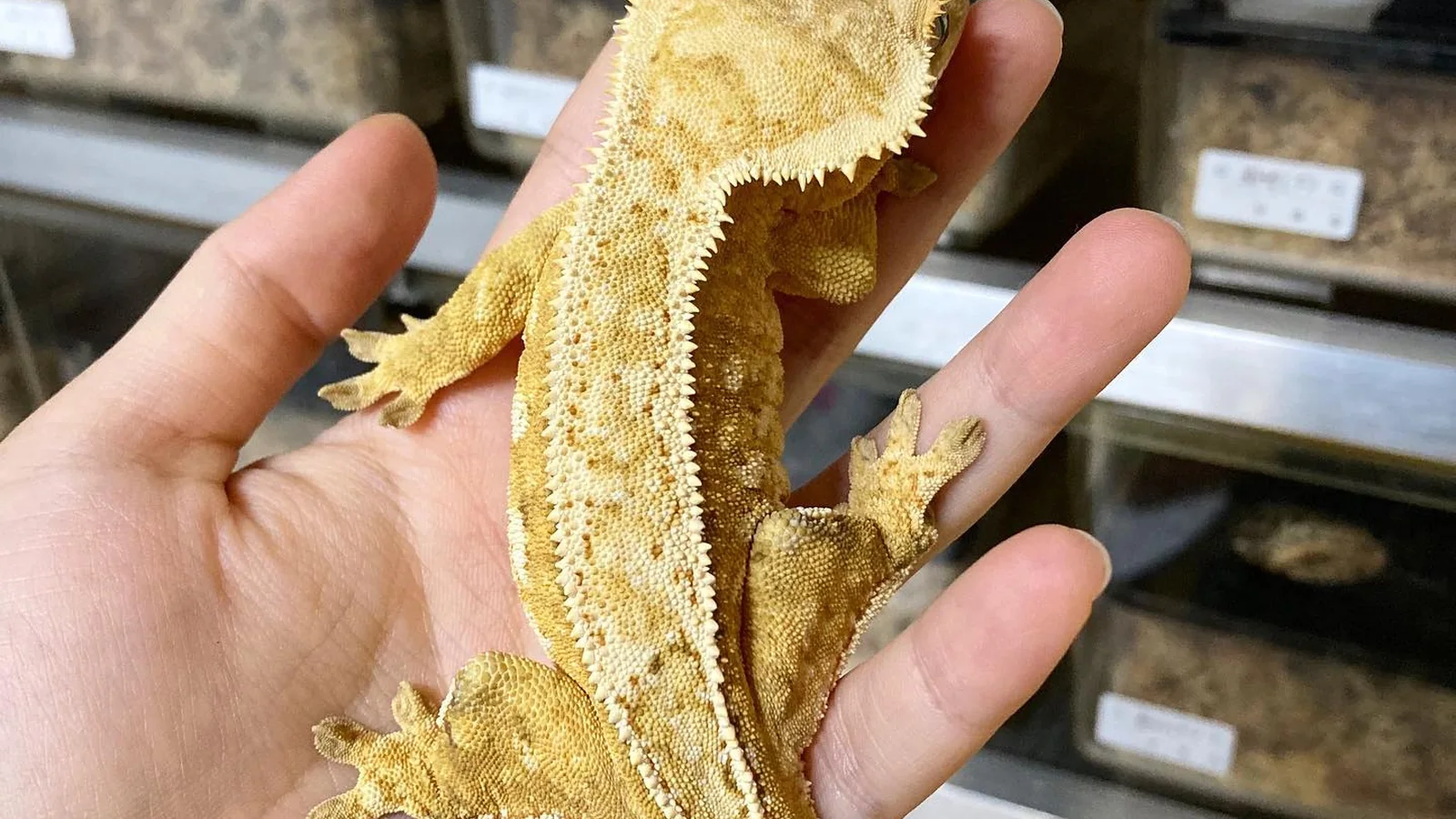
When picking a first crested gecko, flashy dorsal patterning, fiery red pigment, or bright white lateral walls steal all the attention. Seasoned keepers inspect structure first. Bone hardness, hydration, quiet breathing, intact toe pads, and verifiable breeder records decide whether your pet sails smoothly into adulthood or needs urgent medical care.
Whether evaluating animals face-to-face at a reptile expo or reviewing videos from a breeder online, walk through this three-part vetting check before money changes hands.
Part 1: Skeletal Density, Posture, and Toe Grip
Metabolic Bone Disease (MBD) and prolonged juvenile dehydration leave permanent physical clues:
- Jaw Alignment and Snout: View the head straight-on and in profile. Upper and lower jaws must meet tightly. Pass on any gecko with a soft, recessed, or protruding lower jaw (“rubber jaw”), or raw nose rubs from pacing bare plastic tubs.
- Spine, Pelvis, and Tail Control: Trace down the spine from neck to tail base for smooth alignment. While minor congenital tail-tip bends occasionally occur, wavy spinal kinks or a sideways-collapsed pelvic tilt (severe Floppy Tail Syndrome) reveal chronic deficiency or poor setup conditions. Healthy tailed geckos generally curl the tip lightly to grip branches or fingers.
- Limbs and All 20 Toe Pads: Legs must look straight and crisp, never swollen like inflated rubber. Count every toe tip for blackened constrictions from trapped shed, and check that sticky lamellae still catch cleanly rather than slipping due to crusted CGD.
- Intact Tail vs. Healed Frog-Butt: A long-healed tail drop is purely cosmetic and never impairs balance or lifespan; simply avoid buying an animal with a fresh, raw tail stump still closing up.
Part 2: Eyes, Nostrils, Breathing, and Vent
Look closely at head and underside details:
- Eye Symmetry and Pupil Response: Both eyes should appear plump, matching, and glass-clear, constricting into tight vertical slits under light. Deeply sunken orbits signal serious dehydration or systemic illness; a hazy film points to retained eye caps.
- Nostrils and Quiet Respiration: Nostrils must stay open and clean without dried food plugs or mucus bubbles. Watch throat movements at rest—gaping, clicking, or faint whistling signals respiratory infection. If shopping Cappuccino-related or extreme-structure lines, inspect nostril openings closely for clear airflow.
- Clean Vent (Cloaca): Smears of dried diarrhea, crusty yellow plugs, or swollen tissue around the underside are instant disqualifiers.
Part 3: Five Questions That Test Breeder Integrity
| Question to Ask | Green Flag Response | Red Flag Warning |
|---|---|---|
| 1. Exact hatch date and recent gram weight? | Shares exact hatch month/day and a current 0.1 g scale reading (e.g., “Hatched June 4, 10.6 g yesterday”) | Vague age estimates with zero weight logs |
| 2. Exact CGD formula and insect routine? | Names specific brand/flavor (e.g., Pangea or Repashy complete formulas) plus weekly dusted crickets (using Repashy SuperCal MeD) | Says “eats whatever—fruit mush or unlabeled house mix” |
| 3. Can you record a quick unedited daylight video? | Sends fresh natural-light clip showing calm walking, clean jaws, and fired-down/up comparison | Offers only month-old glamour flash photos and refuses live video |
| 4. Is each juvenile housed individually? | Tracked and kept one-per-container with dedicated meal notes | Mixed sizes crowded together in communal tubs |
| 5. Lineage proof for Pied, Hypo, Axanthic, or hets? | Shows clear photos of both parents, pairing notes, and clutch mates | Pushes vague “100% het” premiums on word of mouth alone |
Shipping Safety and First-Night Biosecurity
- Hold During Weather Extremes: Never ship when hub forecasts top 29–30°C (84–86°F) or sink below 7°C (45°F). Delivery vans roast or freeze quickly during loading stops; ethical sellers always hold paid geckos until safe shipping weather opens.
- Film Unboxing and Run Quarantine: Shoot one continuous unboxing video upon arrival, verify alertness visually, and place the gecko straight into its pre-tested paper-towel setup. If you already own other reptiles, maintain a strict 30–60 day separate-room quarantine with dedicated tongs and a veterinarian fecal float before moving onto naturalistic soil.