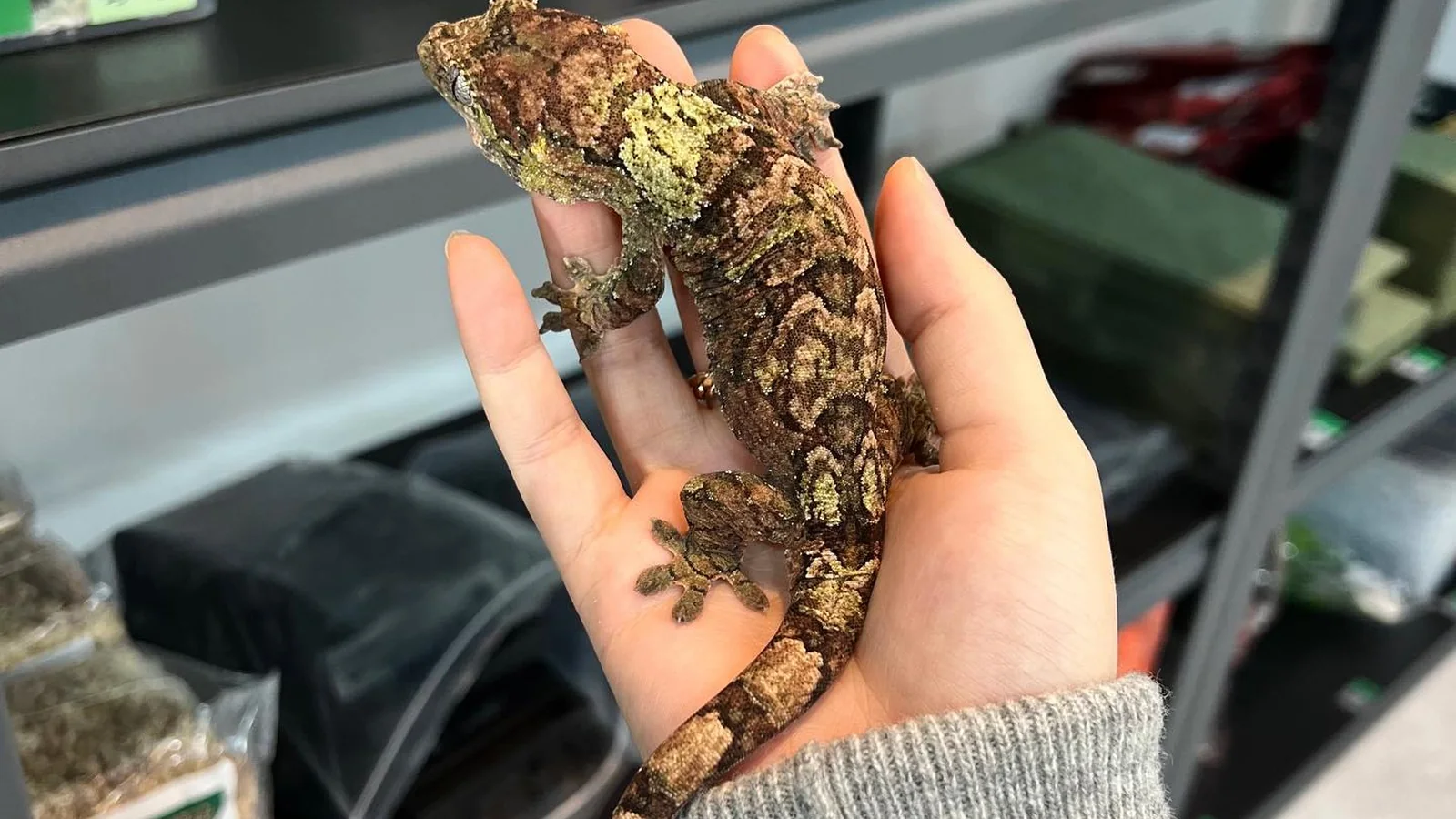
Right before picking an individual animal, most first-time keepers pause over the same pair of decisions: “Should I save money with a tiny baby, or pay extra for a subadult or adult?” and “For a solo pet, is male or female easier?”
Many beginners fall for 2-gram hatchlings perched on a fingertip, only to learn how fast tiny fluid reserves crash after one missed misting or hot afternoon. Others adopt an adult female without knowing she will still produce infertile eggs seasonally even in complete isolation. Comparing real weights and sex differences keeps surprises off your hands.
Weight Tells You Far More Than Calendar Months
Because ambient warmth and insect feeding heavily drive growth speed, one six-month-old gecko may hit 13 grams while a clutchmate stays at 5 grams. Judge readiness by gram weight rather than age alone:
| Life Stage | Typical Weight | Approximate Age | Margin for Error & Care Notes | Beginner Recommendation |
|---|---|---|---|---|
| Fresh Hatchling | 1.5–4 g | 0–2 months | Paper-thin hydration reserves; loses water fast; struggles to locate food cups inside big tanks | Skip as a first gecko (smallest margin for error) |
| Established Juvenile | 5–12 g | 3–7 months | Actively licks elevated CGD and hunts pinhead crickets; pore sexing remains speculative at best | Workable if housed initially in a compact box |
| Subadult | 13–28 g | 8–15 months | Resilient body mass; sex clears up cleanly around 15–20 g; adult markings have largely emerged | Top beginner pick (ideal mix of value and toughness) |
| Adult | 30–55 g+ | 15+ months | Eats CGD every 2–3 days; fits straight into a 30×30×45 cm standard enclosure (or 45×45×60 cm upgrade) | Low-stress choice (skip overly heavy 65 g+ retired breeders) |
Why a 12–25 g Subadult Hits the Sweet Spot
- Past Early Hatchling Fragility: A 15-gram gecko easily shrugs off skipping food for a week while adjusting to a new home, whereas a 2-gram neonate drops dangerously fast.
- Real Sexing Clarity (Zero Temperature Myths): Crested geckos have genetic sex determination—temperature-sexed (“TSM/TSF”) sales claims do not apply to Correlophus ciliatus. Under 10 grams, faint pseudo-pores on females routinely fool inexperienced loupe checks. Waiting until 15–20+ grams makes preanal pores and hemipenal development dependable.
- Predictable Color & Patterning: Juvenile pinstripes, harlequin walls, and contrast frequently shift across early sheds. By the subadult stage, what you see matches the grown lizard.
Solo Pet Reality: Male vs. Female Care
Keeping a Male
- Visual Check: Expect a distinct paired hemipenal bulge beneath the vent plus overlapping rows of preanal pores (dark waxy dots inside scale dimples) on the inner thighs and tail base.
- Core Advantage: Zero egg-laying, zero calcium drain from clutches, and zero dystocia (egg-binding) risk. Long-term nutrition and medical tracking stay simpler.
- Seasonal Quirk: During spring/summer breeding months, hormonal males occasionally chirp lightly and mouth a warm moving finger or sleeve edge thinking it is a rival or mate.
Keeping a Female
- Visual Check: Smooth, flat tail base lacking bulges, alongside clean scales above the vent free of waxy pore centers.
- Core Advantage: Typically calmer around moving hands during seasonal hormone swings and often carries a broad, hefty profile.
- What Unmated Owners Must Plan For: Healthy mature females (30–35+ g) regularly ovulate and lay infertile “dud” eggs every 4 to 6 weeks in season without ever meeting a male. Always supply a moist coco-fiber lay box so she has a digging site instead of holding eggs, and watch her weight and calcium reserves closely using fresh D3-fortified Pangea or Repashy CGD plus crickets dusted with Repashy SuperCal MeD Calcium+D3. Avoid buying obese 65+ g retired breeder females for your very first animal, as chronic follicular retention carries higher veterinary risk.
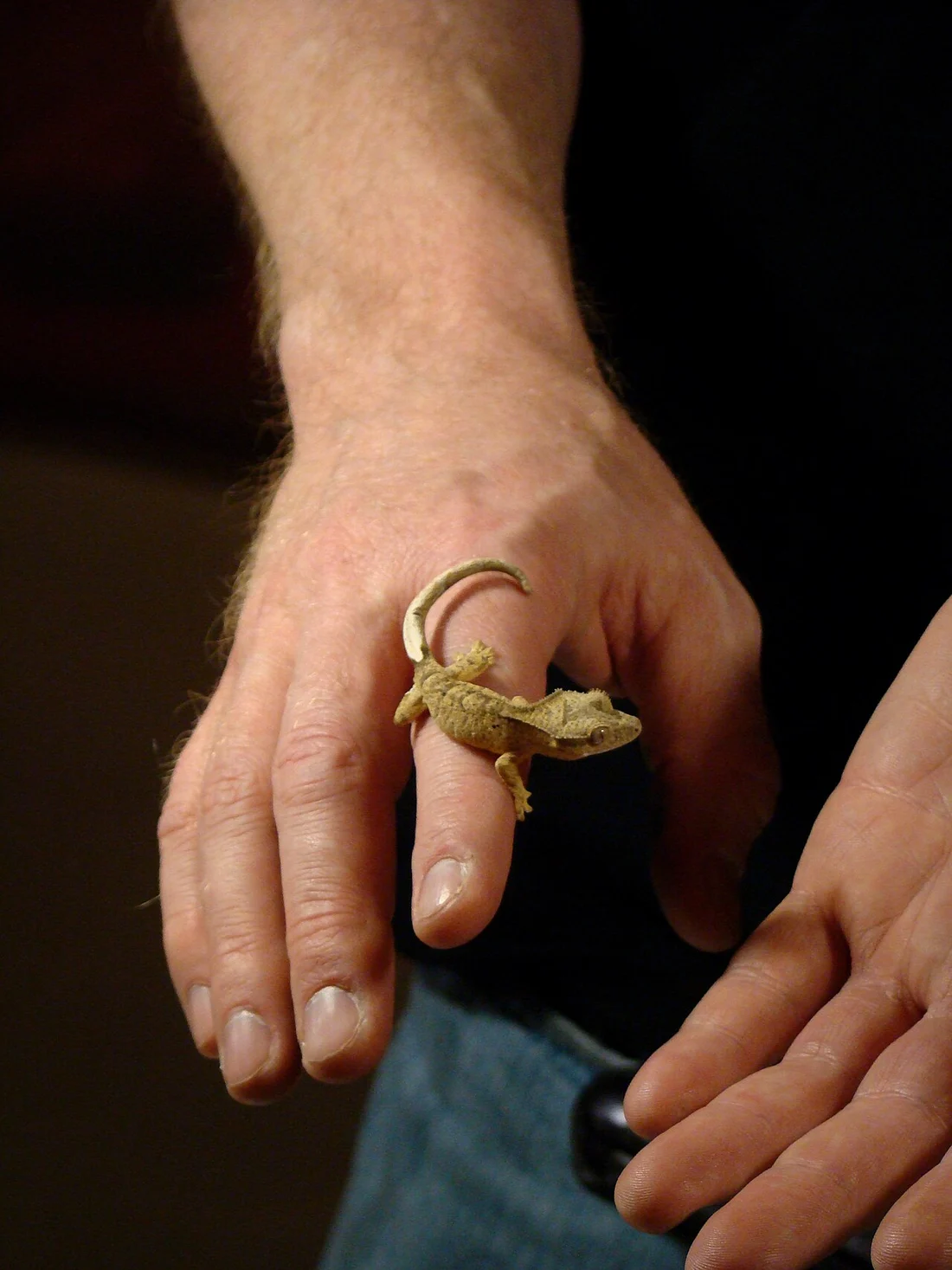
Comparing male pre-anal pore rows and hemipenal bulge against female vent scales once geckos cross roughly 15 grams.
Clear Starting Picks
- Easiest Long-Term Baseline: A sexed male subadult between 15 and 25 grams eating complete CGD and insects enthusiastically.
- If Raising Young Excites You: Start with an already feeding 6–10 g juvenile inside a 20×20×30 cm paper-towel setup, then graduate up around 18–20 g.
- If Choosing a Female: Include a damp lay zone right once she tops 30 grams so egg laying stays uneventful.