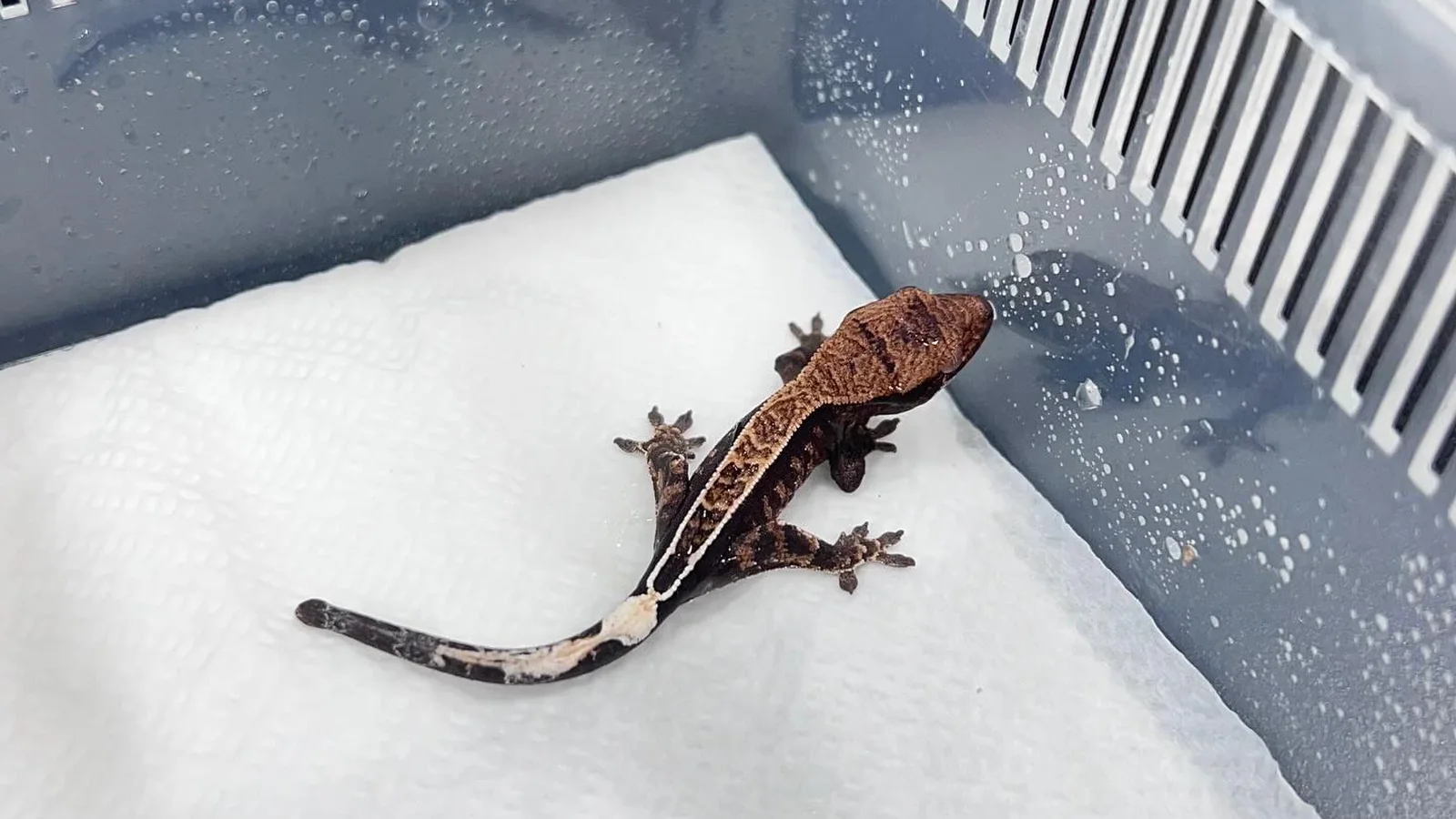
The moment your new crested gecko slides home, every impulse tells you to pick it up for photos and peek through the glass every half hour. Seen through the lizard’s eyes, though, it just endured capture, a dark shipping cup, vibrating vehicles, and release into an unfamiliar box smelling completely foreign.
The golden rule for the first 7 to 14 days is strict hands-off acclimation. Keeping fingers outside the enclosure lets stress hormones drop fast so eating and normal elimination start days sooner.
Three Reasons Week-One Handling Backfires
Relocation spikes circulating stress hormones (corticosterone). In the wild, large hands scooping from above equal capture by a predator. Reaching in repeatedly during week one predictably causes:
- Short Adjustment Turned Long Hunger Strike: A gecko that would quietly lick food on night four will wedge inside cork bark if your hands repeatedly enter its refuge, turning a brief transition pause into weeks of fasting.
- Blind Panic Jumps and Tail Drop: Before learning branch positions and glass depth, startled leaps frequently smash into walls or trigger defensive tail autotomy.
- Depressed Immunity: Travel exhaustion plus ongoing stress lets low-grade opportunistic gut protozoa flare rapidly.
Day-by-Day Blueprint (With Quarantine Biosecurity)
Line the floor with unbleached paper towels, and if you already keep other reptiles, enforce separate tongs, hand-washing, and room isolation from day one:
| Days | Your Simple Routine | Strictly Avoid | Normal Gecko Behavior |
|---|---|---|---|
| Day 1 (Arrival) | Visually check limbs and breathing in the cup, gently let it walk into your pre-tested enclosure, mist lightly at dusk, offer a shallow coat of its seller’s exact CGD, and lights off on timer | No hand-posing photos, no live bugs yet, no hovering over the glass | Retreats immediately behind cork or leaves; almost never eats on night one |
| Days 2–3 | Glance morning and evening at upper and lower digital probes (20–27°C day; 40–85% wet/dry cycle misting to 75–85% and drying into 40–65%); mist quietly at dusk | Do not wipe CGD onto the nose or hold a spoon in its face | Sleeps hidden all daylight hours; begins creeping slowly along branches after room lights go out |
| Days 4–5 | Refresh Pangea / Repashy CGD (2–3 mm thin floor coat); inspect white paper towels for first urates or brown droppings | Do not rearrange cork tubes, leaves, or feeding ledges | Subtle round tongue tracks across the food cup floor or crisp white urate spots on paper towels |
| Days 6–7 | Note humidity dry-out speed, nocturnal sighting times, and waste; quietly swap soiled towels and sanitize dishes with plain warm water | Keep handling at zero outside true emergencies | Picks one consistent daytime sleep hide and emerges reliably after dusk |
How to Confirm Eating Overnight Without Hovering
By day five, empty-looking food cups make many keepers anxious—forgetting that a 6-to-12-gram juvenile’s stomach holds barely a few drops of liquid. Full food cups hide three nighttime licks effortlessly:
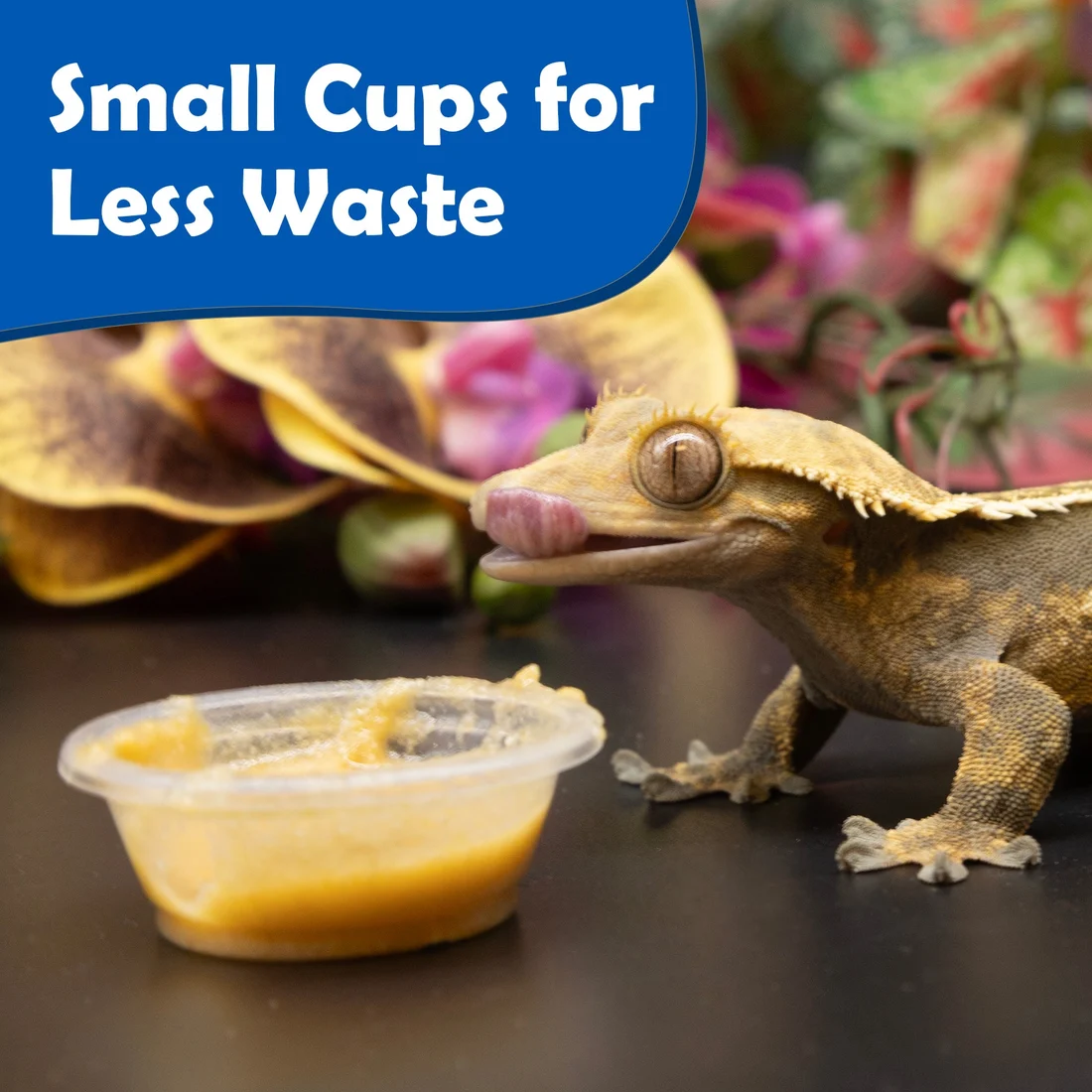
- Use the 2 mm Thin-Coat Trick: Whisk CGD to smooth ketchup texture using filtered/dechlorinated water, then spread barely enough to thinly tint the silicone cup bottom. Any two licks at night reveal bright clear plastic underneath by morning.
- Track Paper-Towel Output: Even before devouring whole dishes, well-hydrated geckos lap leaf droplets and pass neat brown feces paired with clean white urates on white towels.
- Hold Off Switching Flavors for 2–4 Weeks: Feed the breeder’s exact Pangea or Repashy brand and formula during the entire adjustment window before experimenting with new flavors.
Four True Emergencies That Require Immediate Action
Staying hands-off never means ignoring real hazards. Intervene right away if you notice:
- Sustained probe highs entering 29–30°C+ (84–86°F+) or lethargic sprawled posture on the enclosure floor;
- Open-mouth gaping at rest, audible clicking breaths, or bubbling nostrils;
- Rapidly sinking eye orbits or skin folds staying pinched and tented (acute dehydration);
- Bloody, foul-smelling liquid stool, cloacal prolapse, or visible muscle twitching.