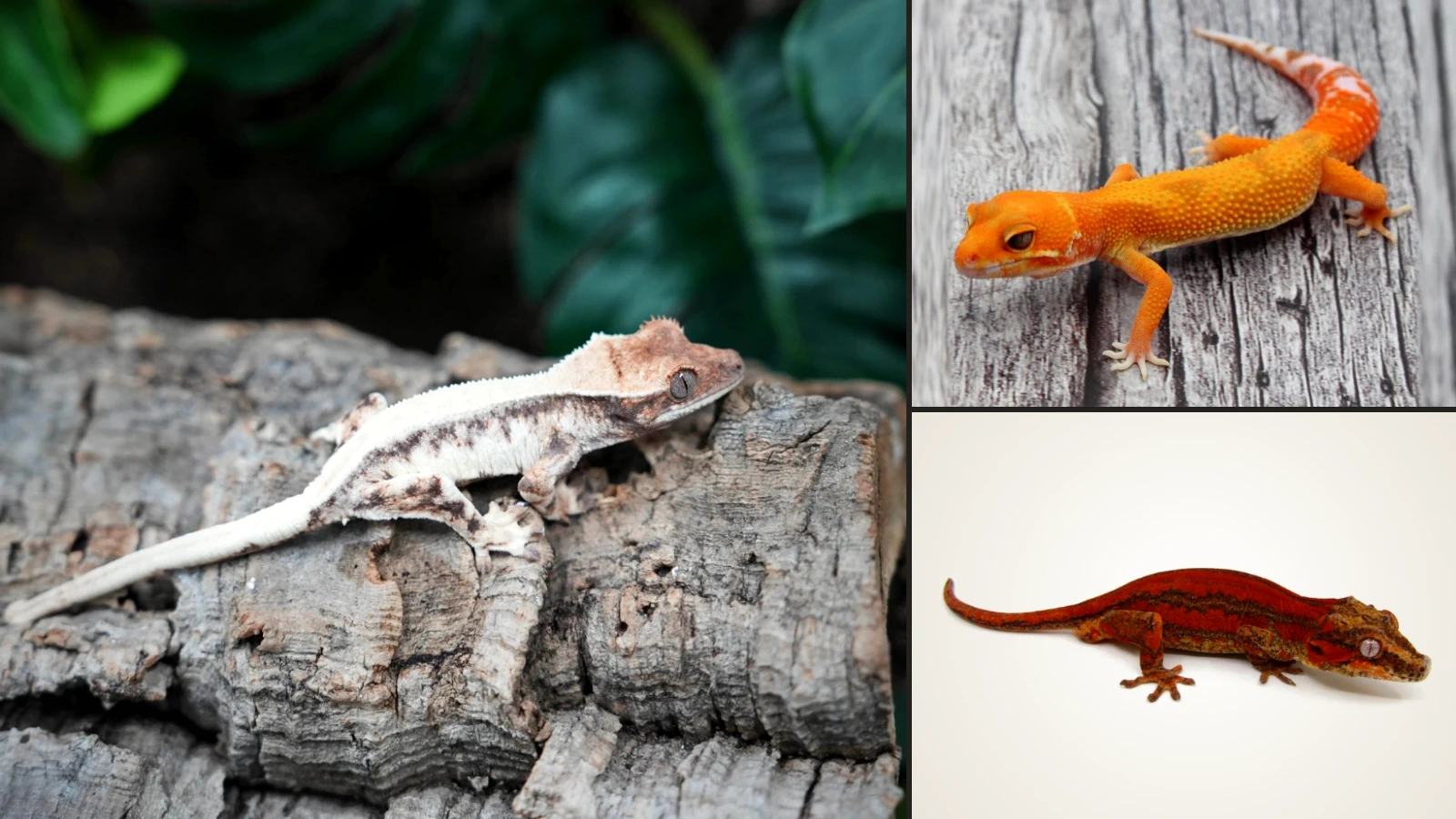
When narrowing down a first pet lizard, beginners usually bounce between four popular names: the Crested Gecko (Correlophus ciliatus), Leopard Gecko (Eublepharis macularius), Gargoyle Gecko (Rhacodactylus auriculatus), and occasionally the giant New Caledonian cousin, the Leachianus (Rhacodactylus leachianus)—alongside the ground-dwelling African Fat-Tailed Gecko. Online lists love declaring the crested gecko “zero maintenance,” yet every species simply swaps one daily requirement for another.
Choosing the best fit means lining up your ambient room temperature, comfort handling live insects, and shelf layout against what each gecko evolved to tolerate.
Side-by-Side Comparison of the Top Four Starter Geckos
| Feature | Crested Gecko | Leopard Gecko | African Fat-Tailed Gecko | Gargoyle Gecko |
|---|---|---|---|---|
| Enclosure Style | Vertical arboreal (standard 30×30×45 cm / 12×12×18 in; 20×20×30 cm starter, 45×45×60 cm upgrade) | Horizontal terrestrial (60×45×45 cm to 80×45×45 cm) | Horizontal terrestrial (60×45×45 cm+ with heavy hides) | Vertical arboreal (30×30×45 cm to 45×45×60 cm) |
| Thermal Window | Day 20–27°C (68–80°F); avoid sustained 29–30°C+ stagnation | Hot spot 31–33°C (88–92°F), cool side 22–25°C | Hot spot 30–32°C (86–90°F), cool side 23–26°C | Day 20–27°C (68–80°F); avoid sustained 29–30°C+ stagnation |
| Humidity Cycle | Broad 40–85%: night mist 75–85% drying into 40–65% | Arid 30–40% ambient + dedicated humid hide | Moderate 50–70% ambient + humid hide | Night mist 75–85% drying into 40–65% |
| Primary Diet | Pangea / Repashy CGD + live bugs 1–2× weekly (crickets first) | 100% live insects (crickets, dubia, etc.) | 100% live insects (often pickier feeders) | Pangea / Repashy CGD + live bugs 1–2× weekly |
| Tail Regeneration | Never regrows once dropped (heals smoothly as a “frog-butt”) | Regrows a bulbous, smooth replacement tail | Regrows a plump replacement tail | Regrows a sturdy functional replacement tail |
| Handling Feel | Adhesive pads; scales glass and leaps suddenly | Claws only; walks calmly across open hands | Shy, gentle, slow ground-walker | Strong claws; prefers textured cork over glass |
Close Arboreal Cousin vs. Ground Insectivore
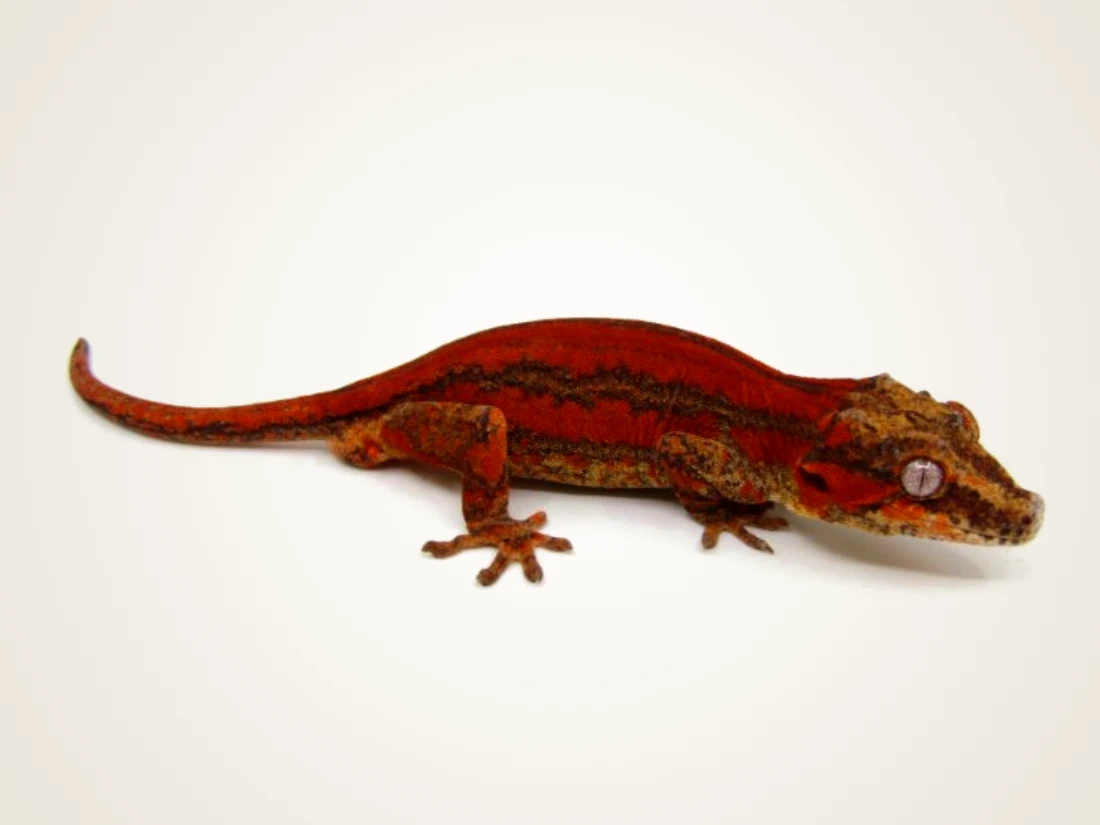
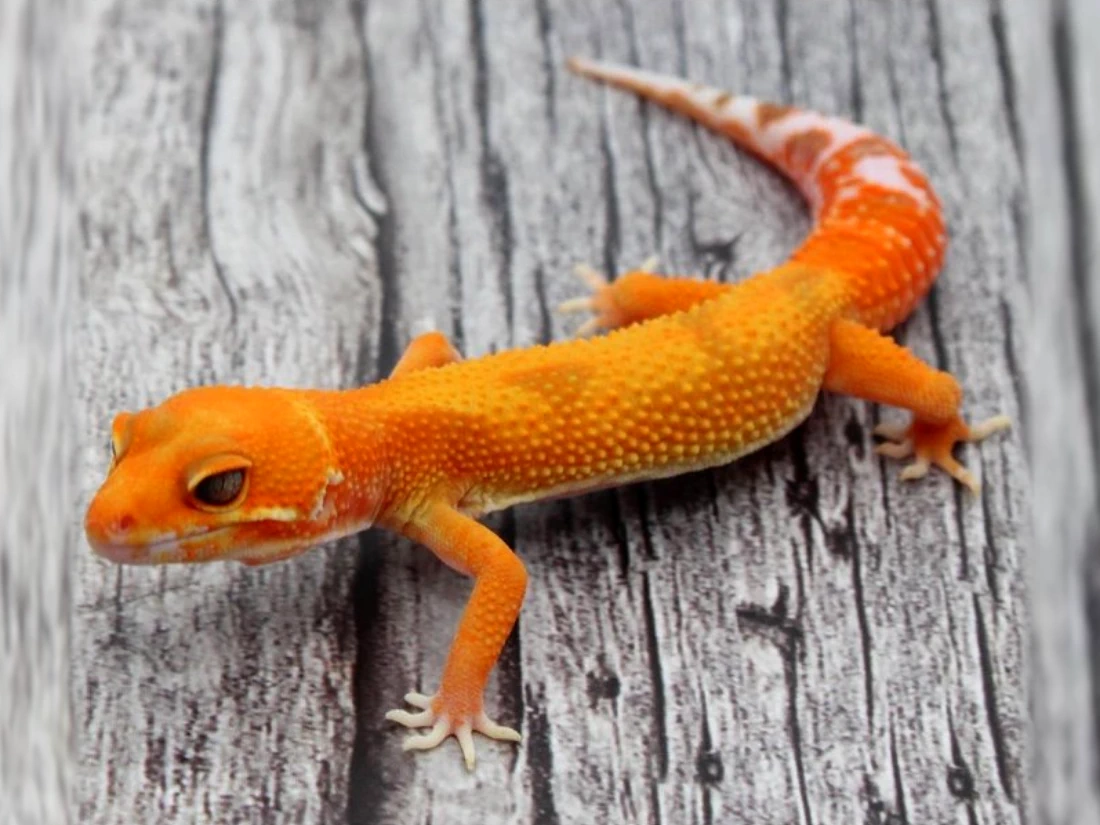
Gargoyle geckos share virtually the same arboreal habitat and Pangea/Repashy + cricket routine as cresties, while leopard geckos belong in warm, dry horizontal setups with 100% live insects.
Why “No Bugs, No Heat” Misses the Mark
1. Feeding Flexibility: Powder Base vs. Strict Insectivores
Leopard and fat-tailed geckos are obligate insectivores: keeping a rotating stock of live insects is mandatory, full stop. Crested and gargoyle geckos run smoothly on fortified Pangea or Repashy Crested Gecko Diet (CGD)—which also means crested geckos do not strictly require UVB bulbs when kept indoors on D3-balanced CGD—making weeknight care much simpler, even though offering live crickets (primary feeder, or small dubia as backup) dusted lightly with Repashy SuperCal MeD once or twice weekly helps juveniles build strong muscle and bone density.
2. Thermal Reality: Cooling Tropics vs. Heated Spots
If your uncooled apartment hits 30°C+ (86°F+) on summer afternoons, desert-adapted leopard geckos cope with room warmth far more safely than forest geckos sensitive to prolonged stagnation. On the flip side, if your bedroom or study already stays air-conditioned comfortably in the 22–26°C (72–79°F) range, a crested or gargoyle gecko needs almost zero supplemental heating wattage while still delivering lush arboreal activity.
New Caledonian Cousins: Crested, Gargoyle, or Leachianus?
Since crested geckos, gargoyles, and Rhacodactylus leachianus share New Caledonian roots, first-timers frequently compare all three:
- Crested vs. Gargoyle Gecko: Husbandry parameters are practically identical. Crested geckos possess stickier toe lamellae and perch effortlessly on glass and glossy foliage; gargoyles grip rough cork branches with stout claws and can regenerate a dropped tail, though startle bites from an adult gargoyle pack slightly more squeeze.
- Where Does a Leachianus Fit?: The Giant New Caledonian Gecko (R. leachianus) often appears on wishlists, yet adults reach 200–350+ grams, require massive 45×45×90 cm (18×18×36 in)+ enclosures, cost several times more, vocalize loudly at night, and frequently develop strong enclosure-protective biting instincts. Starting with a crested or gargoyle builds clean arboreal instincts before ever stepping up to a “Leachie.”
Fast Decision Rule
- Go with Crested or Gargoyle if indoor rooms comfortably avoid sustained 29–30°C+ heat, you enjoy lush vertical layouts with cork bark and misting cycles, and mixing Pangea/Repashy CGD with occasional feeder crickets fits your routine.
- Go with Leopard or Fat-Tailed if your rooms trend warm and dry, you want a lower horizontal enclosure, and stocking live feeder insects is zero issue.