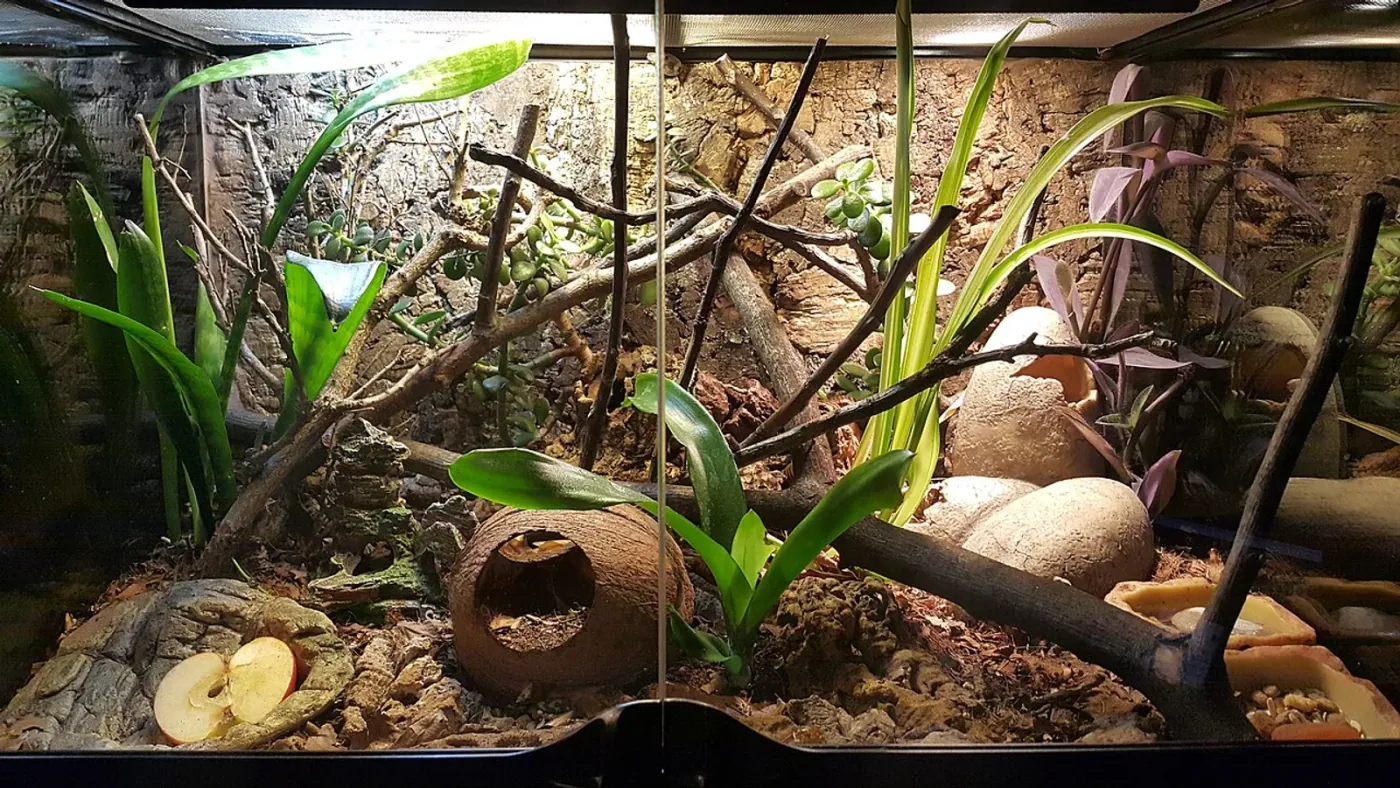
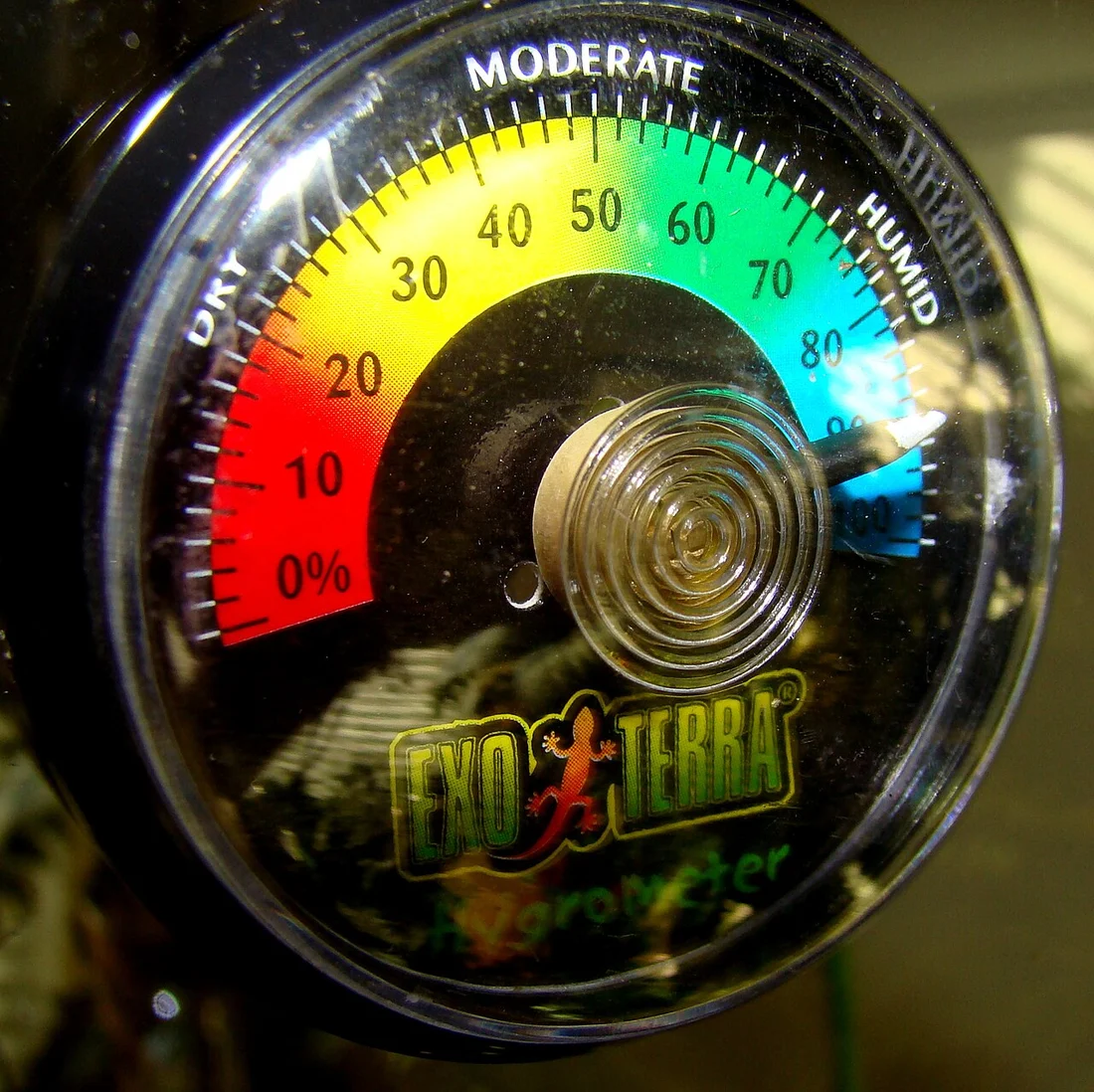
Buying a pre-packaged pet store “starter kit” is usually the quickest way to spend twice. Most bundled boxes pack analog dial thermometers that miss reality by several degrees, sleep-disrupting colored night bulbs, unthermostated sticky heat pads, and a single wispy vine inside bare glass.
Purchasing piece by piece costs roughly the same while letting your enclosure run smoothly for days before your animal ever arrives. Split your shopping cleanly: lock down essentials for climbing, cover, feeding, and measurement in Round 1, and hold ornate bioactive upgrades until after quarantine.
Round 1 Essentials (Installed 72 Hours Before Arrival)
| Category | Exact Specs to Look For | Why It Belongs on Day One |
|---|---|---|
| 1. Enclosure | Front-opening vertical terrarium: Hatchlings/Compact 20×20×30 cm (8×8×12 in); Recommended Standard 30×30×45 cm (12×12×18 in) (45×45×60 cm upgrade when space permits) | Screen top + front vents create clean wet/dry air exchange; front doors stop looming hand approaches from overhead |
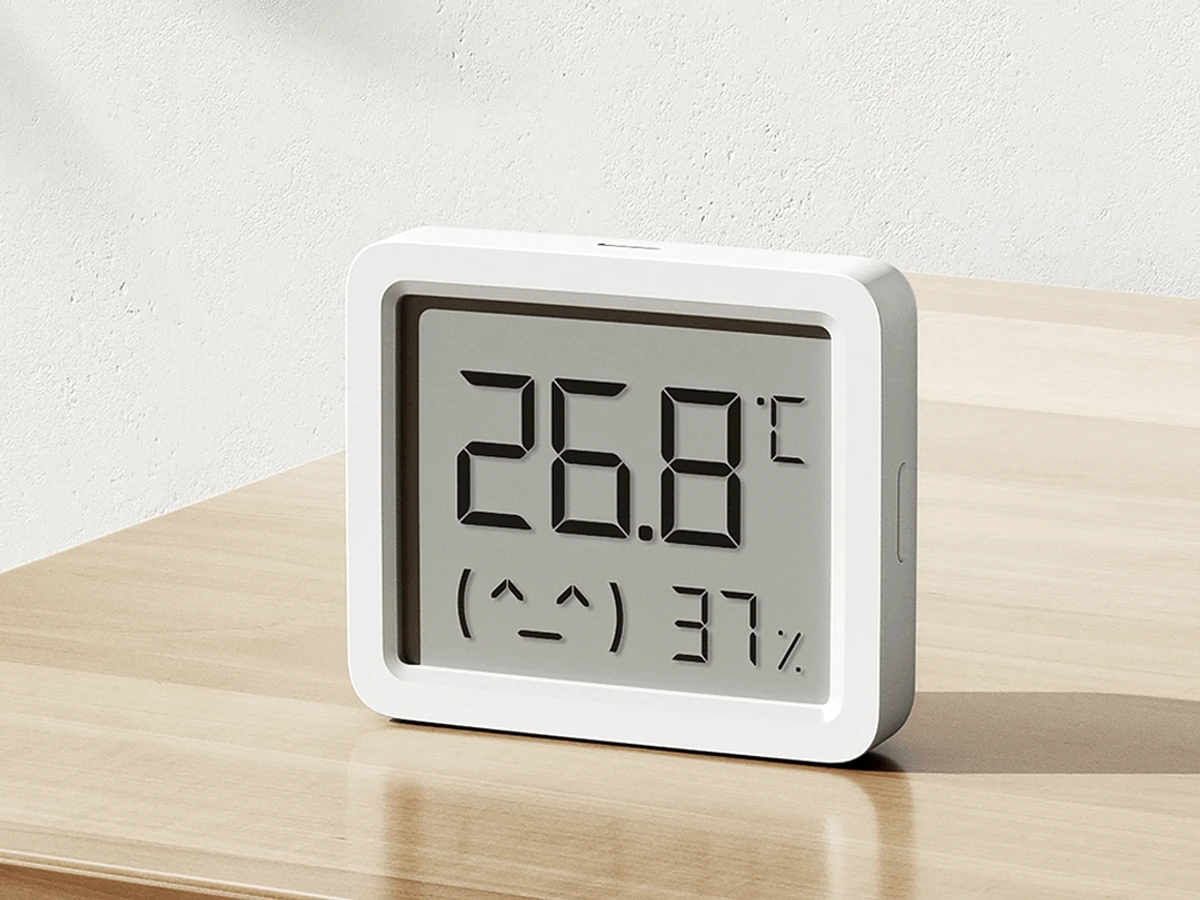
| 2. Digital Hygrometers | Compact digital monitors such as the Xiaomi Mijia 3 Mini (or corded digital probe meters ×1–2) | Replaces wildly inaccurate stick-on plastic dials cleanly; place one at canopy/mid height to track daily dry-out cycles reliably |
| 3. Structural Perches | Hollow cork bark tubes plus 2–3 stout horizontal or angled branches | Horizontal resting spots prevent Floppy Tail Syndrome (FTS) caused by sleeping upside down against flat glass |
| 4. Foliage Clutter | Broad-leafed artificial vines (no sharp exposed wires) filling 65%–80% of upper/mid volume | Correlophus ciliatus fears empty glass far more than roomy heights; heavy cover stops relocation fasting fast |
| 5. Quarantine Substrate | Unbleached paper towels (for hatchlings and the first 30–60 days) | Tracks every fecal pellet and white urate effortlessly while preventing accidental substrate ingestion |
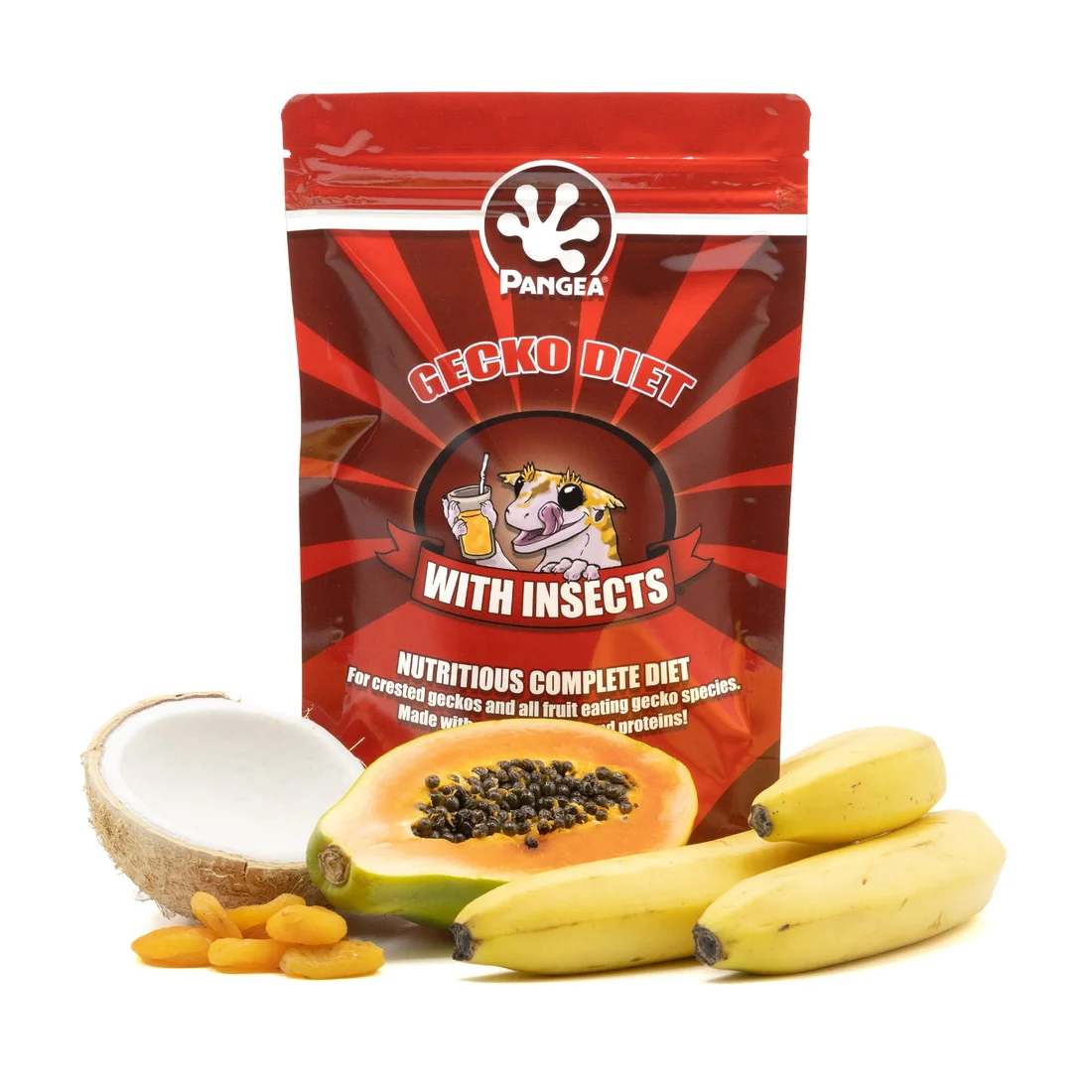
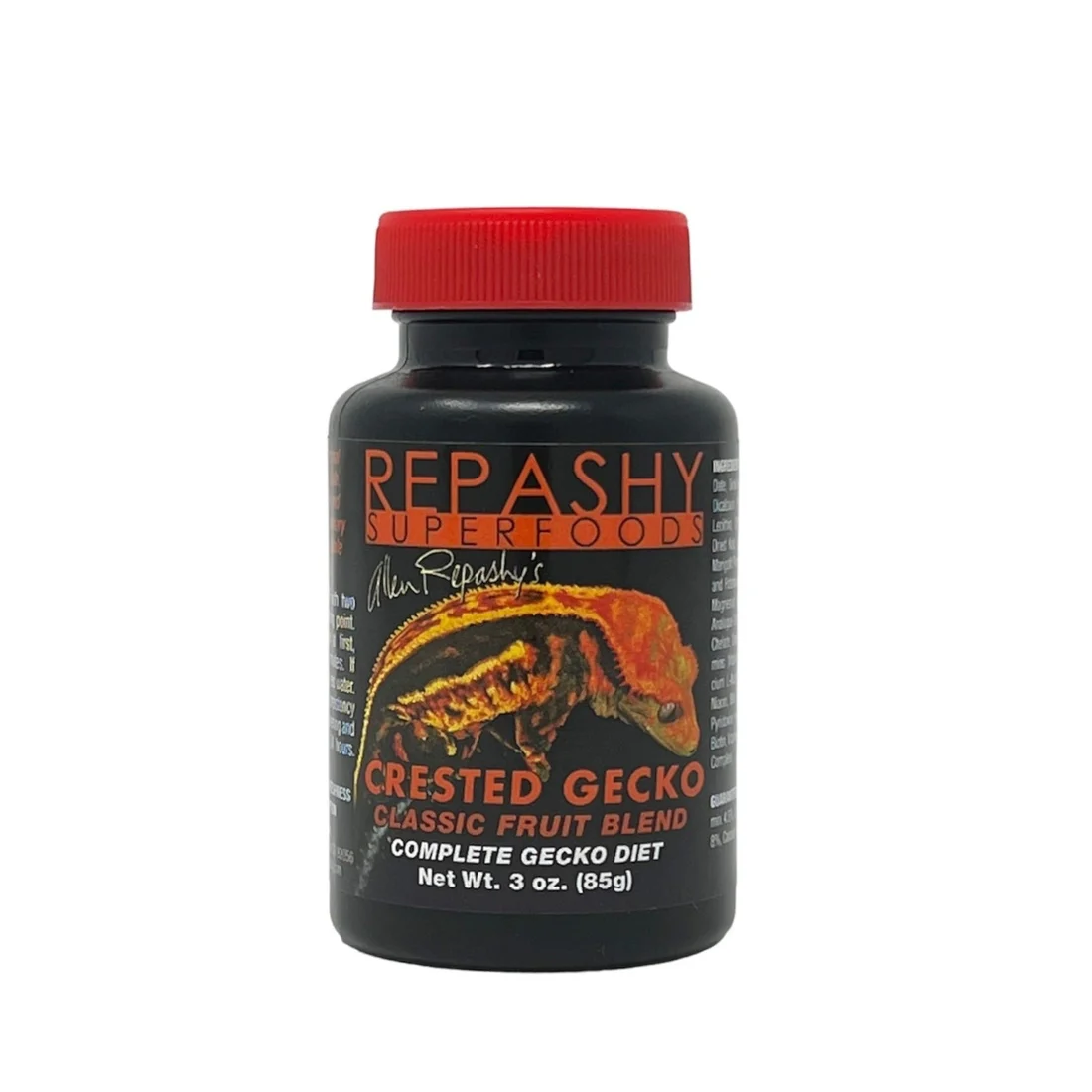
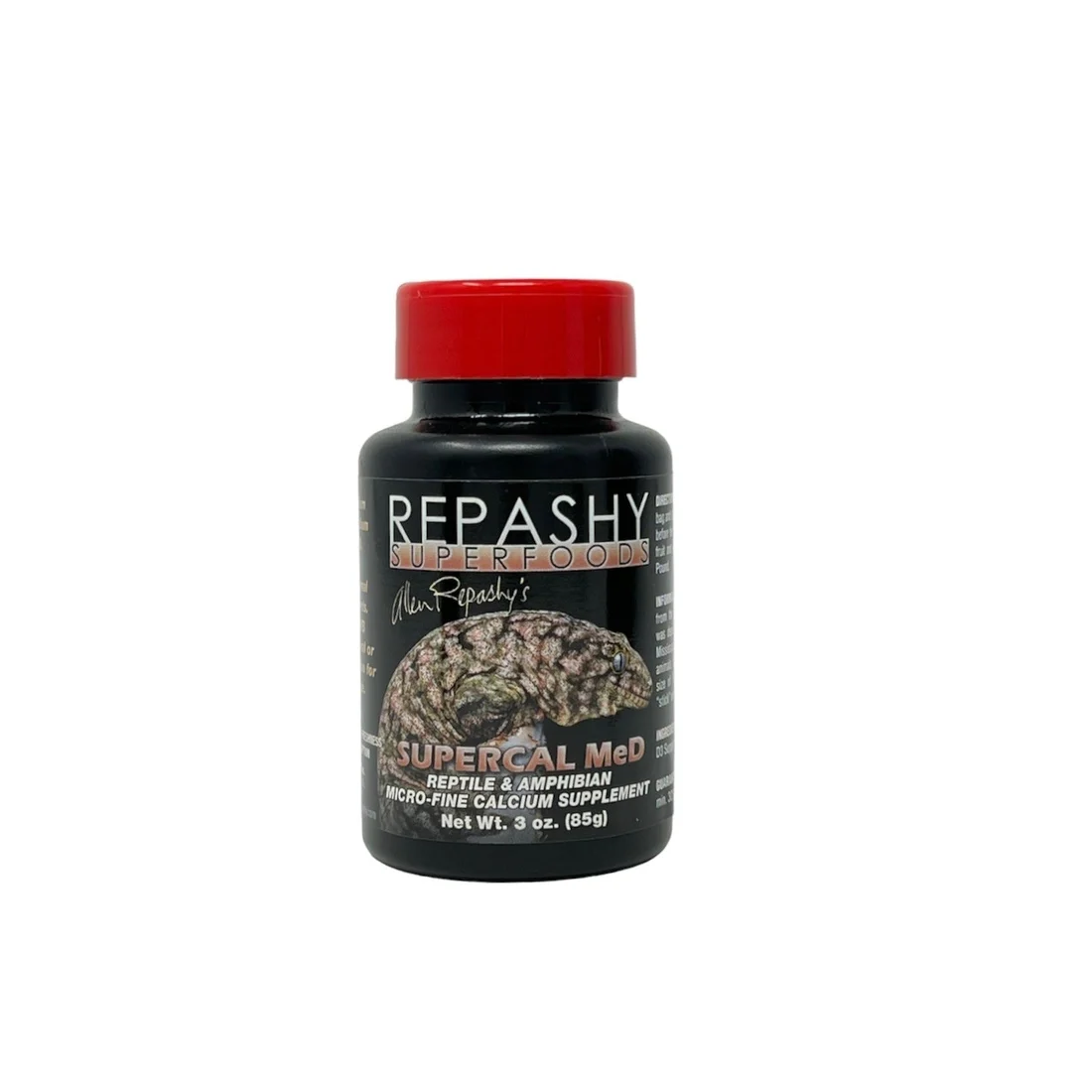
| 6. Diet & Dusting Gear | Reputable complete CGD (Pangea & Repashy only, small pouches first) + Repashy SuperCal MeD for feeder crickets | Start with small tester bags instead of giant tubs; dust primary feeder crickets cleanly (never add powder directly into CGD) |
| 7. Ledge & Mister | Magnetic elevated dual-cup ledge + fine-mist pressure sprayer (with dechlorinated/filtered water) | Arbored feeding mounts stay clean above the floor; fine droplets cling to leaves for natural drinking |
Round 1 Diet & D3 Supplement Picks
Stick strictly to trusted, nutritionally complete formulas: rotate Pangea and Repashy CGD in small pouches first, and pair with Repashy SuperCal MeD for dusted crickets.
Pairing Lighting, Supplements, and Local Climate Gear
1. Dust Feeder Crickets with Repashy SuperCal MeD (Never Mix into CGD)
- Standard Indoor Enclosures (No UVB Needed): Feed fresh Pangea or Repashy complete CGD mixed with water only, and dust live feeder crickets lightly with
Repashy SuperCal MeDonce or twice weekly. - If You Choose Optional Linear T5 UVB (
UVI 0.5–1.0): Crested geckos do not require UVB when fed complete D3-fortified CGD; however, if you opt to run a Zone 1 shade fixture above mesh, switch live insect dusting to Plain Calcium WITHOUT D3. Either way, never mix loose calcium or D3 powder directly into balanced CGD.
2. Buy Only for Your Actual Climate
- Tropical Rainforest Climates (Malaysia, Singapore, Year-Round Humid Regions): Skip heat mats and heat lamps completely. Put that money toward blackout window curtains, room AC, a quiet USB mesh fan outside the screen top for stagnant nights, and emergency cold packs ready for blackouts.
- Four-Season Regions or Cold Winters (Below 18°C / 64°F Overnight): Attach an exterior reptile heat mat mounted to an upper side or back glass wall wired through an independent digital thermostat, keeping an unheated cool side—never place an unregulated mat flat under thin plastic boxes. A low-wattage thermostated CHE or DHP over the screen mesh is also an option for taller glass vivariums.
3. Hygiene and Weight Tracking
- 0.1 g Digital Scale: Weighing biweekly inside a tared deli cup catches subtle weight dips weeks before bones or ribs show.
- Silicone/Rubber-Tipped Tongs: Protects jaws and teeth when eager jumpers strike at offered crickets.
- Reptile-Safe Disinfectant: Veterinary F10SC or properly diluted chlorhexidine leaves no harsh chemical residue—skip pine cleaners, essential oils, or strong bleach fumes.
Hygrometer Choice: Compact Digital Standard vs. Analog Dial to Leave Out
A fast-response LCD thermo-hygrometer belongs on the day-one cart; stick-on coils and bare glass dials belong off it.
Four Items to Leave Out of Your Cart
- Any Adhesive Tape or Velcro Inside the Tank: Even small sticky strips peel loose in humidity and tear fragile gecko skin and toe pads.
- Calcium Sand or Crushed Walnut: Serious digestive impaction risk whenever missed food touches the floor.
- Red, Blue, or Purple “Night” Bulbs: Geckos detect those wavelengths clearly, disrupting natural nocturnal foraging.
- Loose Compact Coil UVB Bulbs: Crested geckos already thrive without UVB on complete diets; avoid harsh spiral coil bulbs that beam intense narrow spikes into lidless gecko eyes.