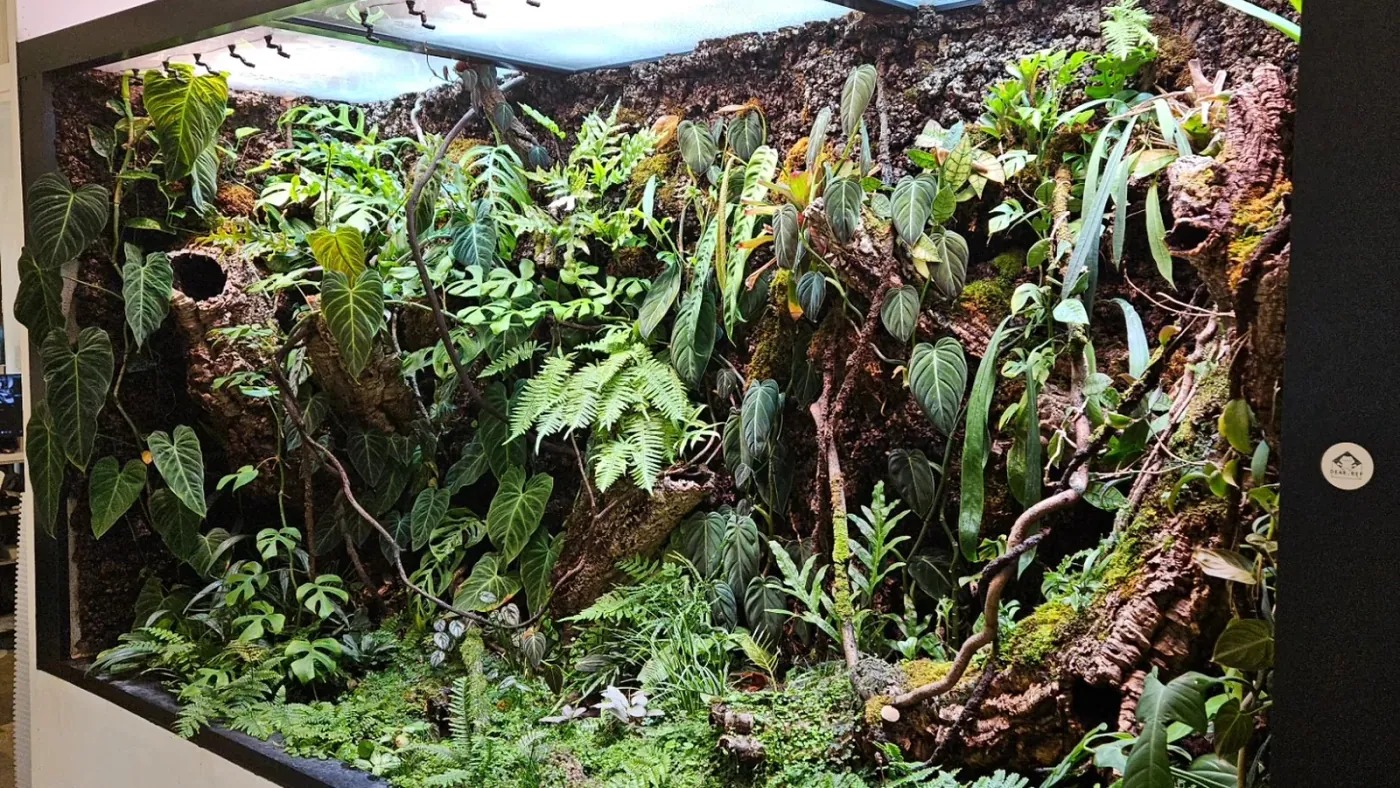
A classic first-tank error is buying a 30×30×45 cm (12×12×18 in)—or a spacious 45×45×60 cm—glass vertical terrarium, leaning one skinny branch down the center, draping a single sparse vine on the back glass, and wondering why the gecko sleeps upside-down on front glass every day.
To an arboreal forest gecko, open air without branches or leaves is unusable dead space. Leaving bare glass everywhere forces the animal onto flat walls. Real usability comes from filling the vertical column with horizontal perches, rough cork hides, and 60%–80% broad-leafed cover.
Why Horizontal Perches and Leaf Clutter Work Together
1. Preventing Floppy Tail Syndrome (FTS)
When a crested gecko sleeps head-down on slick vertical glass night after night, its heavy tail pulls downward by gravity, folding forward over the spine or crooked to one side. Over time this strains ligaments and bends the pelvic girdle into irreversible Floppy Tail Syndrome (FTS), which can later complicate egg passage in females.
You never fix FTS by nudging a gecko off the wall. You fix it by offering horizontal perches and hollow bark hides up in the canopy that feel safer and far more grippy than slick glass.
Sleeping head-down on bare vertical glass pulls the heavy tail forward (left); firm horizontal cork perches keep the tail base level behind the hips (right).
2. The 60%–80% Cover Rule Unlocks Confident Feeding
When an enclosure sits wide open, leaving a sleeping tube to find the CGD dish feels like crossing an exposed clearing. Packing 60%–80% of the vertical volume with overlapping broad leaves, cork tunnels, and angled vines creates shaded walkways where shy geckos explore freely after dusk.
Four-Layer Enclosure Architecture (One Gecko Per Tank)
Whether scaling down lightly for a 20×20×30 cm hatchling box, building the standard 30×30×45 cm adult enclosure, or landscaping a larger 45×45×60 cm vivarium—always strictly solitary—apply these four layers:
| Layer | Recommended Materials | Placement & Angle | Function |
|---|---|---|---|
| 1. Diagonal Highways | 1–2 sturdy ghostwood, Mopani, or thick cork branches (2.5–4 cm / 1–1.5 in diameter; lighter cork strips in 20×20×30 tubs) | Wedge securely corner-to-corner from floor to upper canopy | Bridges cooler floor pockets and warmer upper foliage smoothly |
| 2. Horizontal Rest Bars | 2–3 bamboo rods, heavy-duty bendable vines, or magnetic perches | Mount level across 1/3 height, 2/3 height, and 15–20 cm below top mesh | Gives level gripping surfaces so the tail stays straight behind the hips, curbing FTS |
| 3. Textured Cork Hideaways | 1–2 hollow cork bark rounds or angled bark slabs | Secure one up in shaded mid-canopy and another near cooler lower shade | Rough texture assists shedding; pitch-dark hollows become favorite daytime sleep spots |
| 4. Droplet-Holding Foliage | Broad artificial silk vines (pothos, philodendron) or sturdy live plants | Drape across upper bars, side glass, and tube entrances | Breaks external room motion and catches evening mist beads for drinking |
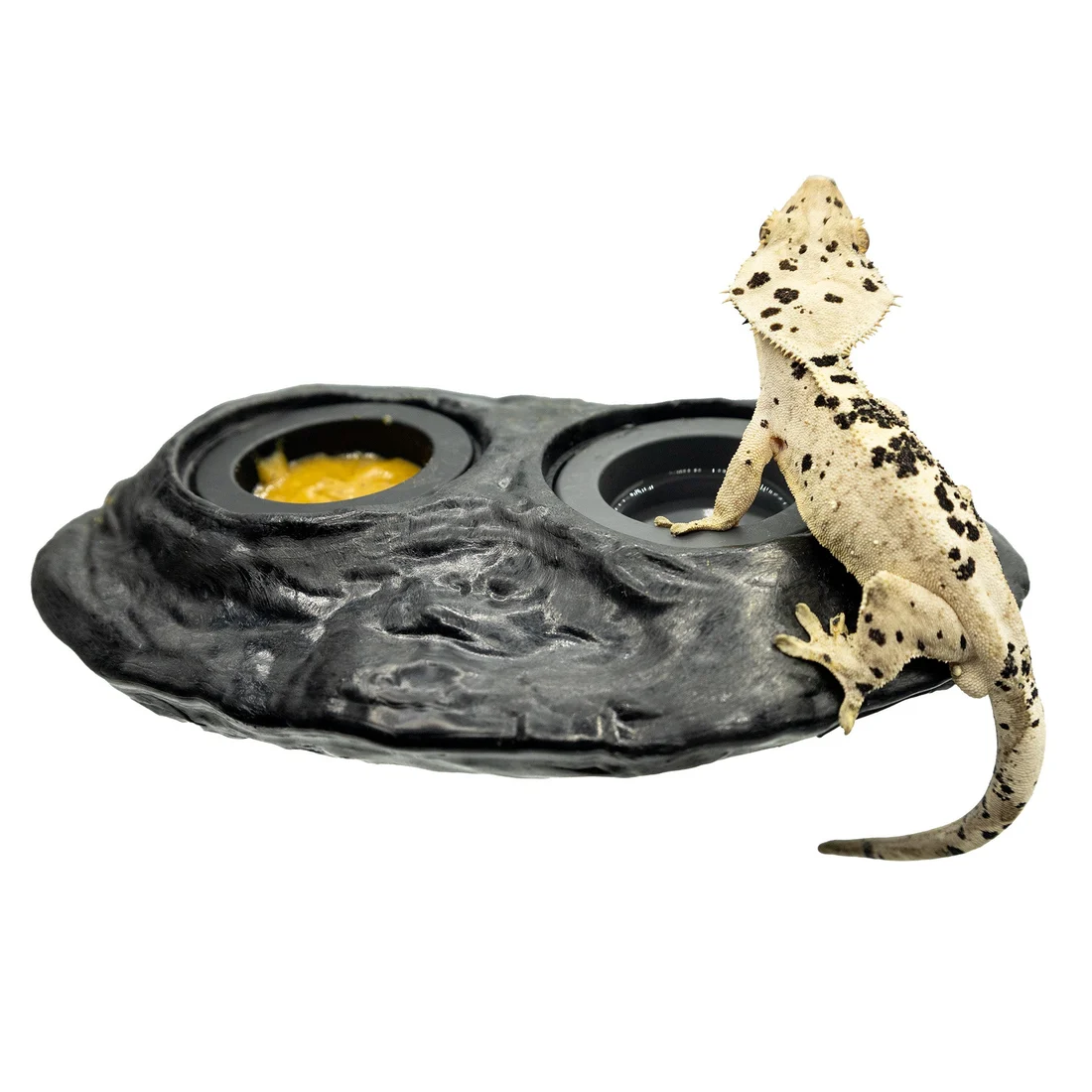
Positioning the Dual-Cup Feeding Ledge (CGD + Water Dish)
Skip setting bowls down on bare substrate where dirt and feeders spoil them. Place a magnetic or locking suction dual ledge cleanly using three rules:
- Mount at 1/2 to 2/3 Tank Height: Matches the gecko’s dusk habit of climbing upward to forage.
- Butt Against a Horizontal Perch: Your gecko should stand with all four feet comfortably gripping wood while leaning effortlessly to lick CGD or drink from the companion 1–1.5 cm deep water cup.
- Add a Leaf Canopy Roof: Draping a wide artificial or live leaf directly above the ledge shields shy eaters from overhead room movement.
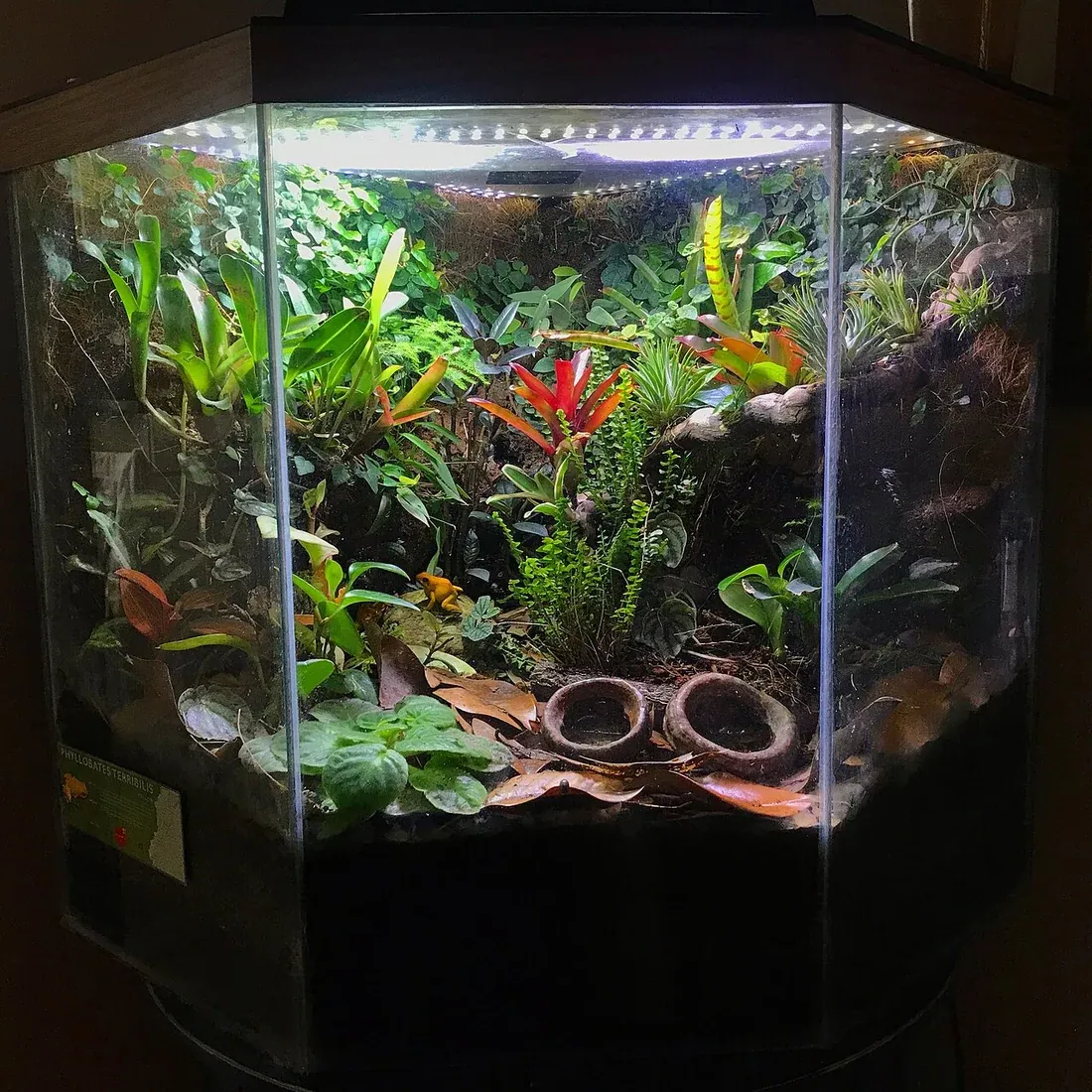
Balanced Vertical Clutter & Elevated Feeding Station
Filling mid-to-upper tank volume with criss-crossing wood and leafy cover keeps geckos hidden from room motion while guiding them naturally straight to elevated CGD cups.
Safety Walkthrough Before Moving the Gecko In
- Press-Test Heavy Wood: Wet wood swells and cheap suction cups fail without warning. Anchor heavy pieces firmly against corners, or lock them with aquarium-safe 100% silicone, zip ties, or strong external magnets so nothing shifts onto the animal.
- Trim and Seal Wire Ends: Artificial hanging stems hide sharp cut wire tips inside plastic casings. Check every cut tip with a fingertip, fold exposed metal back, and cap with a bead of hot glue or silicone before misting.