Substrate arguments often trap keepers into false absolutes: one side swears any soil triggers instant impaction, while the other treats paper towels as neglect. In reality, substrate is a practical tool whose best form shifts with your gecko’s age, weight, quarantine status, and health history.
Choosing the right floor at the right stage makes spotting abnormal droppings, controlling mold, and keeping humidity consistent much simpler.
Comparing the Three Practical Substrate Options
| Option | Ideal Stage | Key Benefits | Tradeoffs & Cautions | Upkeep Schedule |
|---|---|---|---|---|
| Unbleached Paper Towels | All new arrivals (first 30–60 days; 60–90 days before entering collections or bioactive tanks), juveniles under 12–15 g, and injured/tail-drop care | Instant visibility of stool, urates, and tiny blood specks; zero ingestion impaction; 30-second swap | Dries quickly under AC or winter heat; pair with a damp moss hide for shedding | Replace soiled strips daily; full wipe-down every 3–5 days |
| Naturalistic Loose Blend (Coco + Bark + Moss + Leaf Litter) | Healthy, cleared subadults and adults over 15–20 g (standard 30×30×45 or larger) | Buffers evening-to-midday humidity curves; cushions falls; supports female digging instincts | Absorbs liquid diarrhea out of sight; sours or molds without drainage if over-soaked | Spot-clean visible stool daily; full dump-and-replace every 3–4 months |
| Bioactive Build (Drainage + Barrier Mesh + ABG Soil + Clean-Up Crew) | Fully quarantined, healthy adults over 20 g in permanent planted homes (30×30×45 or more comfortably 45×45×60 cm) | Springtails, dwarf isopods, and live roots break down ground organic waste naturally | If an undetected parasite (Cryptosporidium or coccidia) enters, soil and cork cannot be sanitized and must be trashed | Still hand-wipe glass walls and elevated branches weekly; top off dried leaves quarterly |
Why Quarantine and Tiny Hatchlings Belong on Paper Towels
Putting a new 5-gram hatchling straight into deep dark rainforest soil makes invisible problems impossible to track. Plain white paper towels remain indispensable in three stages:
- Mandatory Arrival Quarantine (
30–60 daysbaseline;60–90 daysbefore joining multi-gecko rooms or permanent bioactive builds): Paper reveals whether feces are well-formed or watery, shows normal chalk-white urates, and keeps fresh droppings clean for a veterinary fecal float/wet mount (under 24 hours chilled). Dark soil hides early diarrhea until weight drops noticeably. - Hatchlings & Young Juveniles (
under 12–15 g): Small juveniles lunge clumsily after crickets and swallow loose bark or peat easily; on paper towels with a smooth feeder bowl or tong feeding, ingestion accidents disappear. - Fresh Tail Drops, Wounds, or Veterinary Treatment: Open tail stumps or abrasions heal cleanest over dry white paper rather than damp organic soil.
Match floor layers to the gecko stage: stark white paper towels for hatchlings and quarantine tracking, versus false-bottom drainage, barrier mesh, airy soil, and leaf litter for cleared adults.
Avoid 100% Pure Coco Peat—Build an Airy Blend Instead
Plain finely ground coconut coir packed straight from a brick turns soggy and anaerobic when soaked, then dusty when dry—fine dust clogs sticky toe-pad setae and irritates nostrils.
A Far Cleaner 6 : 2 : 1 : 1 Tropical Blend:
- 60% Fertilizer-Free Organic Coco Fiber / Clean Topsoil (verify zero perlite, zero pesticide drenches, zero fertilizer balls)
- 20% Fine Orchid / Fir Bark to maintain air pockets
- 10% Chopped Sphagnum Moss for localized moisture pockets
- 10% Horticultural Charcoal to resist sour odors
- Essential Surface Cap — Whole Leaf Litter: Blanketing the soil with boiled, dried Catappa (Indian Almond) or Magnolia leaves builds a dry walking buffer that keeps damp dirt off your gecko’s feet, belly, and dropped feeders.
Bioactive Must-Haves: Never Skip the False Bottom
Without drainage underneath, daily misting eventually waterlogs deep soil into a smelly swamp. Layer full bioactive vivariums cleanly from bottom to top:
- 2.5–4 cm (1–1.5 in) LECA Clay Balls or Egg-Crate False Bottom (siphon out excess standing water if it nears soil level);
- Fine Nylon Barrier Mesh separating clay balls from dirt;
- 5–8 cm (2–3 in) Breathable Tropical Soil Mix deep enough for hardy roots;
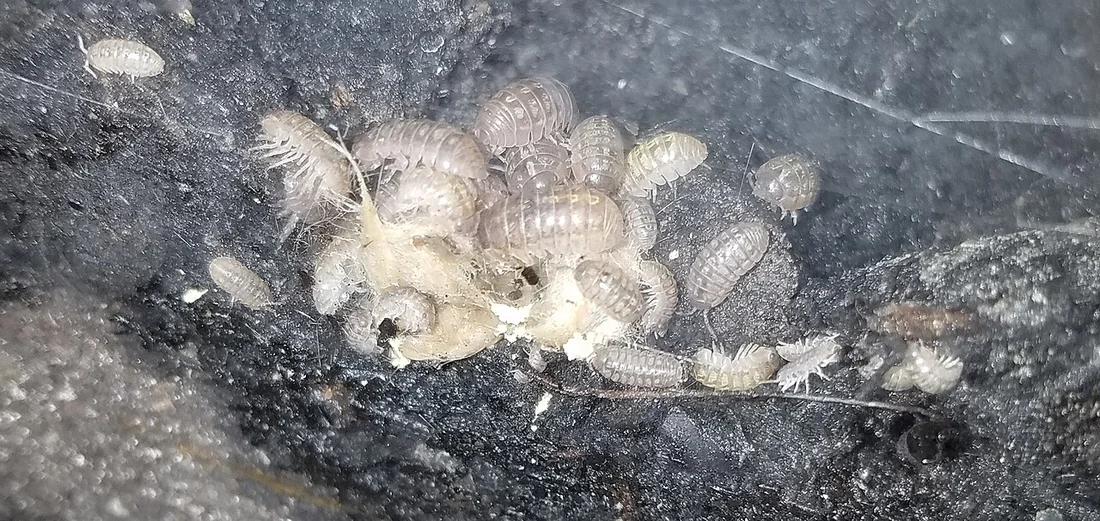
- Leaf Litter + Gentle Microfauna: Stick to springtails plus small gentle Dwarf White (Trichorhina tomentosa) or Dwarf Purple isopods. Skip large, protein-driven Porcellio laevis (“Dairy Cow” isopods), which can nibble resting geckos or shedding feet at night.