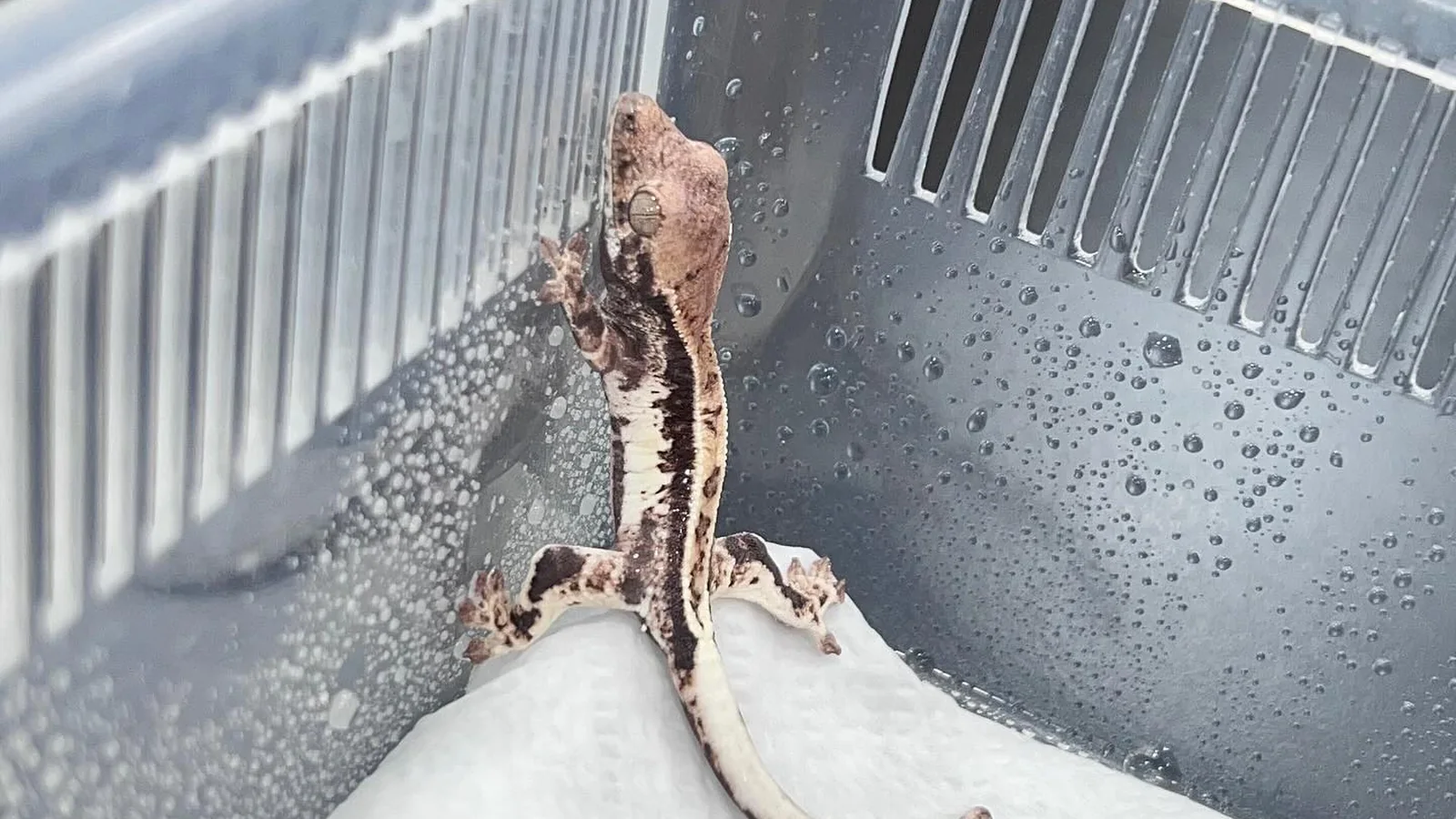
Beginners often swing to opposite extremes when it comes to hydration: either spraying four times a day until the floor turns into a swamp, or skipping a water dish altogether because “crested geckos only lick droplets off glass.”
An enclosure that stays fresh, crisp, and safe relies on delivering drinking droplets at dusk, keeping a clean backup dish up high, and letting airflow dry the interior every afternoon.
Why Both Misting Droplets and a Water Dish Matter
For an arboreal rainforest gecko, evening misting serves as the primary hydration cue rather than a tool to peg a gauge all day:
- Dusk Fine Misting: Mist broad leaves, cork bark, and walls once around lights-out so beads of fresh water hang where the waking gecko walks. This raises evening humidity to 75%–85% while the animal explores and sheds.
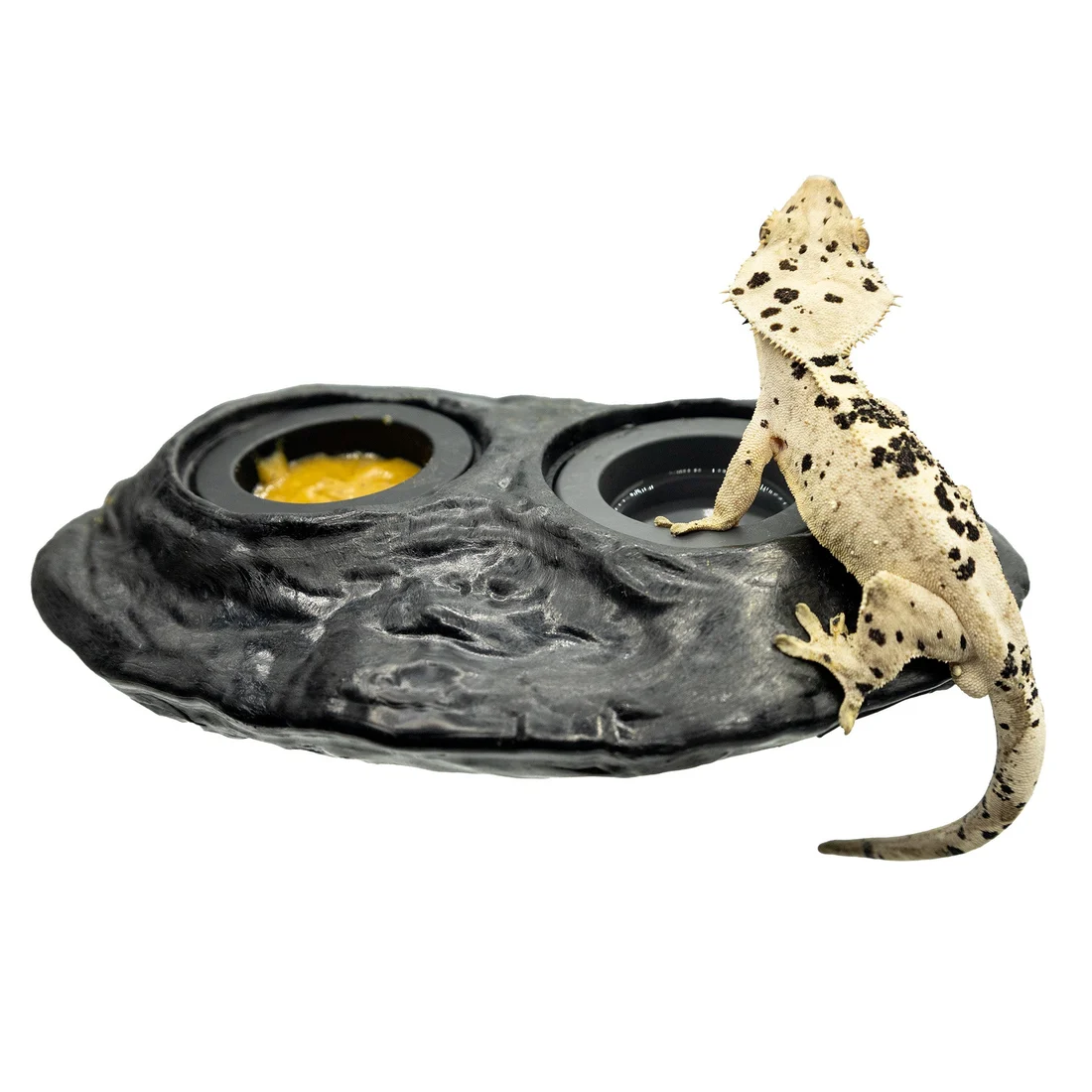
- Elevated Shallow Water Dish: Keep a shallow cup filled 1 to 1.5 cm (about 0.5 in) deep inside the elevated feeding ledge. If air-conditioning dries mist droplets earlier than usual or you arrive home late, your gecko always has safe standing water at canopy height.
Use small removable dishes and scrub away slippery bacterial biofilm every 1 to 2 days before refilling.
Best Water Choices and Why Ultrasonic Foggers Hurt
- Water for Misting: Reverse osmosis (RO) or distilled water prevents chalky white hard-water spots from coating leaves and glass over months of spraying. Filtered, dechlorinated water also works cleanly.
- Water for Drinking Cups: Offer dechlorinated filtered tap water, spring water, or clean RO water. Avoid straight untreated tap water carrying chlorine or chloramines, which irritate delicate oral and throat membranes.
- Skip Ultrasonic Foggers: Unlike crisp mist droplets from a clean pump sprayer or automated misting nozzle, ultrasonic foggers flood the air with cold micro-aerosols that saturate lungs and easily carry bacteria straight from stagnant reservoirs into the respiratory tract.
Why Daytime Dry-Out Stops Mold and Odor
Mold blooms and sour odors rarely come from a single normal misting session. They stem from stagnant wet air combined with trapped food or waste:
| Problem Sign | Root Cause | Practical Fix |
|---|---|---|
| Paper towels or floor still soaked 24 hours later | Heavy over-spraying or sealed screen tops choking airflow | Spray foliage lightly instead of flooding walls; uncover mesh ventilation so midday humidity drops cleanly to 40%–65% |
| Fuzzy white or green mold on bark undersides | Damp wood wedged in unventilated dark corners or splattered with CGD | Pull bark out, scrub with a stiff brush, rinse, and bake plain cork/hardwood at 100°C (212°F) for 30 minutes before returning fully dried |
| Tiny yellow-white dots or small mushrooms in soil | Benign saprophytic soil fungus thriving in damp rich substrate | Spot-scoop surface blooms, water soil less directly, boost air exchange, and seed springtails in bioactive builds |
| Sour, fermented, or ammonia smell on opening the door | Spoiled leftover CGD, slimy water dish, or hidden feces in leaf axils | Remove soiled paper/substrate and uneaten food right away, wipe surfaces, and air out until completely odor-free |
Allowing ambient humidity to dip into 40%–65% during daylight lets cork undersides and bark hollows dry cleanly between evening mistings.
Cleaning Routine and Disinfectant Limits
Separate daily tidying from deep sanitation:
- Daily Spot-Clean: Pick out fresh feces and urates, wash old CGD cups, check the water dish, and swap any damp or soiled paper towels.
- Weekly Glass & Perch Wipe-Down: Wipe dried fruit splatters and glass streaks with clean water and a soft cloth.
- Deep Disinfection & Parasite Limits: Smooth glass, resin ledges, and plastic plants clean safely with diluted reptile-safe disinfectants (such as properly diluted F10SC or 3% hydrogen peroxide) followed by rinsing and thorough air-drying until scent-free.
- Know What Standard Disinfectants Miss: F10SC and isopropyl alcohol kill common bacteria, but neither destroys Cryptosporidium nor coccidia oocysts. If an enclosure ever housed a parasite-positive gecko, discard porous cork bark and wood completely and treat glass with high-temperature steam or veterinary-grade oxidative protocols.
If opening the tank door smells cleanly of damp leaves or neutral air—never sour, stale, or stagnant—your misting volume and airflow are right on target.