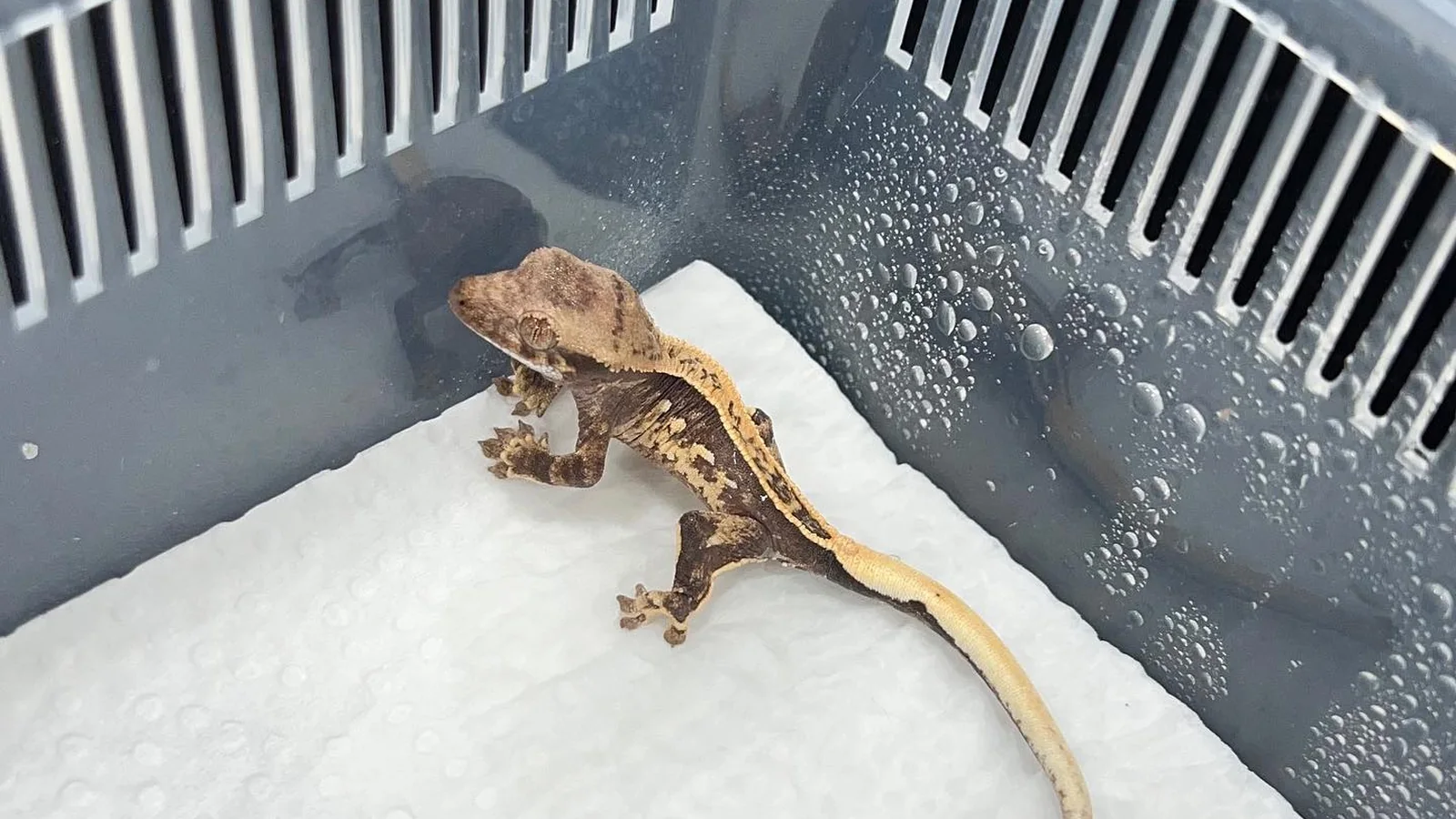
Once keeper confidence clicks with a first crested gecko, adding a second or third morph quickly tempts almost everyone. Two mistakes strike right here: cohabiting females or juveniles “for company,” or unboxing a newcomer beside established animals while sharing feeding tongs, mist nozzles, and unwashed hands.
Whenever two or more reptiles share a roof, lifelong single-gecko housing and strict quarantine (30–60 days baseline, extended to 60–90 days in multi-gecko rooms or prior to bioactive transfer) protect the health of every animal you own.
Rule #1: Zero Cohabitation
Ignore outdated guides recommending “one male with two females year-round.” Correlophus ciliatus stays strictly solitary outside brief breeding windows. Sharing glass guarantees four outcomes:
- Chronic Dominance Beneath “Cuddling”: Two geckos squeezed inside one cork round are competing over the single prime microclimate hide—never comforting each other. Subordinates endure high corticosterone stress and slow growth.
- Food Cup Monopolization: Dominant geckos guard ledges after dark while quieter cagemates starve silently.
- Bite Scars & Lost Tails: Any twitched tail tip or toe pad draws predatory feeding strikes at night.
- Premature Egg-Binding & Exhaustion: Mixed pairs breed before females reach true skeletal maturity (18–24 months and lean 40+ g), triggering fatal dystocia, while lifelong pairing wears down even full-grown females.
5-Step Quarantine Standard for New Arrivals
Shipping jolts frequently reactivate dormant coccidia, flagellates, pinworms, respiratory bacteria, or Cryptosporidium:
| Quarantine Step | Mandatory Execution | What Breaks Isolation | Disease Prevented |
|---|---|---|---|
| 1. Separate Room / Airflow | Keep the quarantine tub in a different room (or far corner off shared ceiling/rack airflow) | Stacking the new box right above or touching existing enclosures | Halts airborne mist droplets, crawling mites, and splash cross-contamination |
| 2. White Paper-Towel Simplicity | Line floors with unbleached paper towels, smooth disposable cups, and quick-wash decor | Putting brand-new arrivals directly into lush soil bioactive tanks | Keeps every stool visible and avoids tossing $150 of plants and soil if treatment is needed |
| 3. Dedicated Gear Only | Buy separate cheap tongs, cleaning sponges, and mist bottles; never touch tank rims with sprayer nozzles | Offering a bug dropped by the new gecko directly into an established pet’s tank | Eliminates fomite transmission—responsible for most household spread |
| 4. Clean-to-Quarantine Order | Feed, mist, and tidy established healthy geckos FIRST; tend quarantine LAST | Handling quarantine first, rinsing fingers quickly, then touching healthy pets | Ensures unknown pathogens flow out of routine chores—never backward |
| 5. Graduation Standards | Complete 30–60 days (60–90 days for multi-gecko collections or bioactive moves) showing steady weights on Pangea/Repashy, clean stools, and negative under-24-hour chilled fecal microscopy (plus Cryptosporidium PCR on unfamiliar imports) | Ending isolation in Week 1 because it took one CGD lick | Parasites shed intermittently; full observation catches false-negative windows |
Wait until quarantine passes before upgrading a new arrival from easy-to-inspect paper towels into deep layered bioactive soil.
What Disinfectants Do—and Don’t—Kill
Tag every multi-gecko bin with ID, hatch date, and biweekly weight, and always clean established tanks before quarantine tubs.
Know your biosecurity limits: 75% alcohol hand sanitizers do NOT kill coccidia or Cryptosporidium oocysts. Scrub hands thoroughly with soap and warm water between tanks. Routine hard glass and cup disinfection works well with veterinary F10SC, yet persistent coccidia and Cryptosporidium oocysts even shrug off standard F10SC/bleach—requiring tossing porous cork completely and sanitizing heat-safe glass strictly via steam heat, validated high-strength hydrogen peroxide (H2O2), or ventilated ammonia under exotic vet direction.