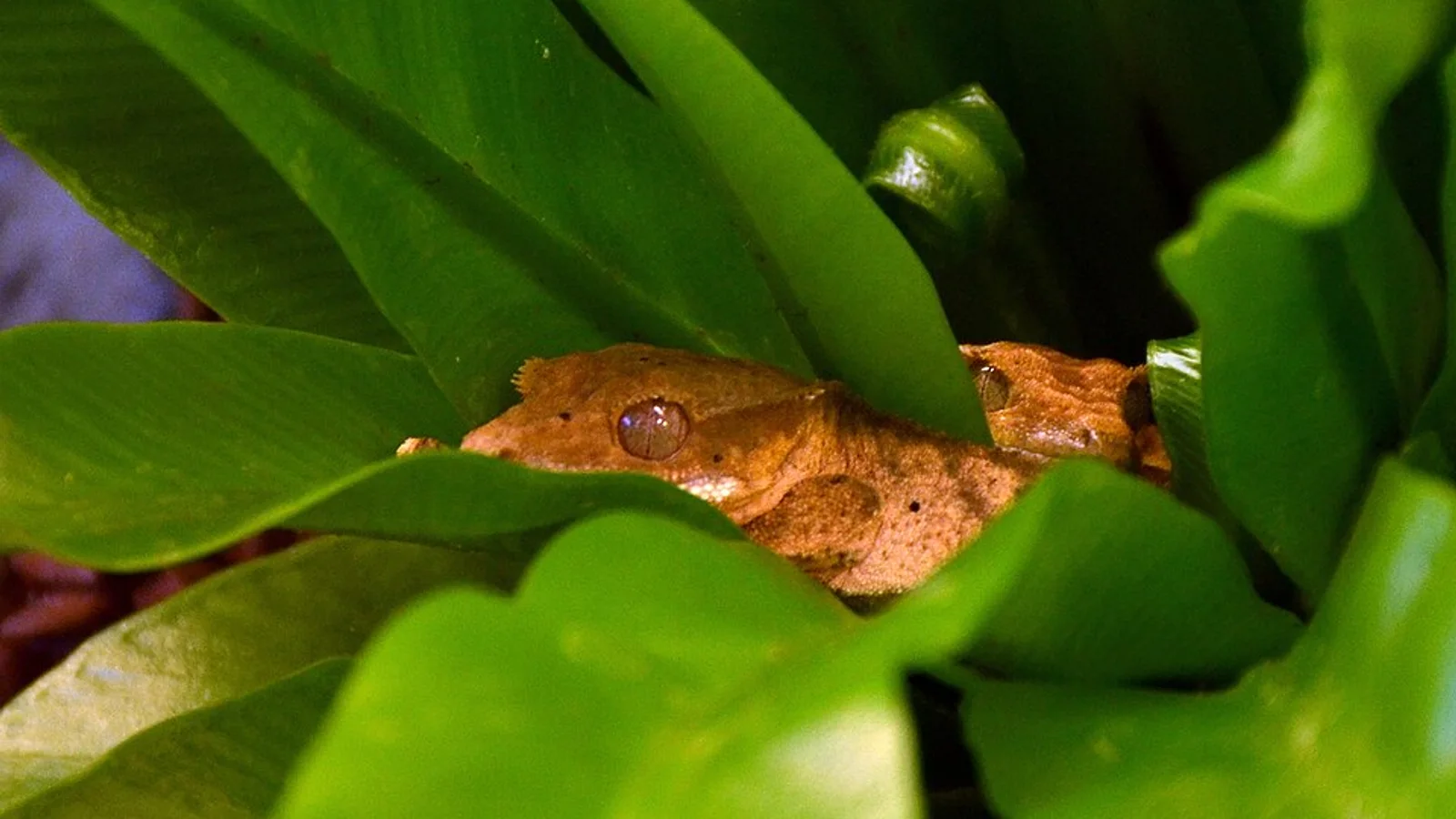
Many new keepers treat a terrarium like a uniform box: glue one plastic dial gauge in the middle of the glass, glance at 25°C and 75%, and call it done. Yet in the vertical rainforest canopy of New Caledonia, Correlophus ciliatus rarely sits inside one static climate. It moves continuously between breezy upper branches and cool shaded bark hollows to balance body heat, moisture, and filtered light.
Avoiding a stuffy, overheating cage depends on building vertical gradients, daily wet-to-dry cycles, and clean cross-ventilation.
Three-Tier Microclimate Inside Vertical Enclosures
Inside a structured adult enclosure (30×30×45 cm mainstream or 45×45×60 cm upgrade), conditions taper softly from top to bottom. (If keeping a tiny hatchling in a compact 20×20×30 cm grow-out box, height is shallow and heat builds rapidly—skip overhead heating lamps unless the entire room sits below 20°C and keep ventilation generous.)
| Canopy Layer | Daytime Temp | Nighttime Drop | Midday Dry-Out Target | Daytime Light & Shade | Primary Behavior |
|---|---|---|---|---|---|
| Upper Canopy (15–20 cm below screen) | 24–27°C (75–80°F) | 19–21°C (66–70°F) | 40%–55% | Soft daytime LED / dappled leaf shade (UVB optional) | Rests tucked under broad foliage with clear daytime cues; evening high patrols |
| Mid-Level Branches & Cork Tubes | 22–25°C (72–77°F) | 18.5–20.5°C (65–69°F) | 45%–65% | Diffused filtered ambient light | Deep daytime sleep inside bark hollows; elevated ledge eating and drinking at night |
| Lower Shaded Floor | 20–23°C (68–73°F) | 18–19.5°C (64–67°F) | 55%–75% | Deep shaded retreat | Seeking extra dampness during shed cycles or cooling off on warm afternoons |
Temperature Boundaries and Honest Gauges
- Respect Heat Without Over-Panicking: Comfortable daytime activity sits cleanly across 20–27°C (68–80°F). Brief mild dips toward 28°C rarely cause sudden crisis as older alarmist posts suggest—real danger builds during prolonged stagnant rooms holding 29–30°C+ (84–86°F+) with poor airflow.
- Embrace Safe Night Drops: Cooling down to 18–21°C (64–70°F) overnight encourages strong metabolism and feeding response. Add thermostat-controlled top heating only when indoor rooms fall below 20°C (68°F) by day or 18°C (64°F) overnight.
- Swap Stick-On Analog Dials for Digital Probes: Cheap peel-and-stick analog gauges drift wildly and risk pulling loose onto delicate gecko toe pads. Clip corded digital thermo-hygrometer probes high near the canopy and down near lower hides.
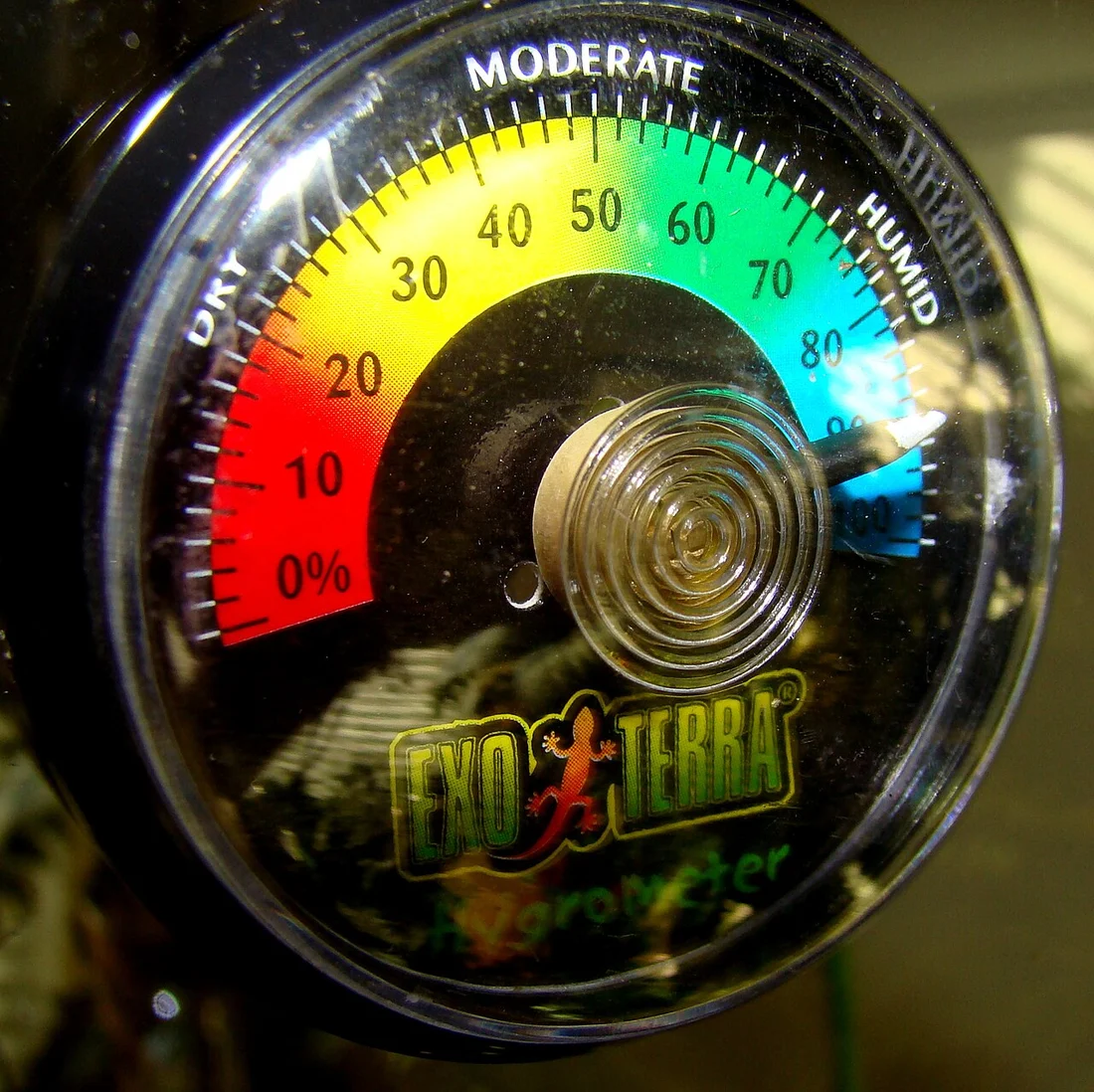
The Daily Humidity Wave: Broad 40%–85% Wet–Dry Rhythm
Older care sheets telling keepers to “lock humidity at 75%–80% round the clock” pushed beginners to cover mesh lids with plastic wrap—creating stagnant bacterial incubators that trigger respiratory and skin infections. At the same time, keepers do not need to panic over hitting an ultra-narrow daytime fraction—a healthy enclosure rides a broad 40%–85% wet–dry cycle:
- Evening Spike (
75%–85%): Mist leaves and cork lightly just around dusk so fresh droplets form for drinking and shedding. - Daytime Dry-Out (
40%–65%): Front lower vents and top mesh work together like a gentle chimney, drying glass and foliage surfaces cleanly within several hours so midday ambient humidity drops naturally anywhere into 40%–65%. Avoid running ultrasonic foggers in small cages; cold suspended fog saturates airways without giving healthy leaf-droplet drinking cues.
Aim for an undulating cycle rather than a locked gauge: peak at 75%–85% after dusk misting, then let natural airflow dry daytime levels comfortably to 40%–65%.
Photoperiod: Clear Days, Pitch-Dark Nights
Nocturnal does not mean living in perpetual closet dimness. Clear visual dawn and dusk stabilize hormone cycles and appetite:
- Automate 10–12 Hours of Daytime Light: Put a simple white/plant daytime LED bar on an outlet timer for clear circadian cues and pitch-dark nights (crested geckos do not require UVB on D3-fortified CGD; low UVB remains an optional upgrade).
- Keep Nights Completely Dark: Never use red, blue, or purple “night viewing bulbs.” Crested geckos perceive those wavelengths easily, and glowing overnight lamps push cautious animals back into hiding.