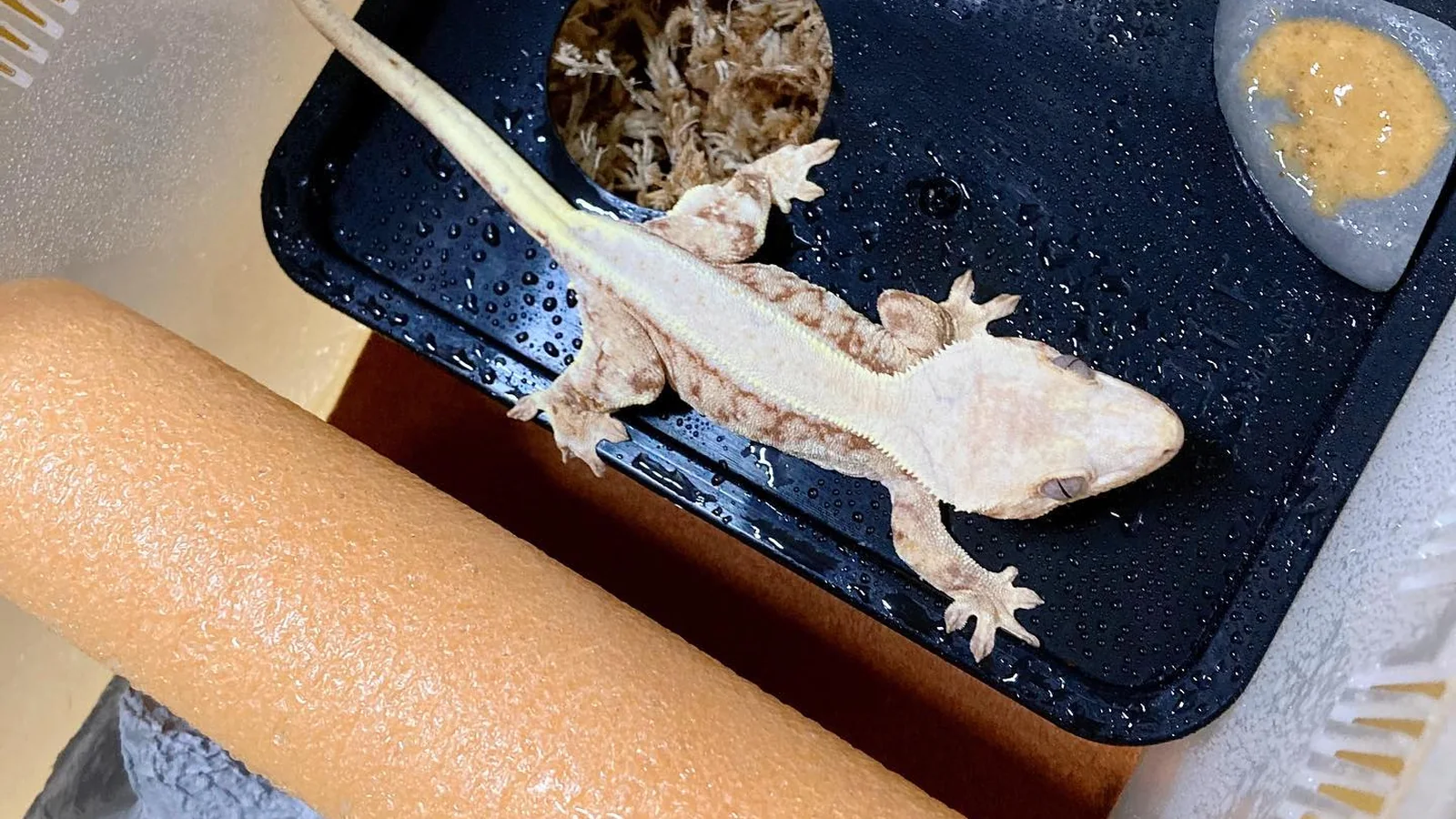
“My crested gecko hasn’t touched its food cup in four days—should I syringe-feed it right away?” Keepers ask this almost daily.
Pause first and set the syringe aside. Short pauses lasting several days—or even a full week or two in fit subadults and adults—are most often normal responses to a move, digesting a freshly eaten shed, subtle seasonal cooling, or breeding focus. Panicking and grabbing a settled gecko nightly to smear paste across its nose often converts a brief adjustment into genuine stress fasting.
Run through this step-by-step triage table before assuming medical emergency.
7 Frequent Reasons Appetite Pauses (Check in Order)
| Likely Reason | Clues You Spot | Underlying Biology | Smart Next Step |
|---|---|---|---|
| 1. Relocation / Tank Upgrade (Under 14 Days) | Newly arrived or rehoused under two weeks ago; hides tight all day | Unfamiliar odors and sightlines elevate alertness above eating | Go completely hands-off; offer a thin smear of the breeder’s previous Pangea or Repashy CGD near main cover; most resume in 5–12 days |
| 2. Chilled Temps (< 18–20°C) or Sustained Heat (≥ 29–30°C) | Sluggish & chilled in winter, or splayed near damp substrate during prolonged afternoon heat | Cold shuts down digestive enzymes so food won’t rot inside; sustained stagnant warmth sparks thermal stress | Audit MIN/MAX digital sensors; aim for a comfortable 20–26°C range (short ventilated dips into 27–28°C are tolerated, avoid persistent 29–30°C+) and 18–21°C nights |
| 3. Eating Its Own Shed | Appeared dull/chalky yesterday, looks bright today, skips dinner tonight | Crested geckos pull off and swallow their entire shed skin overnight—leaving a belly full of protein for 48–72 hours | Totally normal; replace fresh CGD on regular rotation two nights later |
| 4. Hard-to-Reach Ledge or Spoiled Paste | Active at night everywhere except the cup, or sniffs and walks off | Cup clings to open bare glass away from branches, or paste dried hard / soured past 24h | Move ledge right beside a firm cork perch under canopy leaves; whip fresh Pangea or Repashy CGD to ketchup texture |
| 5. Holdout for Live Insects | Lunges eagerly at crickets or worms while boycotting complete CGD | Heavy bug schedules (especially fatty worm treats, or constant crickets) reinforce selective predation | Withhold all live insects for 2–4 weeks, offering only balanced CGD until reliable licking returns |
| 6. Breeding Hormones or Gravid Belly | Restless vocal adult male pacing glass; or rounded adult female test-digging floor corners | Seasonal drive dampens male feeding; two shelled eggs squeeze gastric volume in females | Keep housing peaceful; verify moist lay box access—post-lay appetite surges sharply within 24–48 hours |
| 7. Clinical Illness (Parasites, RI, or MBD) | Weight loss exceeding 10% in 2–4 weeks, sunken eyes, watery foul diarrhea, nasal bubbles, clicking breaths, soft jaw | Heavy coccidia/flagellates, blocked nasal scent detection, or painful MBD bone loss | Skip home DIY fixes—bring a chilled fresh fecal sample collected under 24 hours to an exotic vet |
Often They Ate—Your Cup Was Just Too Full
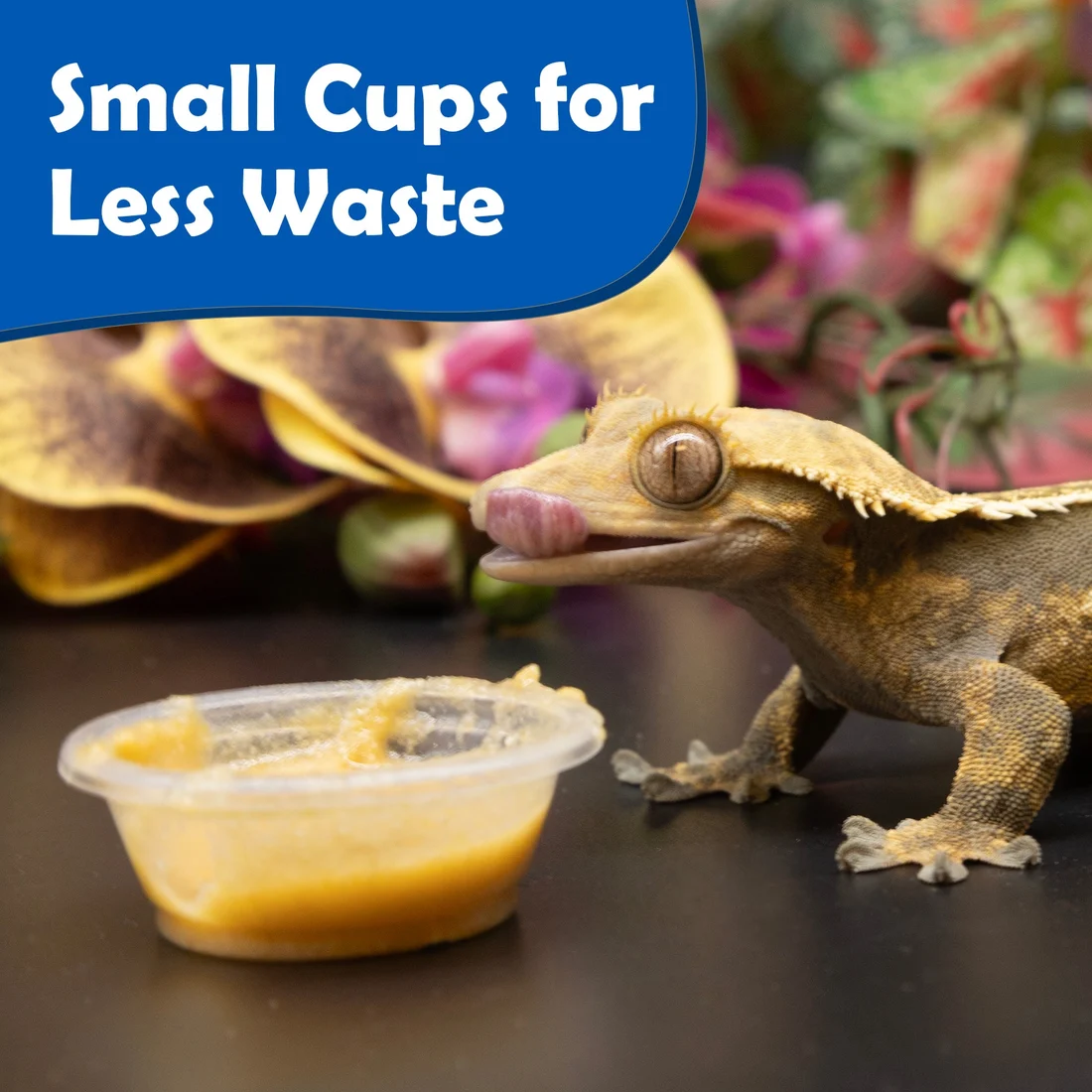
Juveniles under 10 grams need just three tiny licks—barely half a pea—per sitting. Pour half a centimeter of paste into a cup and surface tension levels those tiny licks right over before dawn.
Verify in two nights with zero guessing:
- 2 mm Skim Layer Test: Paint only a wafer-thin 2 mm film across the cup bottom so even two small licks expose clear plastic rings.
- Paper Towel Output Proof: Switch floor lining to white paper towels—consistent formed brown pellets plus white urates every 1–3 days guarantee secret nighttime meals.
Why Smearing Paste on the Snout and Force-Feeding Backfires
Never pry open jaws or wipe CGD over the snout unless a vet demonstrates critical-care tube feeding after diagnosis:
- Aspiration Risk: The tracheal opening (glottis) sits directly behind the tongue base; squirming forces paste into airways and lungs.
- Nostril Crusting: Dried fruit mix seals tiny nostrils overnight, worsening panic and dehydration.
- Jaw Fractures & Food Aversion: Thin mandibular bones crack easily against pry tools, while restraint binds CGD odor permanently to fear.