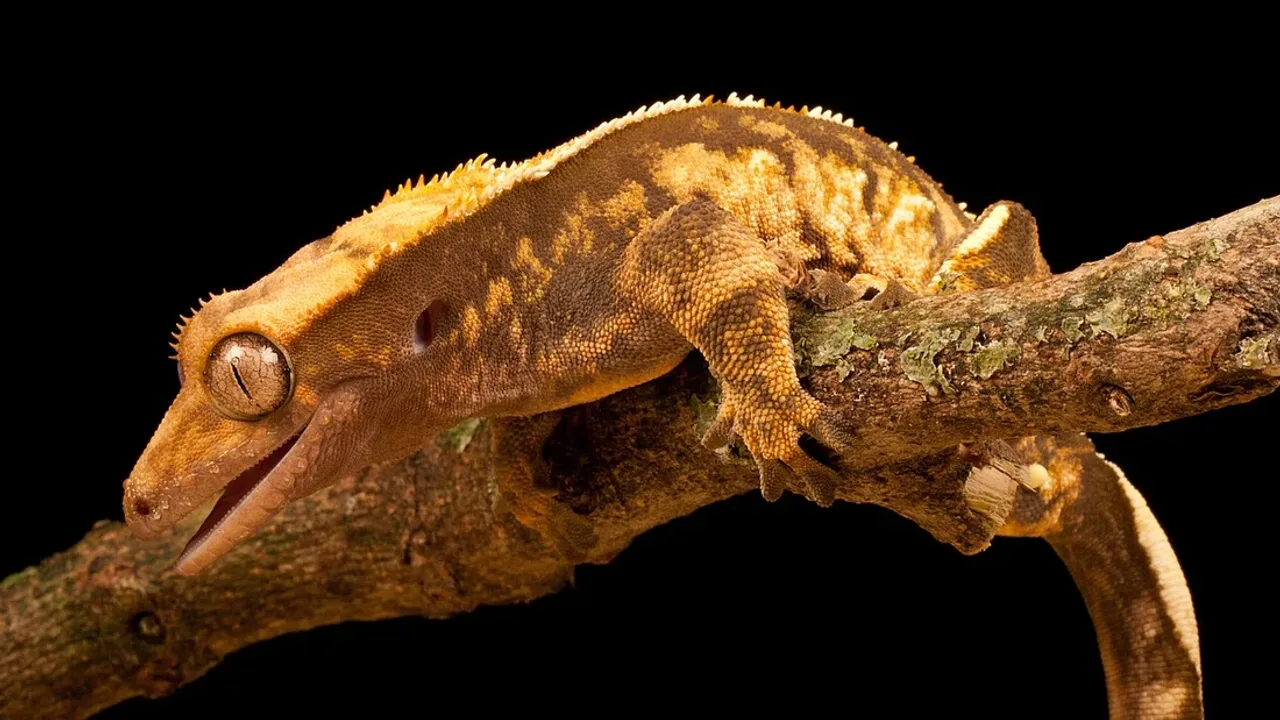
Few moments rattle new keepers faster than hearing a sudden night thump, flipping on a flashlight, and spotting a severed gecko tail flipping wildly across the tank floor while a wide-eyed, newly tailless “frog-butt” hides in the leaves above.
If this happens (caudal autotomy), relax first: clean tail loss is rarely life-threatening. Over 70%–80% of wild adult crested geckos in New Caledonia lack tails. Kept clean and soil-free on paper towels for two weeks, a healed “frog-butt” jumps, feeds, breeds cleanly, and lives the same 15–20+ year lifespan as a tailed gecko.
Why Geckos Drop Tails So Easily—and Never Regrow Them
- Built-In Fracture Planes and Muscular Shut-Off Valves: Tail vertebrae hold pre-scored cartilage cleavage planes surrounded by arterial sphincters. Under sudden shock, rough handling, or cagemate biting, tail muscles snap cleanly along a fracture plane and clamp arteries shut within seconds, leaving little more than a pinpoint drop of blood while the detached tail writhes for 5–10 minutes as a predator decoy.
- Zero Regeneration Evolution: Unlike leopard or gargoyle geckos, Correlophus ciliatus abandoned energetically expensive cartilage regeneration altogether. Skin quickly seals flat over the hip stub and jumping balance recalibrates naturally.
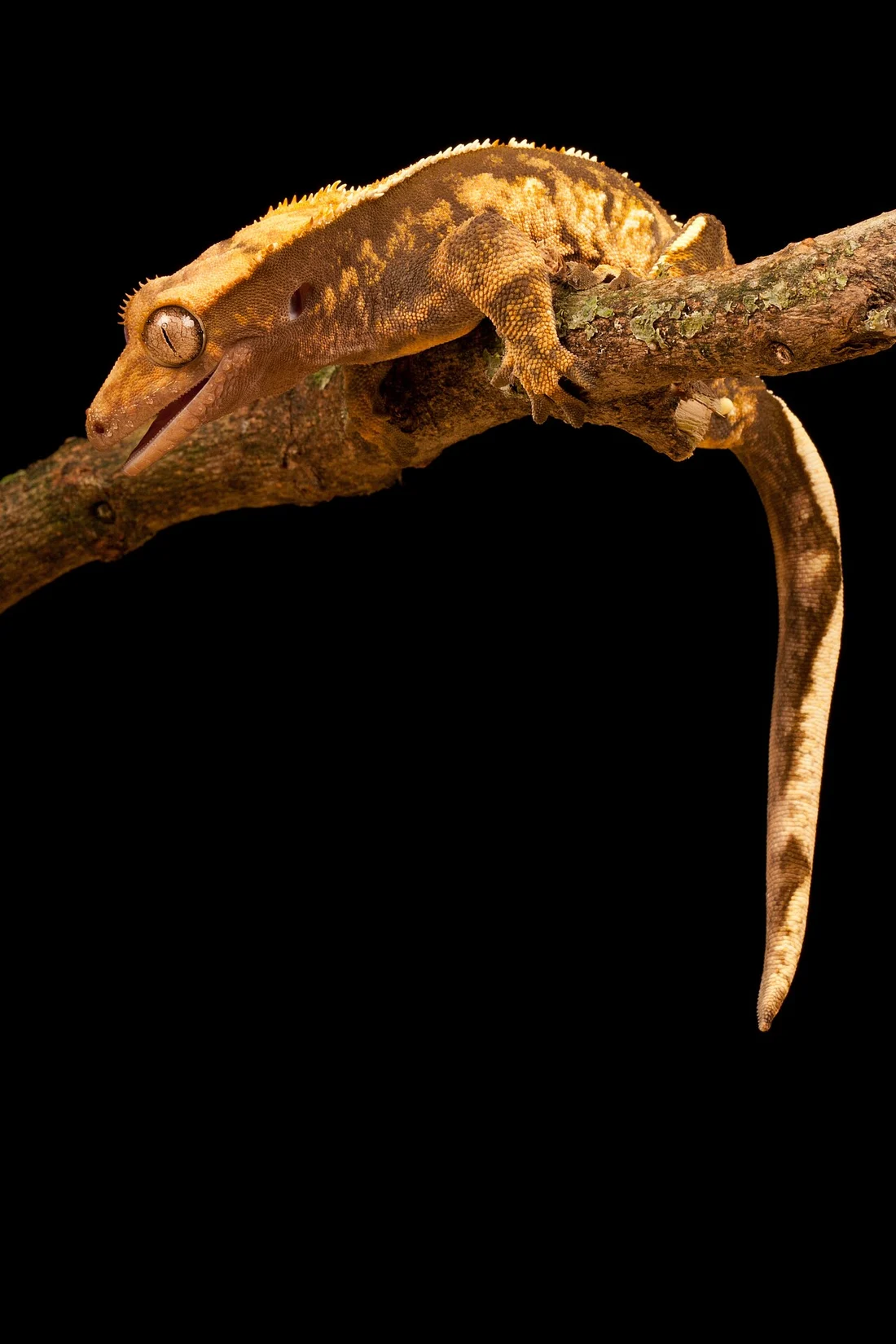
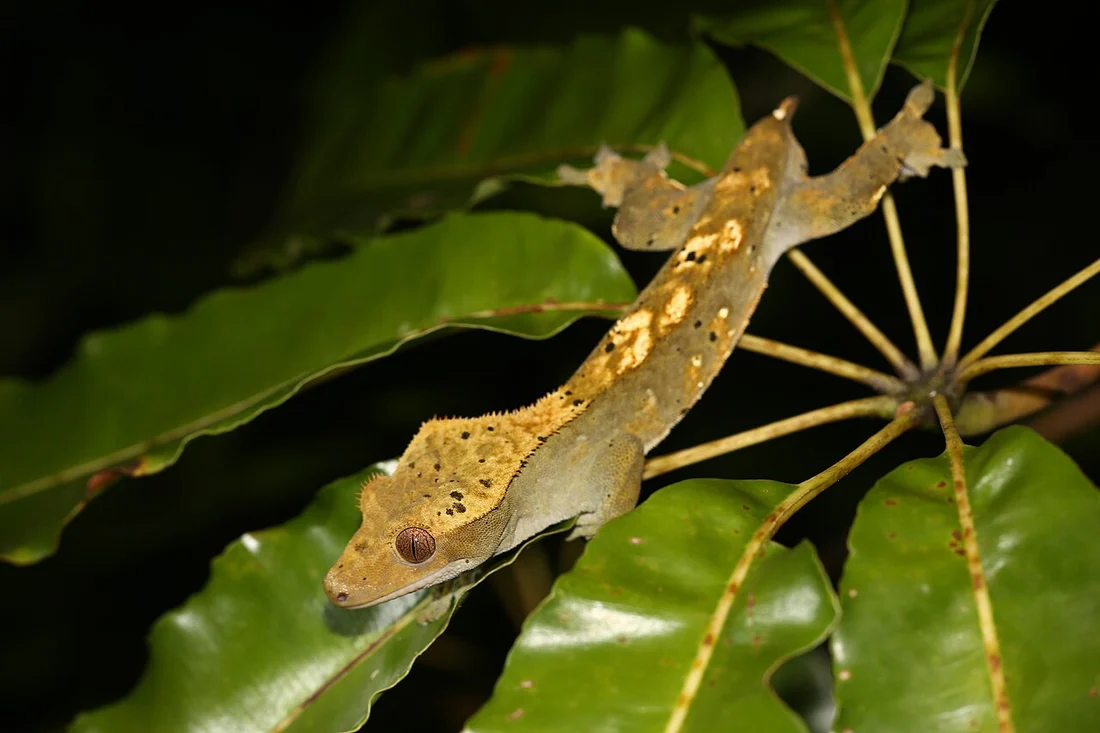
Intact Prehensile Tail vs. Healed Frog-Butt Stump
Unlike leopard or gargoyle geckos, crested geckos never regrow a dropped tail—yet once healed cleanly on paper towel, tailless geckos climb, jump, and thrive identically.
The 14-Day Sterile Paper-Towel Aftercare Plan
Never pack a fresh tail stump with cornstarch, flour, human styptic powder, thick greasy ointments, alcohol, or bandages. Air and cleanliness heal it fastest:
| Recovery Stage | Action to Take | Enclosure Adjustments | Healthy Progress |
|---|---|---|---|
| First 30 Minutes | Gently pick out the twitching detached tail with tongs (its motion scares the gecko); verify active bleeding has stopped; leave the gecko undisturbed | Move at once onto dry unbleached paper towels if the tank holds coco coir or bioactive soil—damp soil sticks to fresh flesh and breeds sepsis | Clean, pale-pink floral rosette at the tail base with minimal blood |
| Days 1–3 (Air Scabbing Window) | Zero handling; when misting leaves at dusk, aim mist away from the gecko’s rump so the wound forms a clean dry crust | Leave fresh Pangea / Repashy CGD and a shallow water cup (skipping food the first night after shock is common) | Within 24–48 hours the raw rosette tightens under a smooth thin tan/dark scab |
| Days 4–14 (Epithelial Seal) | Replace soiled paper towels every 1–2 days; leave the intact dry scab alone (only flush with sterile saline + weak 1:10 povidone-iodine dab if visible dirt touched it early on) | Resume normal CGD and Repashy SuperCal MeD-dusted crickets while your gecko adjusts its balance | Surrounding scales pucker inward smoothly as the stump flattens |
| After 14–21 Days (Post-Shed) | On its next normal shed cycle, the thin scab drops cleanly away with the old skin | Return to naturalistic loose or bioactive substrate once the stub shows completely smooth sealed scales | Healthy permanent “frog-butt” with zero long-term limitations |
Track the Trigger & Watch for Ascending Tail Rot
After stabilizing the cage, trace why the drop occurred: was another gecko sharing the tank (house strictly solitary!), did glass doors slam nearby, or did startled handling brush the tail base?
Call an exotic veterinarian urgently for two complications:
- Swollen, Warm, or Pus-Oozing Stump: Redness spreading into the rump or foul creamy discharge signals wound infection (frequently from leftover soil contamination).
- Progressive Tail Necrosis (“Tail Rot” on an Intact Tail): If an intact tail tip shrivels hard and jet-black like a dead twig (often from tight stuck shed or pinching), and that blackened margin creeps closer to the body over days, ascending gangrene can enter the kidneys and pelvis. A vet can safely induce autotomy or surgically remove just above clean healthy tissue.