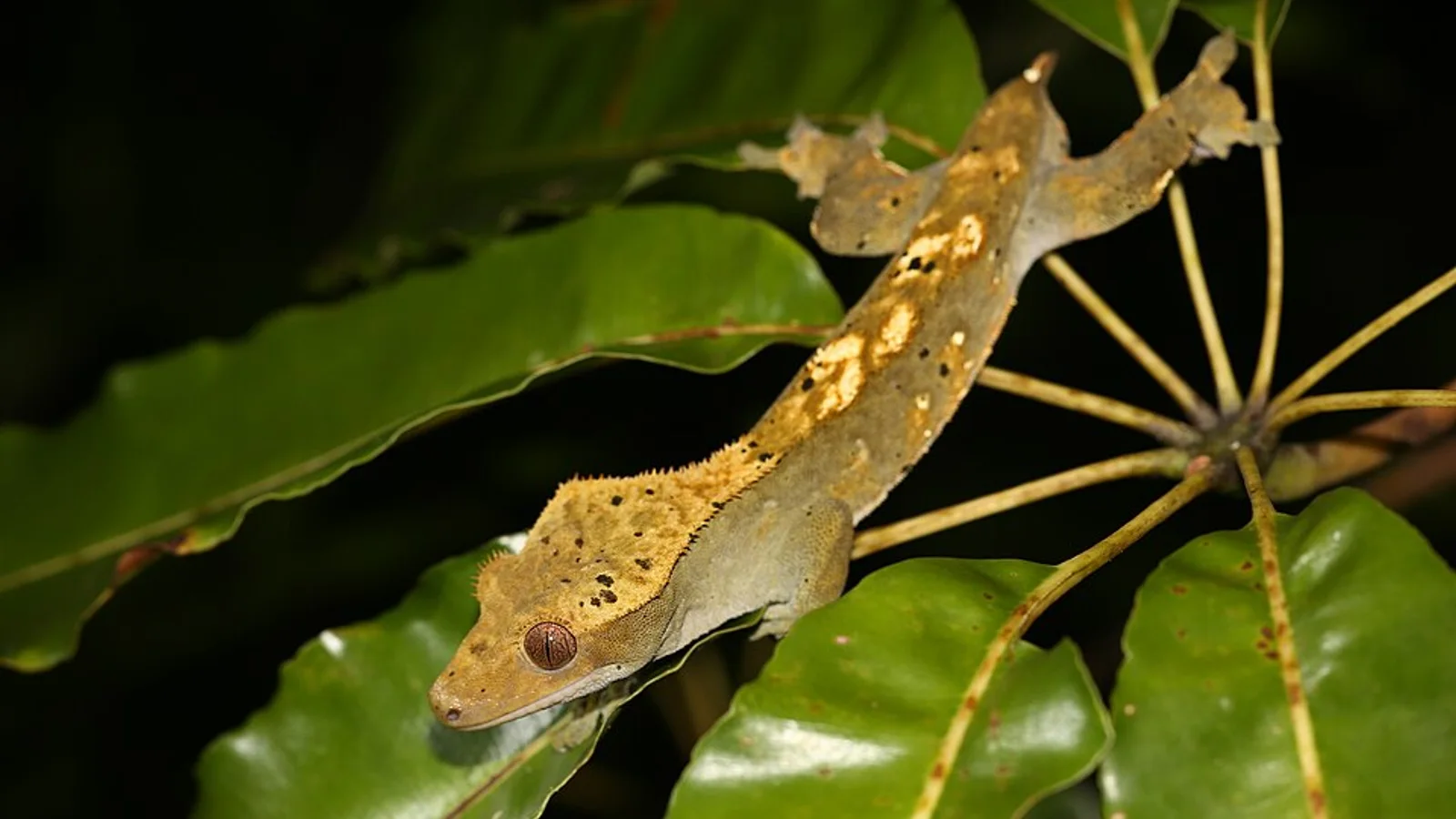
“Crested geckos are nocturnal and sleep all day, so they never need UVB.” For years, that slogan passed from keeper to keeper without challenge.
Modern reptile photobiology and field ecology have moved well past that shortcut. While Correlophus ciliatus feeds after dusk, wild individuals frequently sleep among outer canopy foliage where dappled daylight touches a leg, flank, or tail. Biologists call this cryptic basking (or shade basking).
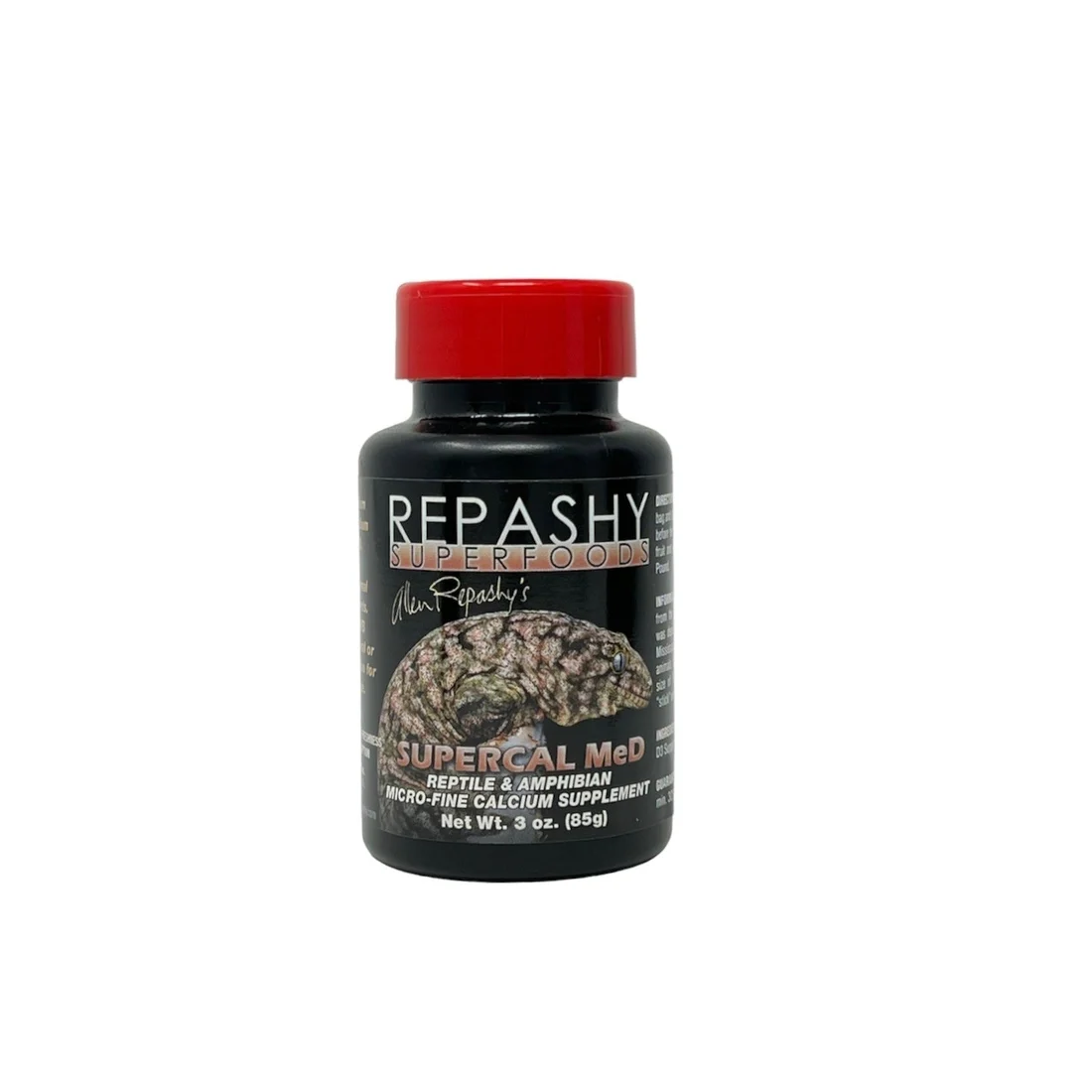
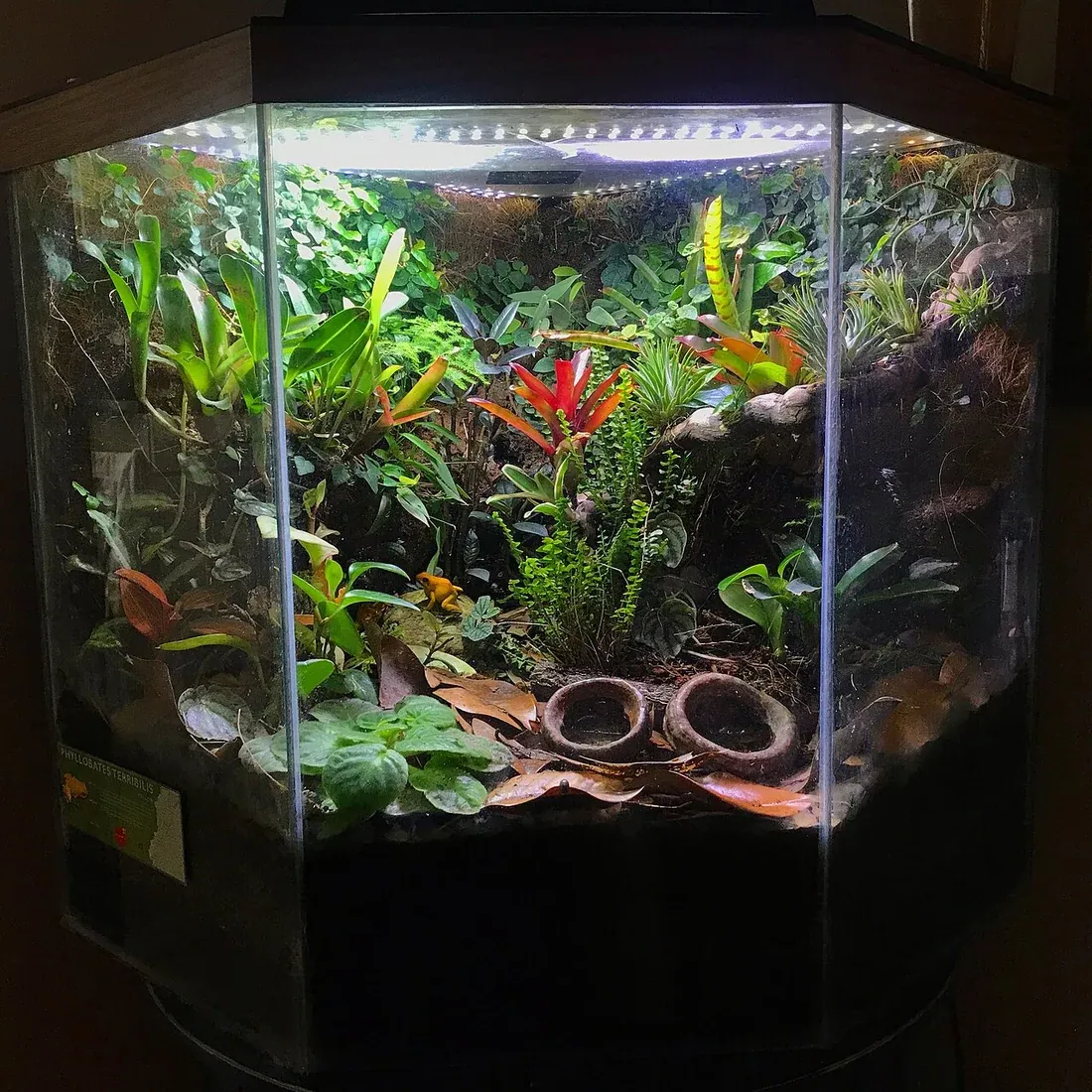
Because crested geckos thrive completely indoors on Pangea or Repashy D3-fortified complete diets (CGD) paired with Repashy SuperCal MeD bug dusting, UVB lighting is strictly optional—not a mandatory purchase. A regular timer-controlled daylight/plant LED bar covers daytime circadian cues cleanly for most keepers. Treat this guide purely as a safety manual for keepers who voluntarily choose to add gentle shade-dweller linear T5 lighting over larger 30×30×45 cm or 45×45×60 cm habitats.
If You Opt Into Optional Shade-Dweller UVB
- Built-In Safety Valve Against Overdose: Cutaneous vitamin D3 synthesis stops automatically once body stores reach capacity, converting excess precursors into harmless photoproducts—eliminating the hypercalcemia and organ calcification risks tied to heavy-handed oral D3 dosing.
- Bone Strength and Reproductive Resilience: Fast-growing juveniles and egg-producing adult females (who draw heavily on skeletal calcium to shell clutches) hold noticeably steadier calcium balance under mild UVB exposure.
- Sharper Day-Night Behavior: Full-spectrum daylight paired with low UVI clarifies dawn and dusk transitions, supporting deeper daytime rest and stronger evening foraging.
Target UVB Guidelines (Ferguson Zone 1)
Crested geckos belong in Ferguson Zone 1 (crepuscular shade dwellers). Safe illumination is defined by UV Index (UVI) at the perch, never wattage alone:
| Lighting Parameter | 2026 Safe Standard | Outdated / Unsafe Practice | Practical Notes |
|---|---|---|---|
| Target UVI Gradient | UVI 0.5–1.0 at the highest usable branch, dropping to 0.0 inside shaded hides | Desert strengths (UVI 2.0 or higher) or zero shaded retreats | Always combine UVB with 60%–80% dense leaves and hollow cork tubes so your gecko can choose total UV shade whenever it likes |
| Fixture & Bulb Style | Linear T5 HO fluorescent tube with reflector (e.g., Arcadia ShadeDweller 7% or Arboreal 2.4%) | Spiral compact coil UVB bulbs or 10.0 / 12% desert tubes | Compact coil bulbs beam narrow, scorching spikes that irritate lidless gecko corneas while casting poor broad coverage |
| Screen Attenuation & Distance | Set on top of metal mesh, leaving 15–25 cm (6–10 in) clearance down to the highest branch | Bare bulbs mounted inside the enclosure where geckos jump onto hot tubes | Standard wire screen blocks 30%–45% of UVB output; a 7% ShadeDweller above mesh generally reads 0.5–0.9 UVI at 15–20 cm below |
| Daily Schedule & Replacement | 10–12 hours per day on an outlet timer | Random manual switching or staying lit more than 14 hours | Replace quality T5 HO tubes every 10–12 months unless verified with a Solarmeter 6.5 |
Matching UVB with Complete Diets and Calcium Dusting
Keepers often ask whether running UVB alongside fortified crested gecko diet pushes D3 too high.
- Never Stir Extra Calcium or D3 into Complete CGD: Formulated staples (Pangea and Repashy) are engineered with balanced baseline calcium and vitamin D3. Mixing extra powders into CGD spoils palatability and skews carefully tested nutrient ratios.
- Adjust Your Live Insect Dusting Instead:
- With Linear T5 UVB Installed (
UVI 0.5–1.0): Dust primary feeder crickets at routine meals using plain calcium carbonate without D3, and offer a gentle reptile multivitamin (check label D3 content) roughly every 2 to 3 weeks. - Without UVB (Standard Indoor Baseline or Compact
20×20×30 cmGrow-Out Boxes): Dust live crickets withRepashy SuperCal MeD(medium D3) so dietary intake covers skeletal demand cleanly.
- With Linear T5 UVB Installed (
Dusting Choice: Standard Non-UVB vs. Optional Shaded UVB
Most homes run Pangea/Repashy CGD plus Repashy SuperCal MeD on crickets without UVB. Switch crickets to plain calcium only if adding an optional Zone 1 shade lamp over leafy cover.
Caution for Albino and Heavy Melanin-Reduced Morphs
Rare red-eyed Albino geckos and extremely pale individuals lack protective dermal and retinal pigment. Step down to a gentler 2.4% Arboreal T5 tube above mesh, aim for UVI 0.3–0.6 at upper branches, and drape extra overlapping broad leaves right beneath the fixture.