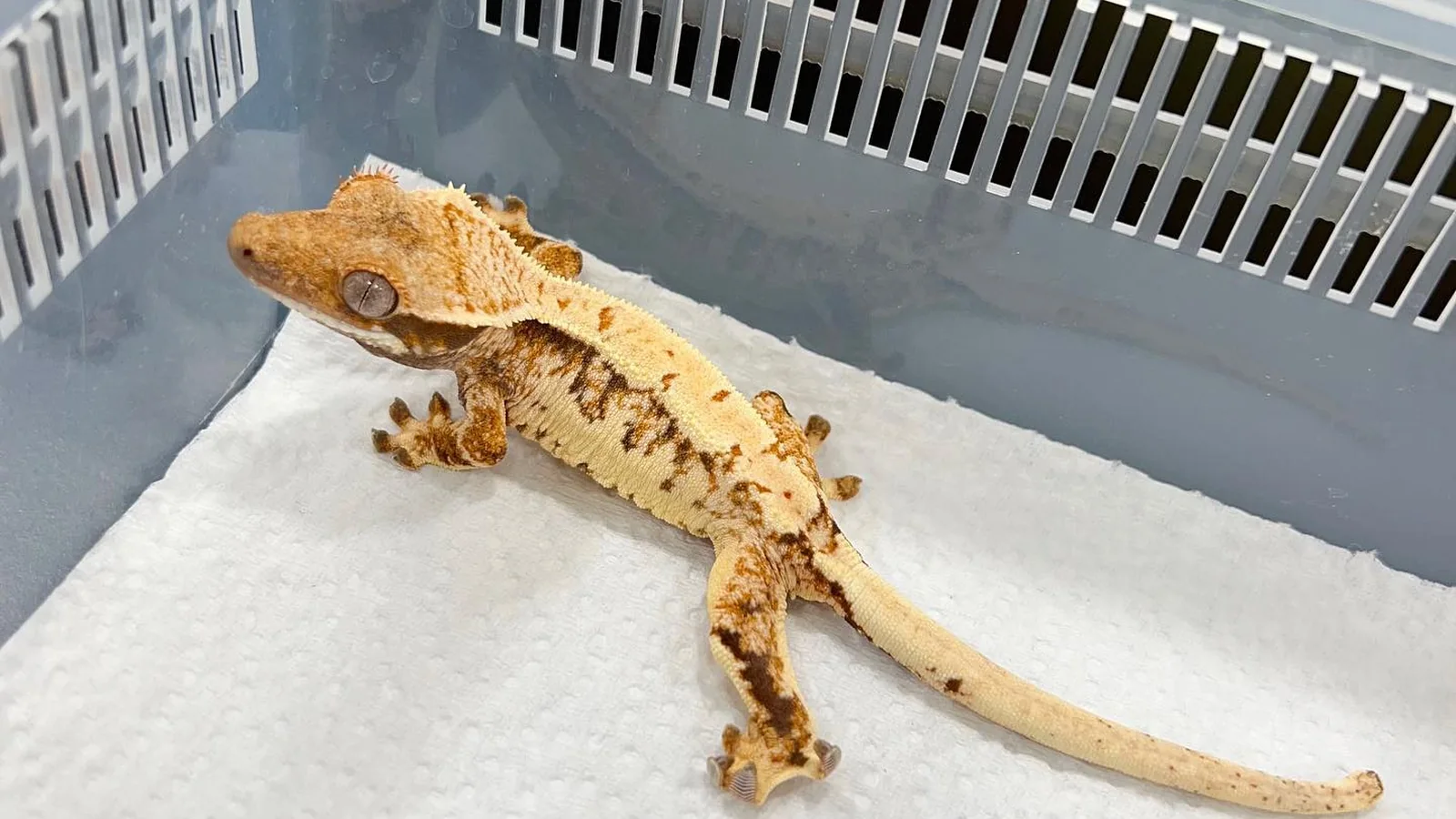
Early husbandry setbacks rarely happen because new owners ignore their pet—they happen because owners repeat dated forum habits or panic-change five parameters at once. Keepers flood enclosures trying to force 80% humidity nonstop, smear puree across nostrils to speed up eating, or spike complete Crested Gecko Diet with extra calcium until mineral ratios crash.
Dropping these six widespread traps saves far more money and stress than buying extra supplements ever will.
The Six Highest-Risk Beginner Mistakes and Modern Fixes
| Common Mistake | Why It Harmfully Snowballs | Updated Modern Practice |
|---|---|---|
| 1. Constant heavy misting—or spraying water to “cool” a hot tank | Zero daytime dry-out grows mold and scale rot; misting inside a 29–31°C (84–88°F) room builds a lethal wet sauna that triggers heatstroke faster | Keep a 40–85% wet/dry cycle: mist at dusk (75–85%) and let afternoon dry to 40–65%; drop heat with room AC and airflow, never extra misting |
| 2. Adding calcium/D3 into complete CGD, or feeding pure fruit mash | Pangea and Repashy CGD are mineral-balanced already; extra dusting skews Ca:P ratios and risks D3 toxicity, while mashed fruit brings MBD fast | Stick to Pangea or Repashy CGD mixed with water only; dust primary live crickets 1–2× weekly with Repashy SuperCal MeD (or plain calcium only if running optional UVB) |
| 3. Skipping paper-towel quarantine or housing two geckos “for company” | Loose coco substrate hides missing droppings and adds impaction risk for tiny hunters; cohabiting breeds silent bullying, bitten toes, tail loss, and premature egg strain | One gecko per enclosure, no exceptions; keep juveniles and all new arrivals (first 30–60 days) on unbleached paper towels |
| 4. Dabbing food on the snout, syringe-feeding, or handling in week one | Wiping paste onto nostrils blocks breathing and teaches geckos to dread hands, turning a brief transition fast into long food refusal | Offer a 2 mm thin layer of the breeder’s CGD high up on the wall and grant 1–2 undisturbed weeks |
| 5. Using bare shallow tubs, window sun exposure, or direct AC drafts | Exposed flat containers cause Floppy Tail Syndrome and insecurity; window sunlight turns glass into a 35°C+ greenhouse while AC vents strip moisture rapidly | Hatchlings 20×20×30 cm, adult everyday standard 30×30×45 cm (45×45×60 cm upgrade), 65%–80% leafy vertical clutter, shaded room placement |
| 6. Pulling dry stuck shed, giving “human-warm” baths, or changing five things at once | Dry peeling rips living epidermis and injures toes; water feeling warm to human hands (36°C+) dangerously overheats Correlophus ciliatus; changing five things hides real causes | Use a ventilated room-temp (20–26°C / 68–79°F) damp paper-towel sauna for 15 minutes plus a wet swab; troubleshoot one variable at a time |
Looking Closer at Three “Helpful” Habits That Backfire
1. Snout-Smearing Is Self-Cleaning, Not Voluntary Feeding
Short online clips frequently show owners painting puree across a gecko’s snout until its tongue flicks out. Crested geckos wipe their nostrils and spectacle lenses with their tongue strictly to keep breathing and vision clear—you are triggering an emergency cleanup reflex rather than building appetite. Dried paste eventually clogs tiny nostrils while teaching the animal to retreat every time fingers approach.
2. Heavy Misting During Tropical Heatwaves Creates a Sauna
When afternoon indoor heat lingers in the 29–30°C+ (84–86°F+) zone across tropical or uncooled summer rooms, heavy misting evaporates straight into stagnant glass air, driving humidity past 90%. At sustained high heat plus saturated air, respiratory distress and heat prostration strike abruptly. Always cool the room gently using AC, shade curtains, and safe top airflow outside the screen.
3. Dry-Peeling Stuck Shed Damages Living Tissue
Whenever white skin clings around a toe tip or tail end past 24 hours, keep tweezers out of reach. Place the gecko inside a small ventilated cup lined with room-temperature (20–26°C / 68–79°F) damp paper towels for 15–20 minutes until soft, then roll a moistened cotton swab gently toward the tip. Water that feels warm to your own skin is already too hot for a crestie.
Safe home remedy for stuck toe shed: a ventilated deli cup with room-temperature (20–26°C) damp paper towels for 15 minutes before gently rolling the loosened shed off.
Three-Point Weekend Gut Check
- Humidity dips cleanly into 40–65% every afternoon (within an overall 40–85% daily cycle) with zero musty or sour odor.
- Firm brown droppings with crisp white urates show up consistently on paper towels without hand-feeding.
- You own a 0.1 g digital gram scale and know your gecko’s exact latest weight.