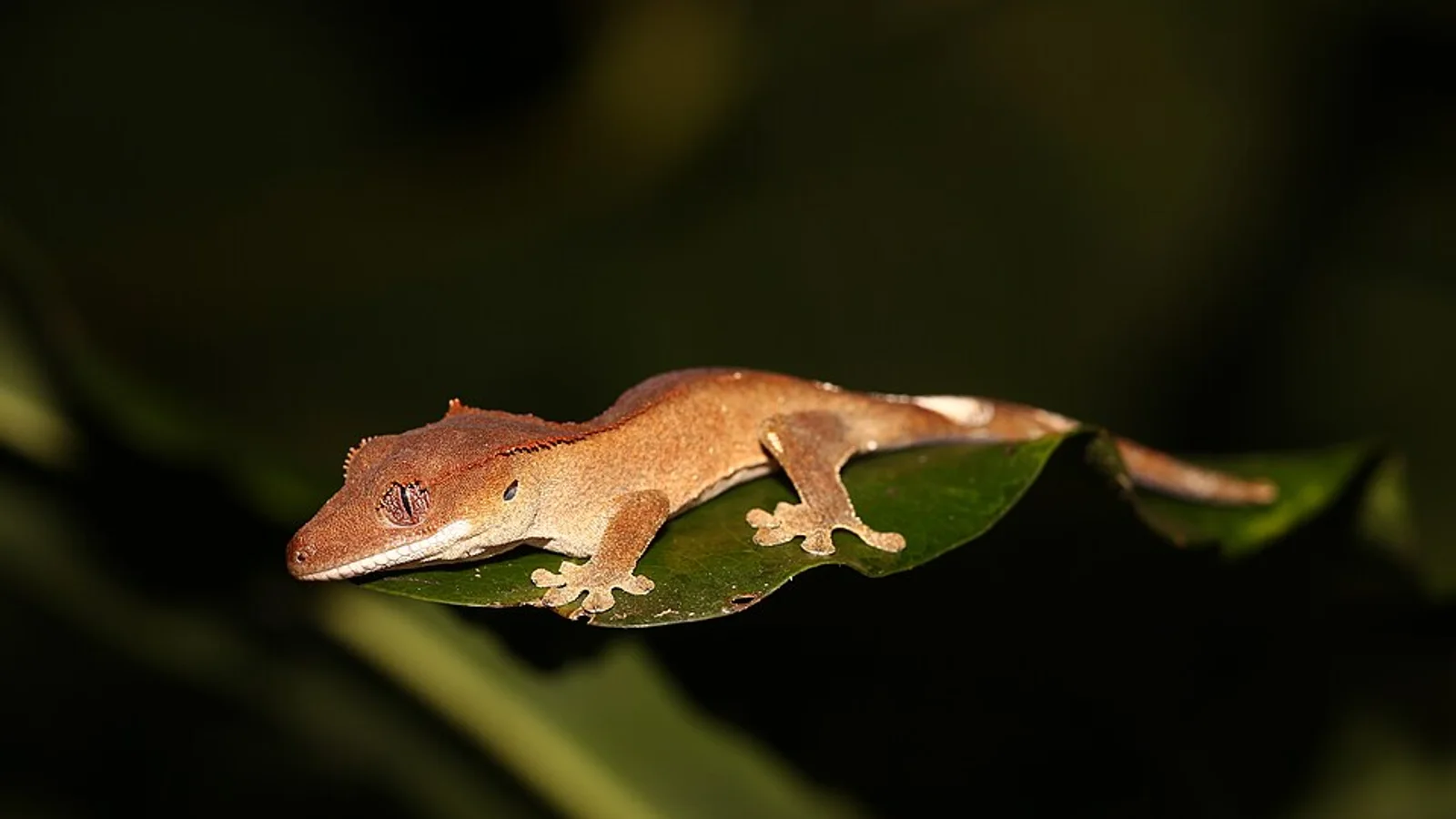
Calcium, phosphorus, and vitamin D3 work like three legs of a stool in reptile physiology. Too little dietary calcium—or zero vitamin D3 to shuttle it through the gut—forces the gecko to drain its own jaw, spine, and limb bones into Metabolic Bone Disease (MBD). Yet over-anxious keepers who scoop extra D3 calcium straight into complete fruit mixes create the opposite risk: hypervitaminosis D and soft-tissue calcification.
Safe supplementation rests on one rule for complete CGD and one clean split for live feeder insects matched to your lighting.
Iron Rule: Never Stir Extra Calcium or D3 Into Pangea or Repashy CGD
Trusted complete diets (Pangea and Repashy) are already lab-balanced with roughly a 2:1 calcium-to-phosphorus ratio (~1.2%–2.0% dry calcium) plus safe baseline D3:
- Mixing CGD bowls: Add clean water only. Extra scoops of loose calcium skew mineral ratios and leave a bitter, chalky paste most geckos refuse.
- Dust ONLY live insects: Primary feeders like crickets and secondary alternates like Dubia roaches carry an inverted calcium-to-phosphorus ratio (often 1:3 to 1:9). Lightly coating live prey right before tongs feeding restores that safe ~2:1 balance. (BSFL already carry higher natural calcium, though a faint dust stays helpful for growing juveniles and gravid females.)
Preferred Calcium+D3 Supplement: Repashy SuperCal MeD Only
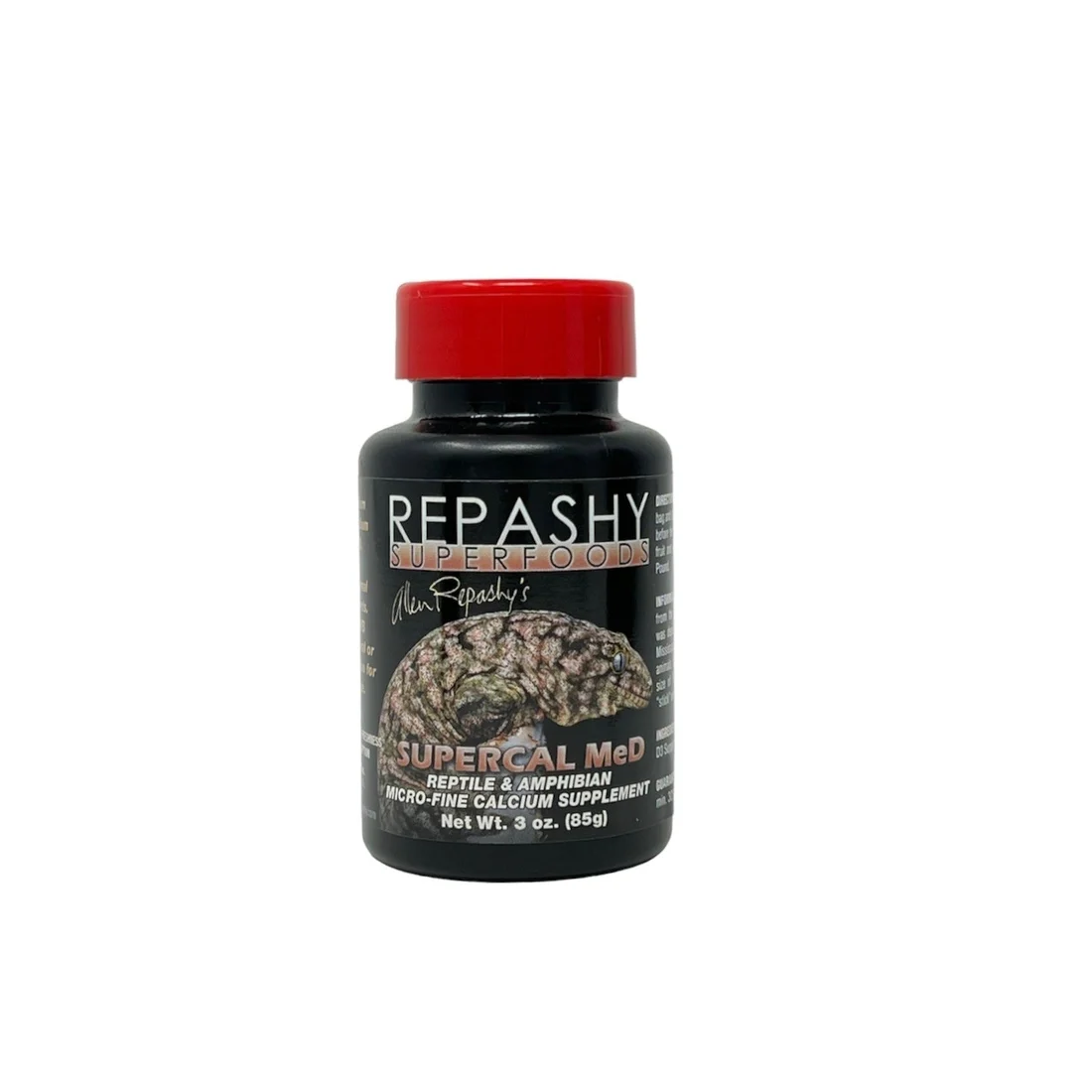
For standard indoor setups without optional UVB lighting, Repashy SuperCal MeD (Calcium min 30%, Vitamin D 25,000 IU/lb, micro-fine 3.5-micron Mohave Desert calcium carbonate) is the only Calcium+D3 powder we recommend for feeder insects—it adheres cleanly as a light dry coat without delivering mega-dose D3 spikes.
| Tank UV Setup | Routine Insect Dust | Multivitamin Rotation | Why It Stays Balanced |
|---|---|---|---|
| Standard No-UVB Enclosure (Default Care Setup) | Repashy SuperCal MeD (Medium D3 Calcium) | Rotate a reptile multivitamin once every 2–3 weeks | Complete Pangea/Repashy CGD + lightly Repashy SuperCal MeD dusted crickets cover calcium absorption safely |
Optional Zone 1 Linear T5 UVB (UVI 0.5–1.0) | Plain Calcium Carbonate (ZERO D3) | Dust insects with a reptile multivitamin (containing preformed vitamin A) once every 2–3 weeks | Because optional shade-level UV drives internal D3 synthesis, switching bugs to plain calcium avoids D3 overload |
| Gravid / Laying Adult Females | Use Repashy SuperCal MeD on feeders 1–2× weekly (or plain calcium only if running optional UVB) | Multivitamin every 2 weeks; rotate Pangea Growth & Breeding or Repashy Grubs ‘N’ Fruit; seek vet care if chalk sacs thin out | Shelling clutches pulls heavily on skeletal reserves; preventive monitoring outperforms emergency treatment |
Right panel illustrates proper dusting thickness: tap away loose excess inside the cup so insects wear an even white haze rather than thick clumps.
Checking Built-In Calcium Reserves: Endolymphatic Chalk Sacs
Just along both sides of a crested gecko’s upper palate sit white calcium-storage pouches called endolymphatic calcium sacs (chalk sacs). Never pry jaws open forcefully—wait for a voluntary yawn or lightly brush the lip edge with a moist cotton swab during a gentle check to glance upward with a soft penlight:
- Healthy Reserves: Crisp, symmetrical white chalk-like pads resting neatly behind the upper palate (naturally thicker in mature cycling females).
- Depleted Reserves: Translucent pink palate with flat or empty white pads—especially in a laying female—means pause breeding immediately, verify Pangea/Repashy freshness plus Repashy SuperCal MeD insect dusting, and schedule an exotic vet check.
Symmetric white chalk sacs on the palate roof confirm active calcium storage; empty pink pockets signal early mineral depletion before limb softening.
Store Vitamins Like Perishables
Plain calcium carbonate lasts practically indefinitely in a dry jar, whereas vitamin D3 and preformed vitamin A degrade quickly under warm tropical heat and moisture. Buy small bottles, cap tightly in a cool dark drawer (or fridge compartment), and replace D3/multivitamin jars every 12 months.