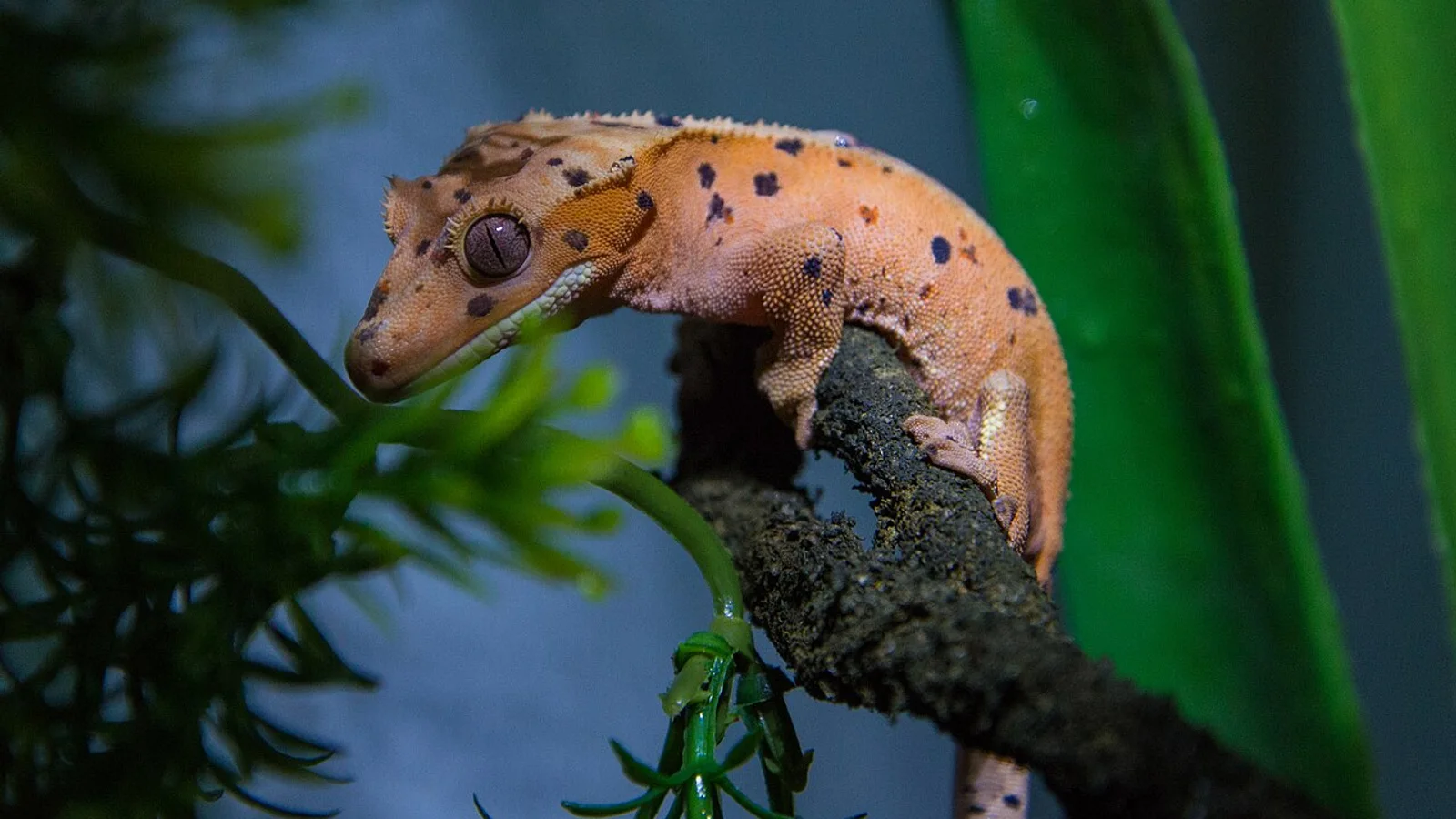
Ask ten reptile keepers how large a crested gecko terrarium must be and you will hear two opposite extremes: one camp stacks adult geckos in shoebox-sized plastic bins for life, while another insists nobody should keep one without an expensive 45×45×60 cm (18×18×24 in) glass cabinet on day one.
In reality, the practical, widely accessible adult home for a single crested gecko is 30×30×45 cm (12×12×18 in, roughly 40 liters / 10–11 gallons)—a vertical footprint large enough for proper branches, microclimate gradients, and safe lighting while fitting ordinary desks and realistic budgets. Larger 45×45×60 cm tanks are a rewarding upgrade when space permits, while compact 20×20×30 cm setups serve well as hatchling nurseries and quarantine enclosures.
Why Vertical Height and Usable Cover Matter Most
Crested geckos spend most of their waking and sleeping hours perched off the ground:
- Elevation Brings Security: Sleeping tucked into upper foliage or hollow bark far above the floor reduces prey anxiety and gives the gecko cooler, damper lower zones to retreat into when needed.
- Usable Structure Beats Empty Glass: A
30×30×45 cmenclosure packed with 60%–80% dense foliage, horizontal perches, and cork hollows supports healthy movement far better than a vast45×45×60 cmtank containing one bare stick surrounded by open air.
Choosing the Right Size by Body Weight and Stage
Match the box to the gecko in front of you instead of guessing blindly:
| Life Stage & Weight | Recommended Vertical Footprint | Why This Size Works | Practical Tradeoffs to Watch |
|---|---|---|---|
| Hatchlings, Small Juveniles (under ~12–15 g), & Quarantine | 20×20×30 cm (8×8×12 in) tall glass or ventilated clear tub | Keeps shallow CGD cups easy to locate at night and makes fecal checks and daily paper-towel swaps fast | Treat strictly as a grow-out or hospital box. Once a juvenile passes 15–20 g, a 20×20×30 cm unit restricts jumping stride and leaves little room for safe thermal or humidity gradients |
| Subadults & Adults (~15 g to full adult 35–55 g) | 30×30×45 cm (12×12×18 in) — Practical Adult Mainstream | Supports multi-level horizontal branches, elevated ledges, clean top-mesh ventilation/lighting clearance, and solid day/night microclimate consistency | Strictly one gecko per unit. Pack upper and mid zones with broad leaves and horizontal cork bars so the gecko does not sleep upside-down on bare glass (preventing Floppy Tail Syndrome) |
| Spacious Adult & Planted Bioactive Upgrade | 45×45×60 cm (18×18×24 in) — Generous Upgrade | Offers extra jumping runways and enough vertical room for a false-bottom drainage layer and deep roots without pinching canopy height | Avoid leaving a hollow open center; add extra climbing bridges and two sheltered ledges if needed so shy adults do not stick solely to one back wall |
Vertical tank progression by life stage: start tiny hatchlings and quarantine cases in 20×20×30 cm, house everyday adults in 30×30×45 cm, or upgrade to 45×45×60 cm for planted builds.
Keep Even a 20×20×30 cm Grow-Out Box Properly Cluttered
Tiny juveniles rarely stop eating because an enclosure is “too spacious”—they stop eating when a tank is bare and exposed. Even in a compact nursery tub or 20×20×30 cm glass cube:
- Anchor a couple of slanted soft cork strips and drape lush silk or plastic leaves across the upper walls so the baby can sleep hidden off the paper floor.
- Maintain cross-ventilation along upper opposite sides so light evening mist evaporates cleanly by midday.
One Gecko Per Enclosure Is Non-Negotiable
Whether your terrarium measures 30×30×45 cm or 45×45×60 cm, house crested geckos strictly solitary:
- Geckos Do Not Bond as Companions: Cohabitation frequently ends in dropped tails, missing toe pads, or skin bites during nighttime territory disputes.
- Quiet Resource Bullying: Even without visible fight wounds, one animal routinely claims the best sleeping hides and feeding ledge while the subordinate slowly loses condition.
- Male-Female Housing Exhausts Females: Keeping sexes together leads to non-stop breeding attempts, early egg binding risks, and chronic weight drain. Separate even clutchmates early as soon as you can track individuals independently.