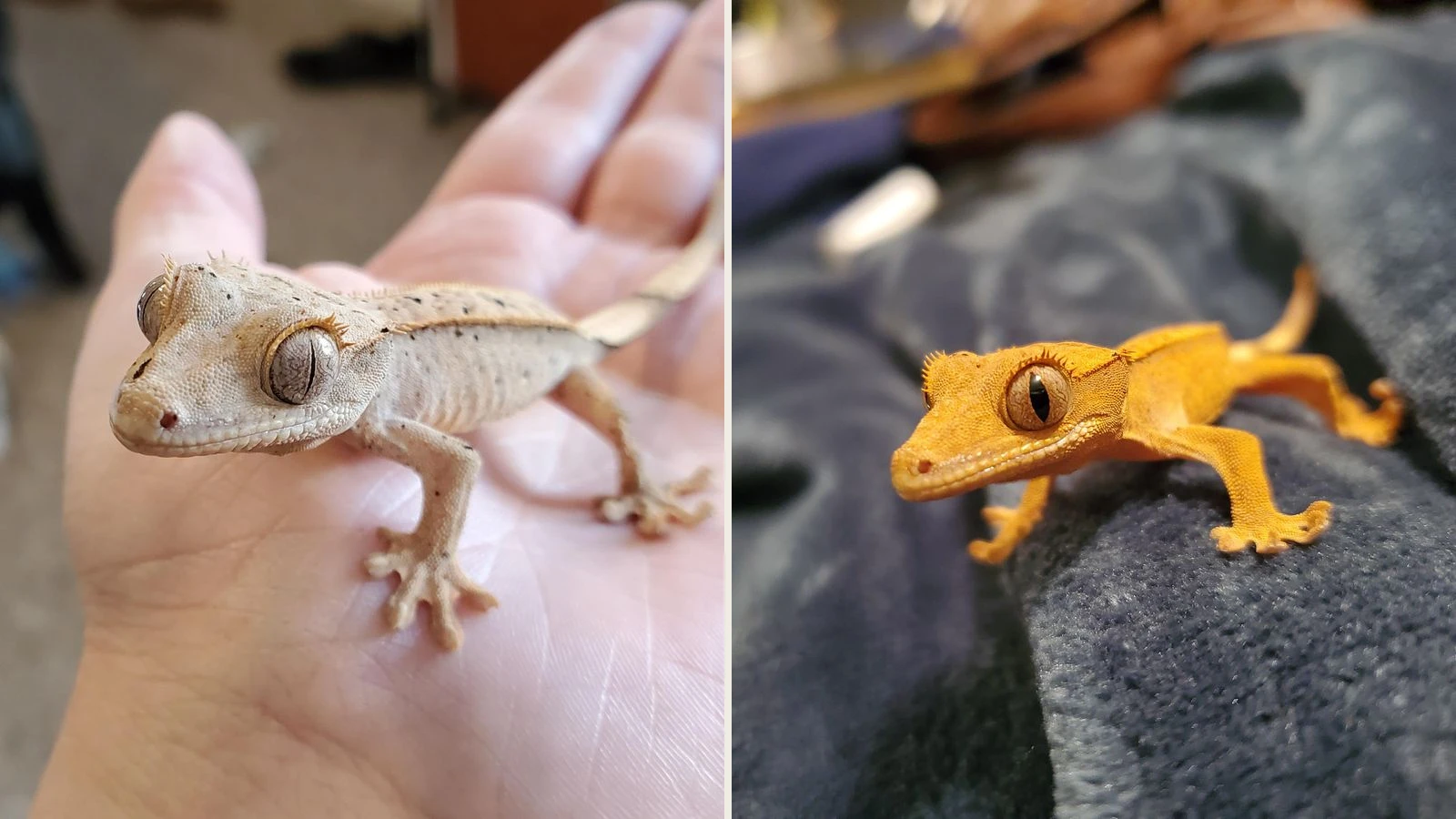
Almost every first-time buyer feels a flash of panic when opening a shipping cup: in the breeder’s listing photo the gecko looked jet-black with molten orange pattern, yet inside the cup it sits looking pale cream and washed-out gray. Two hours after evening misting, that same animal deepens back into the dramatic colors you fell in love with.
This rapid daily shift in darkness and contrast is firing up and firing down. Knowing how pigment cells behave lets you read your gecko’s mood and stop falling for misleading listing photos.
Pigment-Cell Mechanics: Contrast Knobs, Not Chameleon Color Swaps
Unlike chameleons, a crested gecko does not invent new hues out of thin air. Instead, it turns a contrast dimmer switch up or down across its existing inherited base and pattern colors.
Inside the dermis sit red and yellow pigment cells (erythrophores and xanthophores) layered beside branching star-shaped dark pigment cells (melanophores):
- Fired Down (Daytime Resting State): When sleeping soundly or warm and dry, melanin granules gather tightly into the center of each melanophore cell, leaving the skin pale cream, pastel pink, soft peach, or light gray for daytime camouflage.
- Fired Up (Active Peak Contrast State): Triggered by dusk, elevated moisture after misting, mild cooling, or alertness, nerve and hormone signals disperse melanin granules outward through branching cell arms—deepening dark bases and making reds, oranges, and whites stand out cleanly.
Exact Same Gecko: Fired Down (Pale Olive) vs. Fired Up (Dark Charcoal)
Melanophores act like a dimmer switch on one animal—check the matching tiny black speckles along the neck and dorsal ridge to verify this is the exact same gecko.
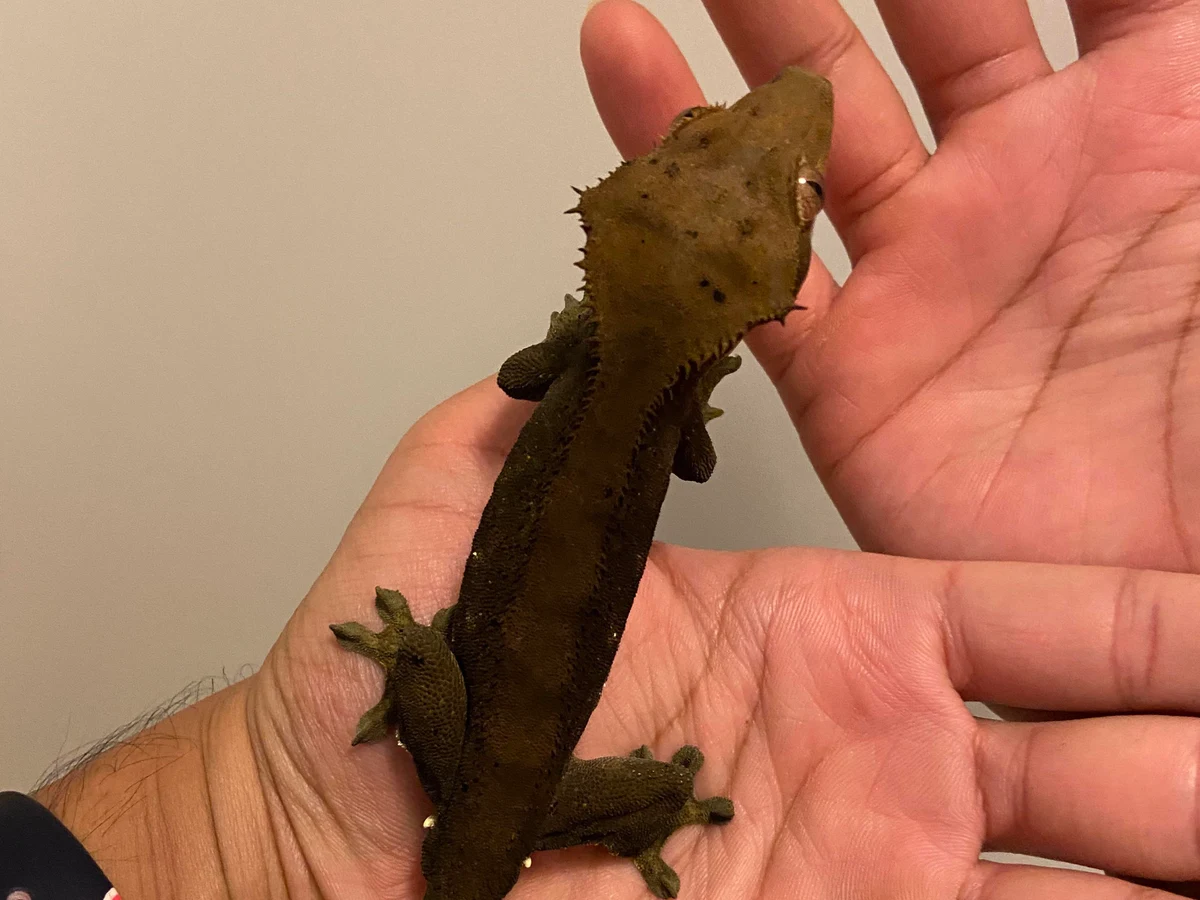
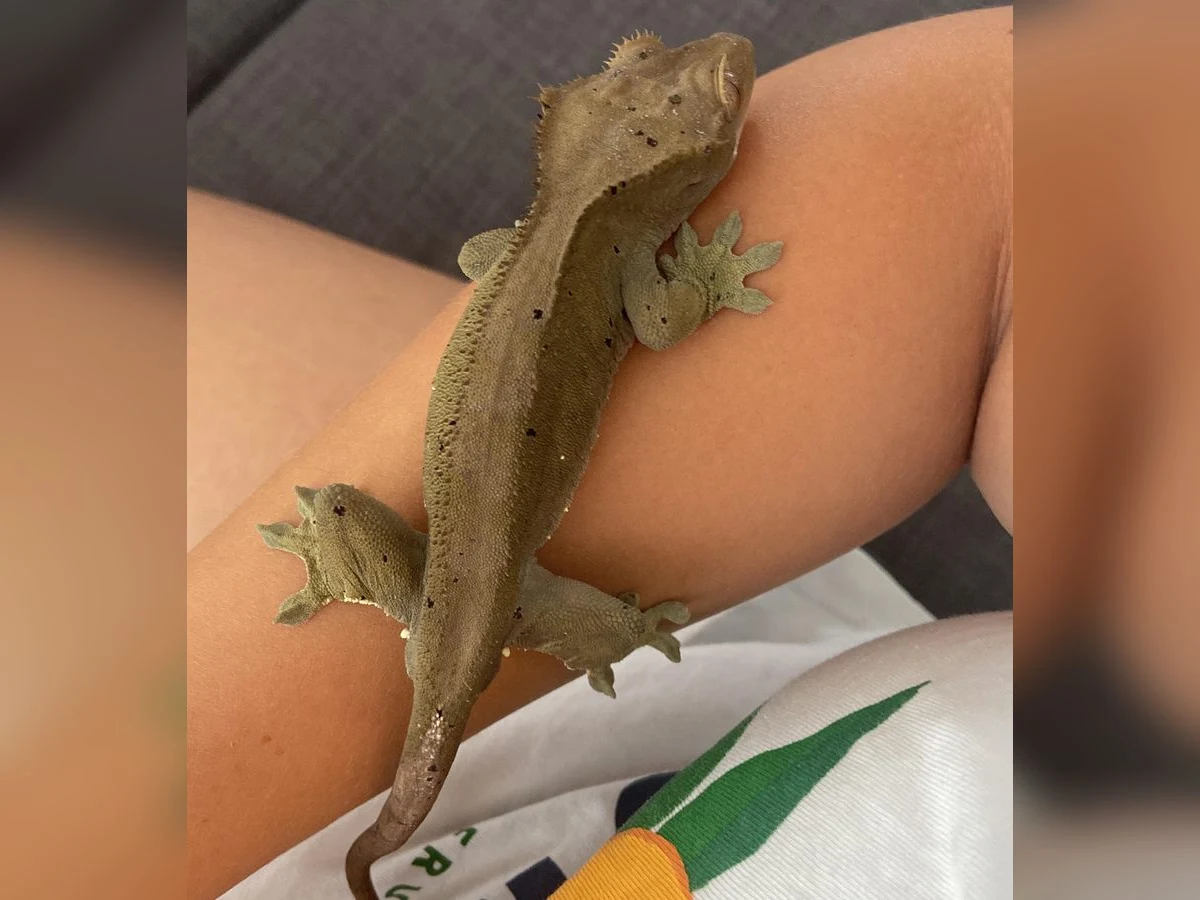 Daytime Rest Look Peak Evening Contrast
Triggers Behind Everyday Firing Shifts and “Misfires”
| What You Notice | Visual Appearance | Biological Reason |
|---|---|---|
| 30–60 minutes after dusk lights-out and misting | Full, smooth peak saturation across limbs, crest, and torso | Circadian wakefulness combined with moisture triggers honest full-fired appearance |
| A single broad leaf resting over half the body by day | Local “Misfire” / Leaf Shadow: Razor-sharp dark stencil right under the leaf while exposed skin stays pale | Dermal photoreceptors (opsins) in gecko skin detect local shade independently of the brain and trigger localized pigment dispersion |
Cool room temperatures (19–21°C / 66–70°F) | Darker daytime coloration overall | Darker surface tones absorb scarce ambient warmth slightly better |
| Shipping, handling stress, or territorial excitement | Sudden dark blotches or washed-out gray mottling | Adrenaline and stress-hormone surges override normal resting contrast |
| 24–48 hours before shedding | Even, milky frosted haze coating head to tail | Lymphatic fluid separating old skin from new tissue underneath—clears instantly once shed finishes |
Judging Morphs Honestly: Fired State vs. Real Traits (Pied / Hypo)
With newer traits attracting steep prices, viewing both states under neutral daylight matters more than ever:
- Do Not Mistake Fired-Down Paling for Pied or Hypo Traits: Heavily washed-out fired-down skin or normal white fringing can fool beginners. True Pied relies on verified lineage cues—such as crisp white socks, translucent toes/venters in specific branches, or abruptly bordered depigmented blotches that remain distinct regardless of firing state—separate from ordinary Hypo-lineage toe fading. Both Hypo and actively studied Pied lines must be assessed in natural daylight across both fired-up and fired-down frames rather than bright flash glare.
- Clean Fired-Down Color Signals True Quality: Top Red-base or clean Yellow-base geckos stay vibrant pink, coral, or buttery cream even when resting pale at noon rather than fading muddy olive-gray. Always ask sellers for unedited photos of both fired-up and fired-down states in natural light.
Never Chill or Shake a Gecko to Force a Photo
Putting a lizard into cold water, rattling its cup, or blasting harsh camera flashes to shock a dark fire-up inflicts stress without showing natural quality. Wait 30 to 45 minutes after normal evening misting and shoot under soft, steady ambient fill light instead.