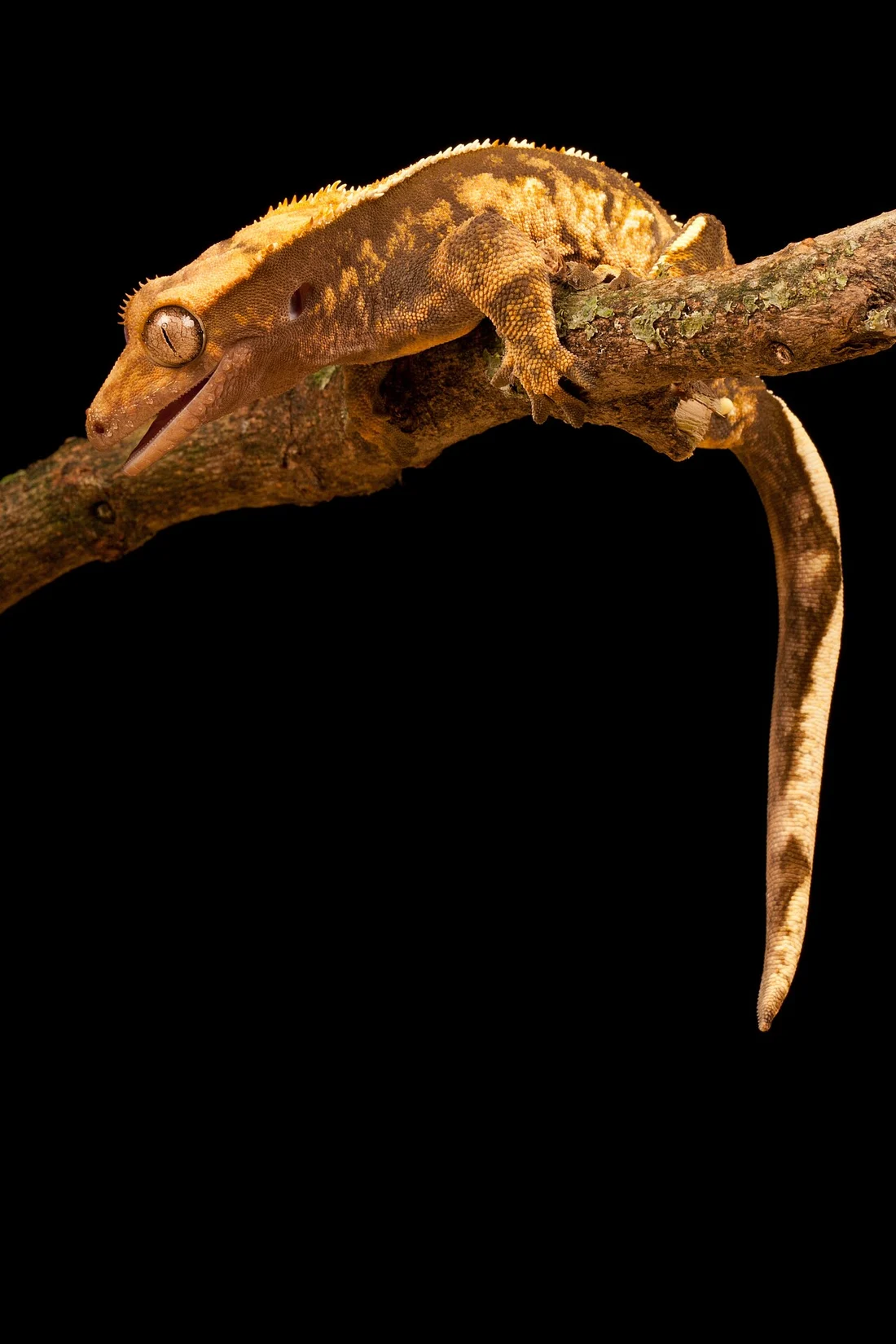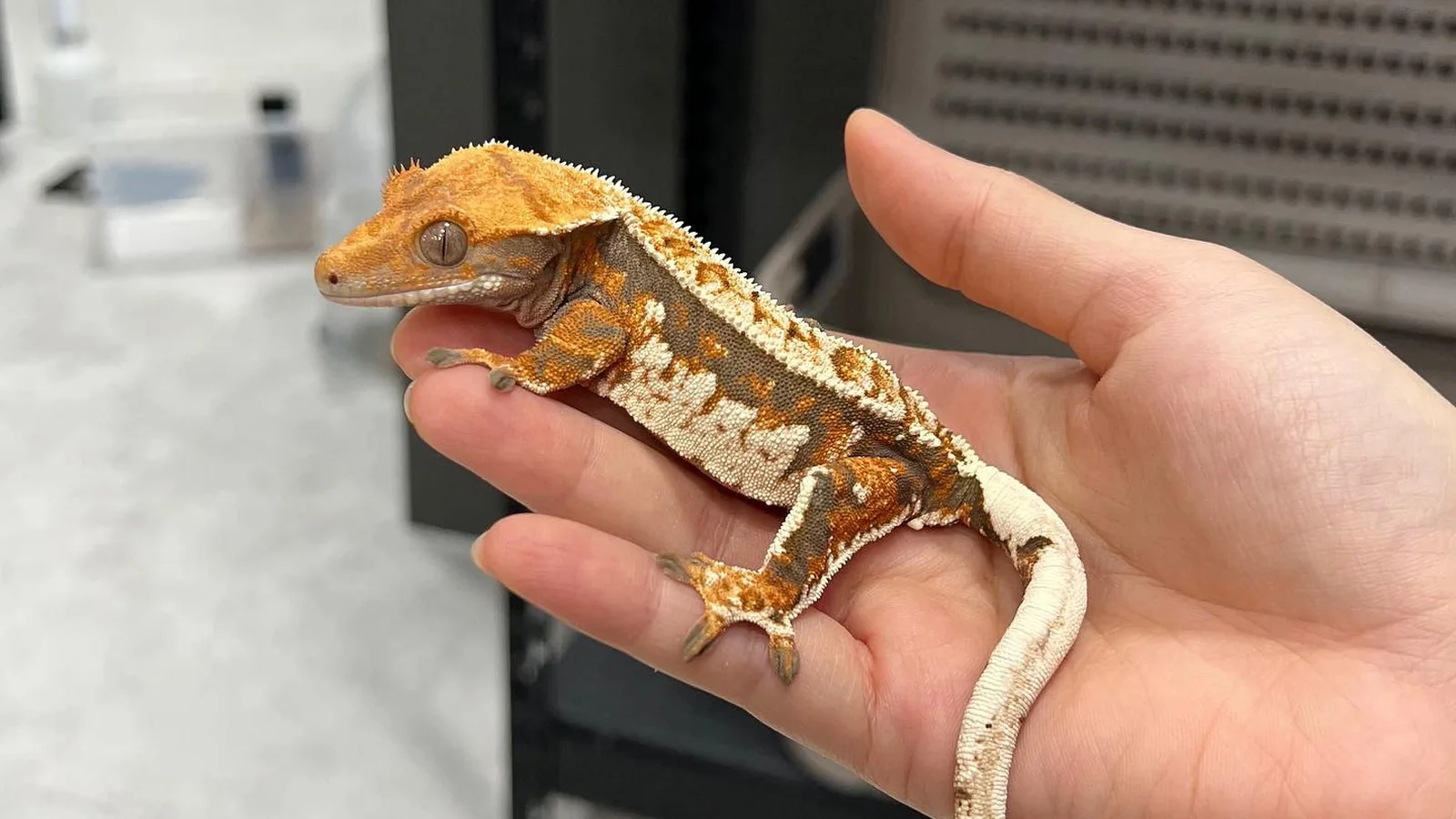
Charming videos of crested geckos perching calmly on hands make it easy to forget that Correlophus ciliatus is a tiny wild-instinct prey lizard. Unlike puppies or kittens, geckos do not crave affection—they gradually learn through brief, predictable sessions that your warm hands feel like harmless moving branches rather than hawks.
Waiting until a new arrival settles cleanly (at least 7–14 days with confirmed eating and regular stools) and ending every interaction cleanly protects trust and prevents accidental tail drops.
Reading 6 Clear Body Language Signals
Read your gecko’s posture and throat movement before lifting it out:
| What You Observe | Internal State | Best Keeper Response |
|---|---|---|
| Calm steady steps, tail tip gripping gently, soft tongue flicks | Relaxed exploration (scent-mapping with Jacobson’s organ) | Keep slow hand-over-hand movement smooth and unhurried |
| Pressed paper-flat against bark with eyes dilated wide and limbs stiff | Defensive freeze (hoping camouflage hides it) | Leave it alone tonight unless urgent cleaning requires lifting |
| Rapid heavy throat pumping and rib heaving | Rising adrenaline and stress | Slow motions down, stop touching its back, and steer back toward a branch |
| Slow snake-like S-wave motion along the tail | High danger signal (Seconds from bolting or tail dropping!) | Freeze completely! Rest your palm quietly beside an enclosure perch so it can hop off immediately |
| Sharp head flick, crisp “peep/squeak”, or open-mouth bluff | Clear leave-me-alone warning | Respect its choice right away and step back |
| Adult male clamps onto your finger while vibrating and chirping | Seasonal courtship mix-up (mistaking warm human skin for a mate) | Never yank or shake loose (can wrench his jaw); rest your hand gently on a branch inside his cage until he releases cleanly |
The 4-Step Choice-Based “Hand-Walking” Method
Never reach down from directly above with pinching fingers—in nature, only predators snatch from overhead.
- Wait 1–2 Weeks & Time It for Dusk: Hold off recreational handling until the gecko settles and eats cleanly, and only start once it wakes naturally around lights-out rather than yanking it from daytime bark hollows.
- Offer a Flat Front Path: Lay one open hand flat on the perch directly in front of its chest and lightly brush behind a hind leg if needed so it steps onto your fingers willingly.
- Run a Calm Hand Treadmill (Stay Within 30–40 cm of Soft Surfaces): Sit over a bed, sofa, or towel-padded table. Whenever your gecko crouches to leap, position your free open palm 10–15 cm (4–6 in) ahead as a safe target, alternating hands steadily without gripping.
- End Short While Still Calm (5–10 Minutes): Return it smoothly to upper leaves before stress ramps up.
Three Physical Rules to Respect Every Session
- Never Pinch or Pull the Tail: Pre-formed fracture lines let a stressed gecko release its tail voluntarily even under light restraint, and it never grows back.
- Skip Petting the Head Crown or Eyes: With no eyelids, overhead finger shadows look terrifyingly like predatory strikes.
- Never Enclose in a Tight Fist: Geckos breathe by expanding ribs—trapping the midsection restricts breathing and triggers panic leaps.
Prehensile Tail Aid vs. Permanent Autotomy
Respecting the tail as a balancing fifth limb keeps sessions relaxed and avoids startling a gecko into dropping it permanently.