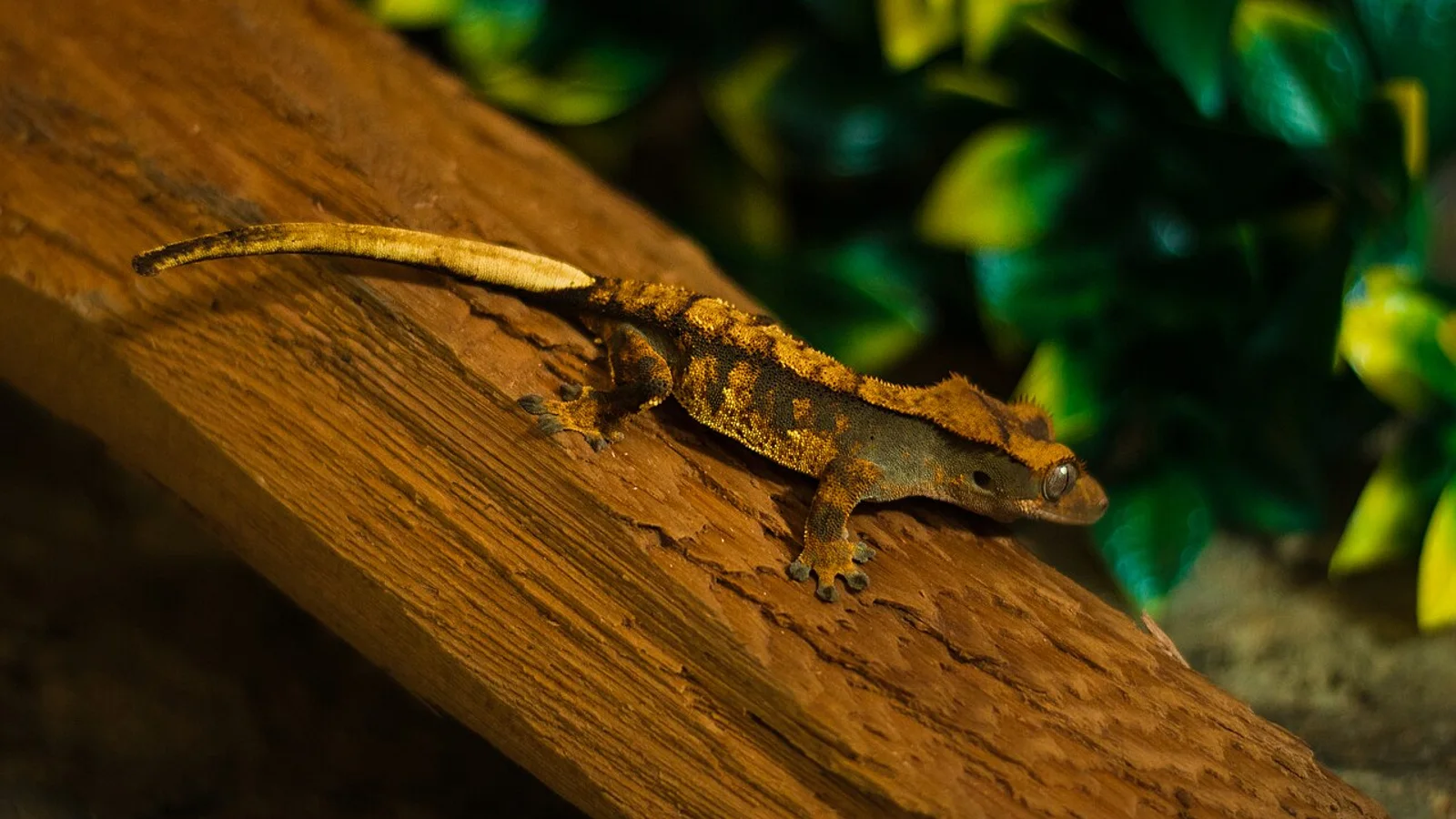
Ask whether a crested gecko needs a heater and online advice often splits into two unhelpful extremes: some treat them like desert lizards needing a constant hot spot, while others repeat “room temperature is always fine” even when winter rooms sink to 15°C (59°F).
In truth, Correlophus ciliatus thrives in a mild gradient centered on 20–27°C (68–80°F) by day with a natural 18–21°C (64–70°F) nighttime drop—short modest bumps around 28°C with airflow are usually tolerated, whereas sustained 29–30°C+ (84–86°F+) stagnant heat is the real danger. Whether you plug in a heater depends strictly on what your enclosure thermometer reads inside the tank, not guesswork.
When to Add Heat vs. When to Stay Unheated
Base your decision on digital probe readings inside both the upper canopy and lower floor zones:
- Add Supplemental Heating When:
- Daytime upper-canopy temperatures drop below 21°C (70°F) consistently, slowing digestion and suppressing evening feeding.
- Nighttime enclosure temperatures fall below 18°C (64°F) during winter nights or inside rooms exposed to heavy air-conditioning vents.
- Never Add Heat When:
- Your indoor ambient temperature already sits at 23–27°C (73–81°F)—common across Malaysia, Singapore, and tropical rainforest climates. In tropical climates, your priority is shade and airflow so daytime boxes stay well clear of prolonged 29–30°C+ heat.
Target daily thermal curve alongside the 40–85% humidity cycle: reserve thermostated overhead warmth strictly for winter rooms dropping below 18–20°C.
Choosing Safe Heating Equipment
Just as heat filters downward through rainforest canopies in nature, safe enclosure heating comes overhead from above the screen top, leaving the lower floor cooler:
| Heat Source | Performance & Light Output | Verdict |
|---|---|---|
| Deep Heat Projector (DHP) + Dimming Thermostat | Emits natural infrared-A and infrared-B wavelengths that warm muscles gently without bright visible light; works day and night | Top Choice for Cool Rooms — always pair with a proportional dimming thermostat to prevent flickering and early bulb burnout |
| Low-Wattage Ceramic Heat Emitter (CHE) + Thermostat | Pure non-luminous heat that gently lifts ambient temperature overnight; tends to dry upper air faster | Good Backup Nighttime Floor — leave room below for cool shade and maintain evening misting cycles |
| Low-Wattage Daylight Halogen (Day Use Only) | Creates a gentle 25–26°C (77–79°F) upper perch during cold winter days; turn off at night | Daytime Option in Cold Large Enclosures — avoid over small 20×20×30 cm grow-out boxes that overheat fast |
| Thermostated Exterior Heat Mats (UTH) | Common in four-season or cold-winter homes; mount strictly on the outer upper side or back glass with an independent thermostat probe and leave an unheated cool zone—never run unregulated under thin plastic tubs | Recommended Winter Option (With Thermostat) |
| Red, Blue, or Purple “Night Bulbs” & Heat Rocks | Colored bulbs disrupt nocturnal sight and circadian rest; heat rocks cause contact belly burns | Strictly Unsafe — Avoid |
Non-Negotiable Rule: Every Heater Requires a Thermostat
Even a seemingly gentle 25 W or 50 W overhead bulb can push upper perches above 30°C (86°F) within hours over a 30×30×45 cm terrarium if left unregulated.
- Use a Dimming or Pulse-Proportional Thermostat rather than a cheap noisy on/off click unit—especially for DHPs and halogens.
- Position the Probe Correctly: Secure the thermostat probe in the upper third of the enclosure near the highest usable perch under the heat cone, never buried in damp soil or touching bare hot lamp domes.
- Conservative Setpoints: Program daytime upper limits around 25–26°C (77–79°F) and nighttime minimum protection around 19–20°C (66–68°F). Whenever the room warms up naturally, the thermostat simply tapers power to zero.
Good heating never cooks a crested gecko enclosure—it merely takes the chill off a cold room so your gecko can move, digest food cleanly, and pick the temperature pocket it prefers.