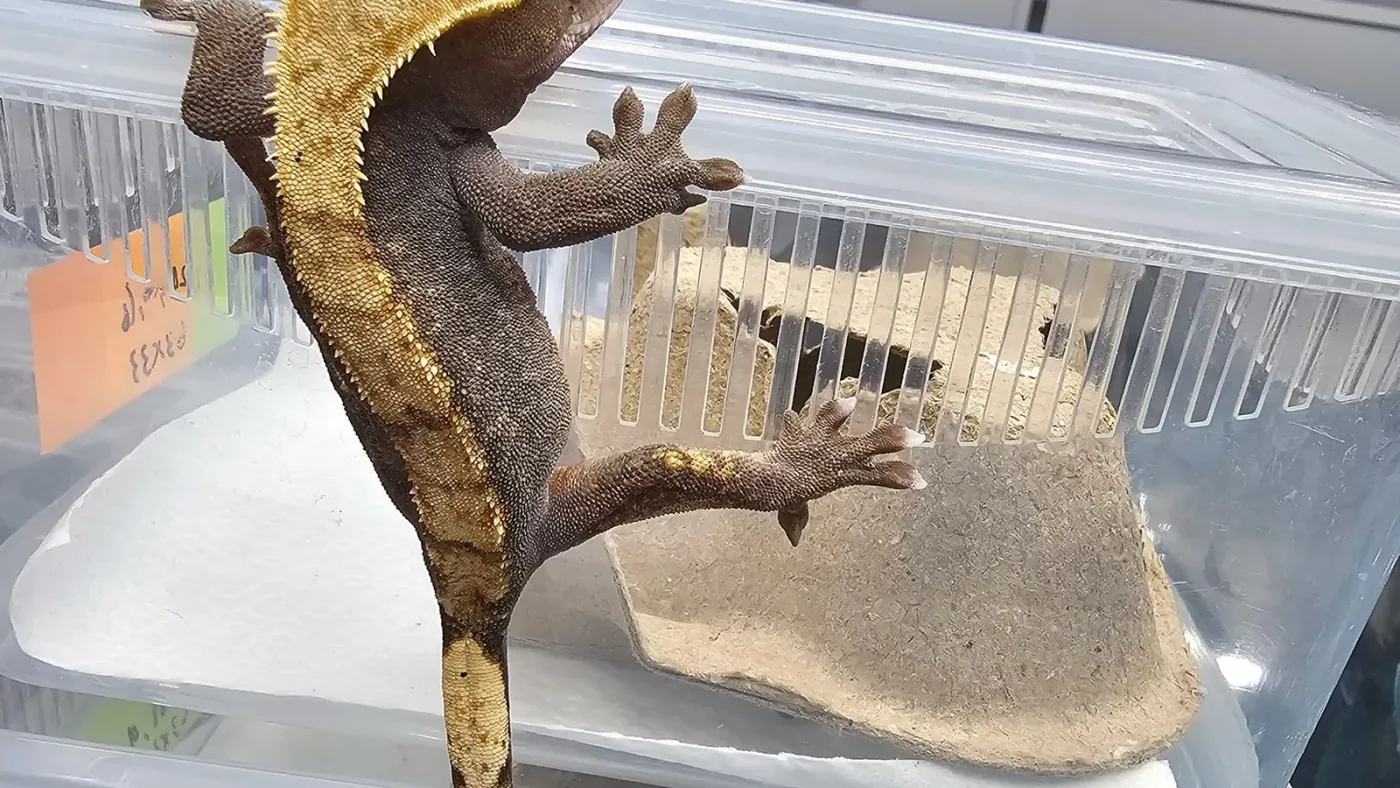
Almost every new keeper gets ambushed by their crested gecko’s sudden “leap of faith”: calm on your fingers one second, launching spread-eagled across empty air the next.
In New Caledonia’s forest canopy, leaping across gaps is normal daily travel and escape behavior. Flexible ribs, gripping prehensile tails, and microscopic toe setae evolved for landing softly on leaves and springy humus—not bedroom tile, sharp desk edges, spinning ceiling fans, or curious pets.
Why Geckos Suddenly Lose Grip (4 Common Slipping Causes)
Crested geckos adhere to smooth vertical panes using millions of dry microscopic toe bristles (setae) generating weak van der Waals molecular attraction. When your gecko starts sliding down walls or struggling to hold your fingers, run down these four checks:
| Slipping Clue | Likely Cause | Immediate Fix |
|---|---|---|
| Loss of grip on all four feet for 1–2 days | Pre-shed fluid separation or retained shed on toes | Pause handling if the gecko looks hazy pre-shed; after shedding, inspect all 20 pads for thin stuck skin gloves |
| Crusty brown or chalky residue under toes | Stepped in CGD paste or fine dry soil dust, sealing setae shut | Place the gecko in a ventilated room-temperature (20–26°C / 68–79°F) damp paper-towel sauna box for 10–15 minutes, then gently roll a moist cotton swab along the toe pads |
| Weak clumsy grip with limb trembling or soft jaw | Early Metabolic Bone Disease (MBD) or cold torpor (below 18°C / 64°F) | Check temperatures at once, verify fresh D3-fortified Pangea or Repashy CGD plus crickets dusted with Repashy SuperCal MeD Calcium+D3, and schedule an exotic vet check |
| Slips only on wet walls or chalky white scale | Water films or heavy hard-water limescale blocking dry adhesion | Mist lightly at lights-out, wipe white scale off glass, and offer textured cork highways |
The 4 Non-Negotiables of Fall-Safe Handling
Since jumping cannot be trained away, make every possible jump completely harmless:
- Stay Within 30–40 cm (12–16 in) of Soft Ground: Never stand upright over hardwood or ceramic floors holding your gecko chest-high. Sit over a bed, plush sofa, rug, or folded towel so a surprise leap lands gently.
- Clear Ceiling Fans, Cats, and Dogs Before Opening the Door: Shut other household pets out completely and turn overhead ceiling fans off first. Even an accidental cat scratch introduces lethal bacteria.
- Block Tight Desk and Bed Gaps: Keep away from dark narrow crevices behind furniture where grabbing a frightened lizard often triggers an instant tail drop.
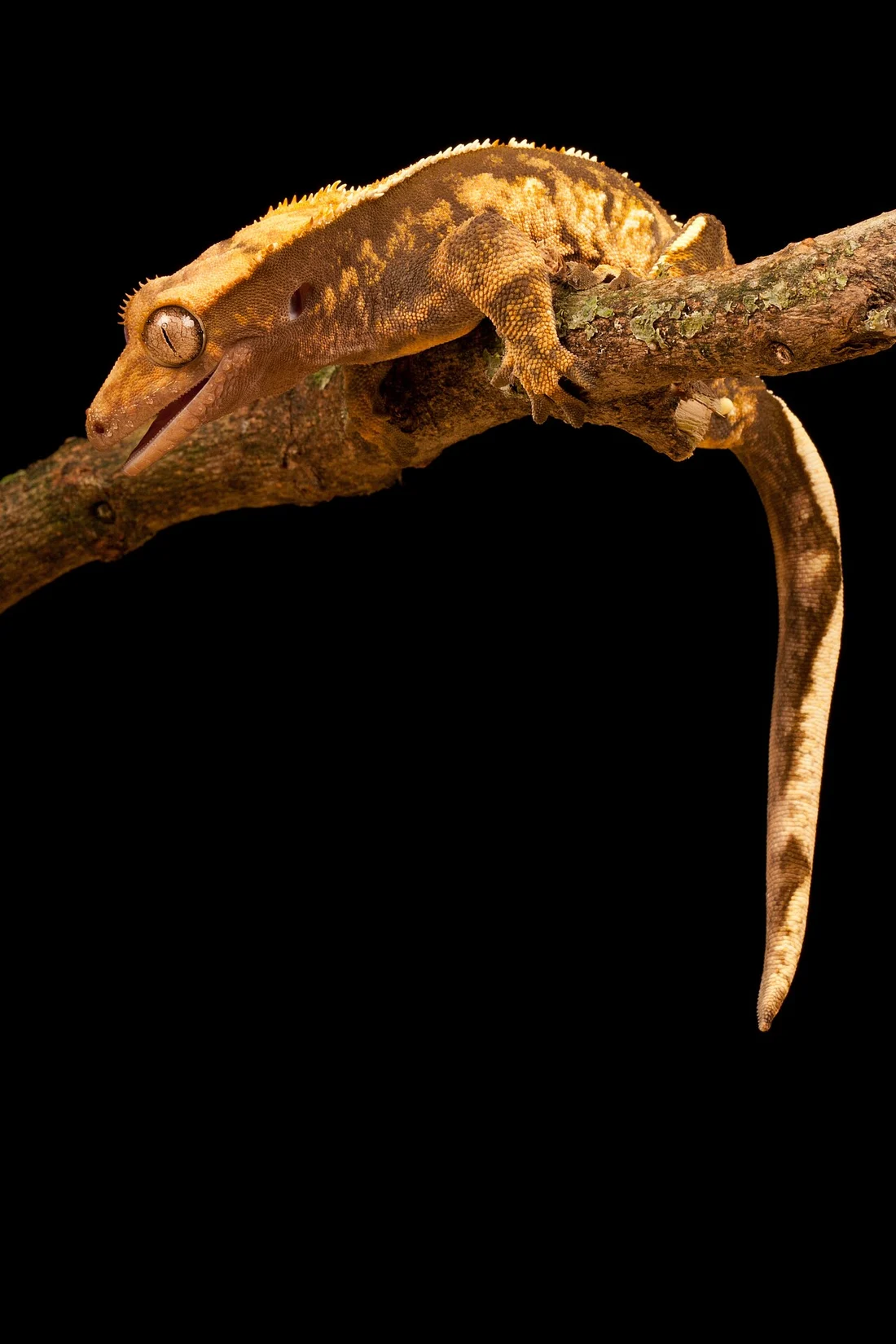
- Catch the “Launch Crouch” Early: Right before springing, a gecko lowers its chin toward its landing spot, bends its hind legs tight, and sometimes sways slightly side-to-side. Place your open free hand 15 cm ahead of its nose and let it jump straight onto your waiting palm.
48-Hour Check After an Accidental Hard Floor Fall
If a gecko hits hard flooring from height, do not immediately grab or squeeze it:
- Watch It Right Itself for 15–30 Seconds: Note symmetrical walking, normal head balance, and clean alert eyes before lifting it gently on a flat palm or card.
- Return It to a Quiet Paper-Towel Enclosure: Dim lights and let shock settle peacefully.
- Check 4 Recovery Indicators Over 24–48 Hours: Confident vertical branch climbing, equal pupil light response, spotless mouth and nostrils, and clean upcoming stool without dark tarry blood. If you spot a swollen bent limb, dragging hind legs, corkscrewing, or deep lethargy, pack a padded ventilated deli cup and visit an exotic veterinarian right away.