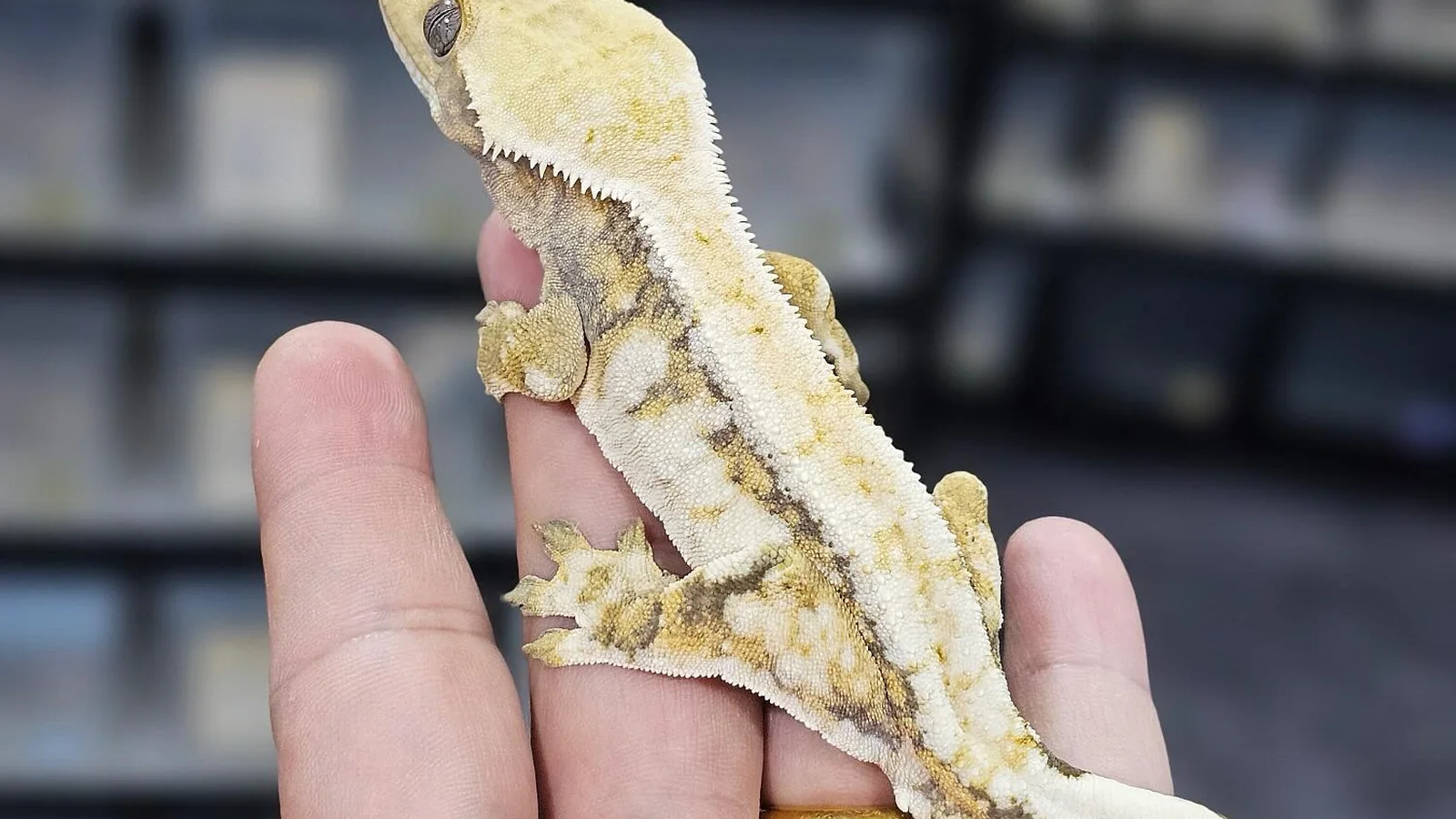
Shop for young crested geckos and you will routinely encounter ads reading “Checked at 4 g—zero pores visible, likely female!” or sellers repeating leopard-gecko labels like “TSF (Temperature-Sexed Female).”
Let’s retire that myth immediately: crested geckos use Genetic Sex Determination (GSD), NOT Temperature-Dependent Sex Determination (TSD). Egg sex is fixed chromosomally at fertilization—incubating at 21.5°C versus 24°C never shifts male-to-female odds.
Accurate sexing rests entirely on gram weight milestones, microscopic preanal pore inspection, and subadult tail-base anatomy.
Sexing Reliability by Gram Weight (Skip Month Estimates)
Growth rates vary dramatically across individuals, so use your 0.1 g digital scale rather than calendar age:
| Current Weight | Diagnostic Check | Reliability | Smart Buyer Perspective |
|---|---|---|---|
| 1.5–5 g (Hatchling) | Impossible to sex reliably | 50/50 coin toss | Male pores rarely erupt below 6 g; nearly every 3–4 g baby looks smooth and “poreless” |
| 6–14 g (Juvenile) | 30×–60× LED jeweler’s loupe scan through a clear plastic deli cup | ~95% male if clear waxy pores appear; 70%–80% if poreless | Clean rows of waxy-cored pits flag early males; poreless babies should simply be labeled NPS (No Pores Seen) rather than guaranteed females |
| 15–22 g (Subadult) | Loupe check + profile inspection behind the vent | 95%–99% | Nearly all males pop visible waxy pores and begin dropping noticeable tail-base swellings here (occasional late bloomers show up close to 18–20 g) |
| 22–30 g+ (Adult) | Naked-eye side profile of the tail base | Virtually 100% | Smooth flat undersides with zero pores past 25 g confirm a mature female |
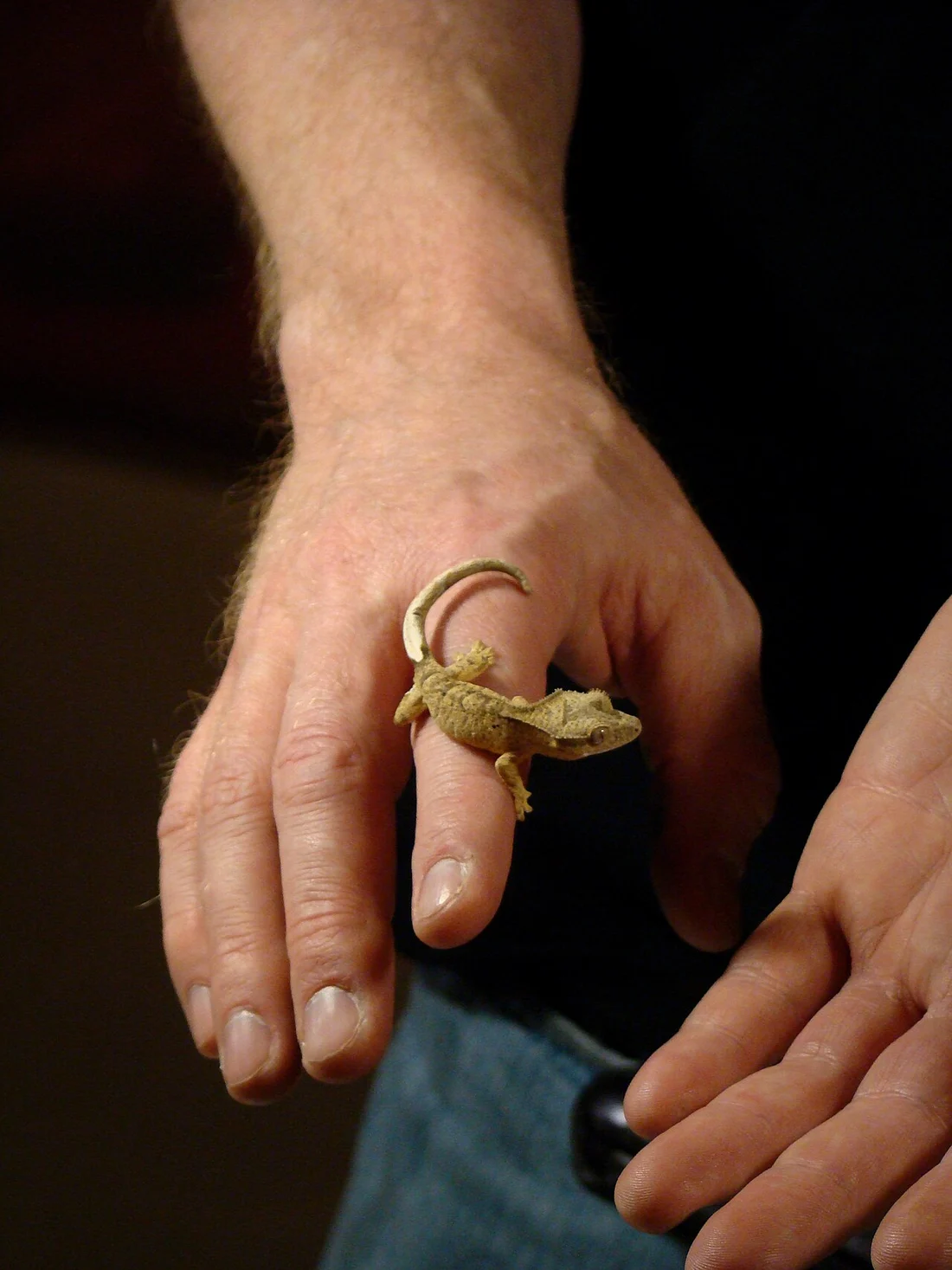
Step 1: Separating True Preanal Pores From Female “Dimples” (8–16 g)
Set the gecko inside a clean clear plastic container and view the scales three to five rows ahead of the horizontal vent slit (between the hind thighs) with an angled 30×–60× LED loupe or clear macro lens:
1. Real Male Preanal Pores
Males grow a continuous chevron or horizontal band of roughly 8 to 16 specialized scales. Dead-center in each pore scale sits a crisp circular crater filled with a dark brown, black, or waxy amber plug that catches side light cleanly.
2. Spotting Female “Pseudo-Pores”
Some females exhibit subtle concavities (“dimples”) on lower belly scales that look suspicious under heavy zoom. Three checks settle confusion:
- Solid Center Core: Male pores house a real waxy/dark plug; female dimples are smooth, shallow, empty depressions on ordinary scales.
- Tight Linear Grouping: True male pores line up cleanly in a unified band rather than sparse isolated dots.
- Re-Check Past 18–20 g: Avoid declaring certainty from one grainy phone macro—wait a few extra grams for pelvic development to confirm.
Step 2: One-Glance Adult Sexing Past 20 Grams
Past 18–22 grams, skip magnification completely and inspect the underside silhouette right behind the hind legs:
- Mature Male: A broad, plump pair of rounded pouches—the hemipenal bulge—drops noticeably underneath the tail base just aft of the vent.
- Mature Female: The lower abdomen sweeps smoothly past the vent into the slender underside of the tail in a seamless flat taper.
Two-stage anatomical check: angled side light reveals dark waxy pore plugs between 8–16 g, while post-vent hemipenal swellings confirm males effortlessly past 20 g.