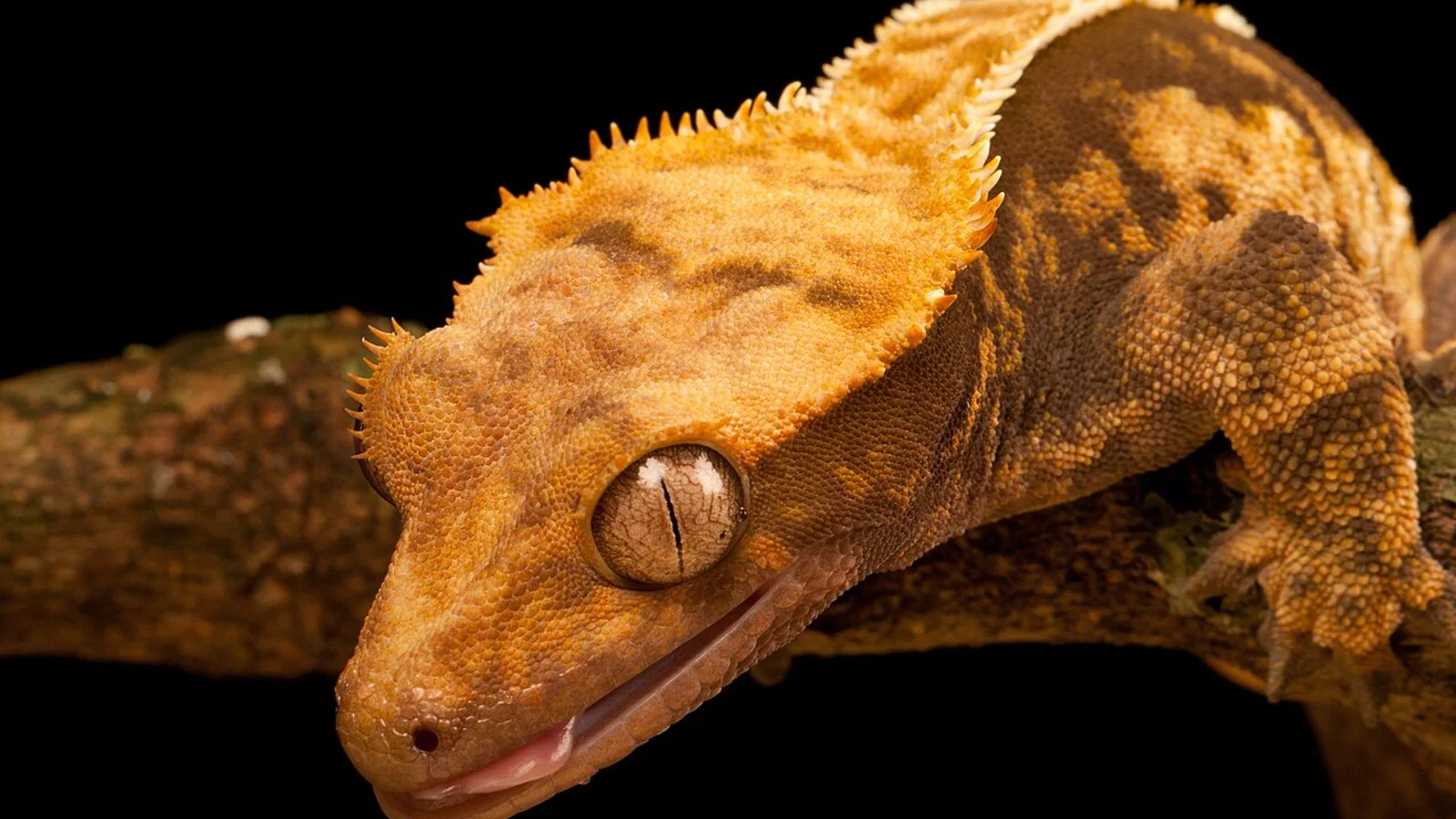
Upload a single snapshot of a crested gecko asking “What base color and morph is this?” and you will quickly collect half a dozen conflicting replies—one commenter insists Buckskin Flame, another shouts Cream Harlequin, while someone else calls Phantom or Lavender.
Two honest keepers read the same gecko so differently for two clear reasons: casual photos almost always capture a gecko partially fired down, and beginners routinely mistake bright dorsal pattern pigment for base color.
Knowing exact anatomical landmarks to inspect—and reading both fired states—cuts through most morph confusion instantly.
Step 1: Locate Base Color Around the Ear While Fired Up
Spot a cream stripe or bright orange flank on a gecko and it is tempting to label it a “cream base” or “orange base.” In reality, dorsal markings and lateral flames sit on top as pattern layers; base color lives underneath.
1. Where Pattern Cannot Hide the True Base
Even on heavily patterned harlequins covering 70%+ of the flanks, unpatterned background pigment remains visible just behind the eye, encircling the ear opening (tympanum), along the lower jaw margin, and at the upper inner thigh crease. Checking those exact spots when the animal is fully fired up reveals its real base color.
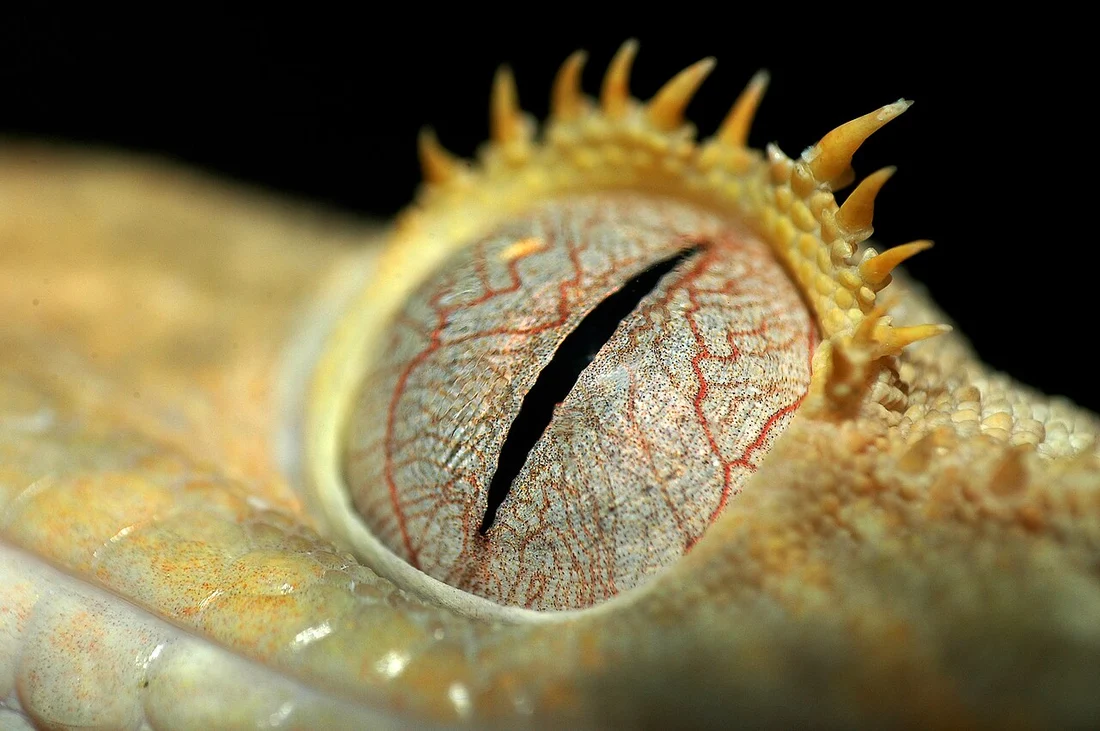
2. How Firing Down Masks True Color
| True Base Pigment | Fully Fired Up (Active Night Tone) | Fired Down (Daytime Rest Tone) | Classic Identification Error |
|---|---|---|---|
| Dark / Black Base | Deep espresso brown, charcoal, or near-black surrounding the ears | Silvery gray, pale taupe, or washed-out buckskin | Daytime sleepers get mislabeled as “Lavender,” silver-gray, or even visual Axanthic |
| Red Base | Rich brick red, scarlet, or deep crimson | Clean reds drop to bubblegum coral-pink; muddy reds drop to rust-tan | Wet-skin flash shots turn warm orange bases artificially deep red |
| Yellow Base | Saturated lemon or warm mustard without brown muddiness | Very pale buttercream or chalky off-white | Standard light buckskins look artificially “yellow” when half-fired |
| Olive / Lavender Tone | Muted olive-green cast or cool slate-lavender undertones | Dusty putty gray or muted pale khaki | Cool camera white balance or bluish LEDs invent false “lavender” on ordinary dark geckos |
Step 2: Separating High-Coverage Pattern, Hypo, White Wall & Pied
When genes override normal patterning, structural cues and pairing proof matter as much as pigment:
- High-Expression Lilly White & Extreme Harlequin: Thick lateral cream walls leaving just millimeters of base around the eyes mean parent fired-up photos are needed to know underlying base lineage (e.g., high-red vs. true charcoal dark).
- Phantom’s Matte Contrast Dampener: Homozygous recessive Phantom softens stark contrast across dorsal stripes and flanks alike, muting high pinstripes into dusty taupe or charcoal-gray while maintaining rich dark background tone.
- Distinguishing Pied, Heavy White Wall, and Hypo: True Pied varies by branch—such as chalky flesh-white White Socks, sharp pattern-cutting patches, and dark/red-pupil Universe Eyes in Korea’s
@cre_jjang Zeroline, versus translucent toe pads and progressive adult depigmentation in JIF lines (accounting for earlier regional “Transparent Toes” naming); White Wall builds dense creeping lateral cream pigment; whereas Hypo gently lowers melanin across the body. Never separate fired-down geckos or minor Hypo-lineage toe fading from true Pied using single dim snaps—verify natural 5500K dual-state pictures alongside parent records (see Korean & Global Pied Genetics Research).
Step 3: Ontogenetic Color Shifts From Hatchling to Subadult
Avoid judging a tiny 3-gram baby by finished adult color criteria:
- 0–3 Months (2–4 g): Newly hatched geckos wear reddish-rust or warm tan juvenile camouflage.
- 6–15 Months (8–25 g): Across successive sheds, dark bases deepen, yellows clear up, lateral white ports climb higher, and Dalmatian ink spots populate gradually—true expression settles cleanly past roughly 15–20 grams.