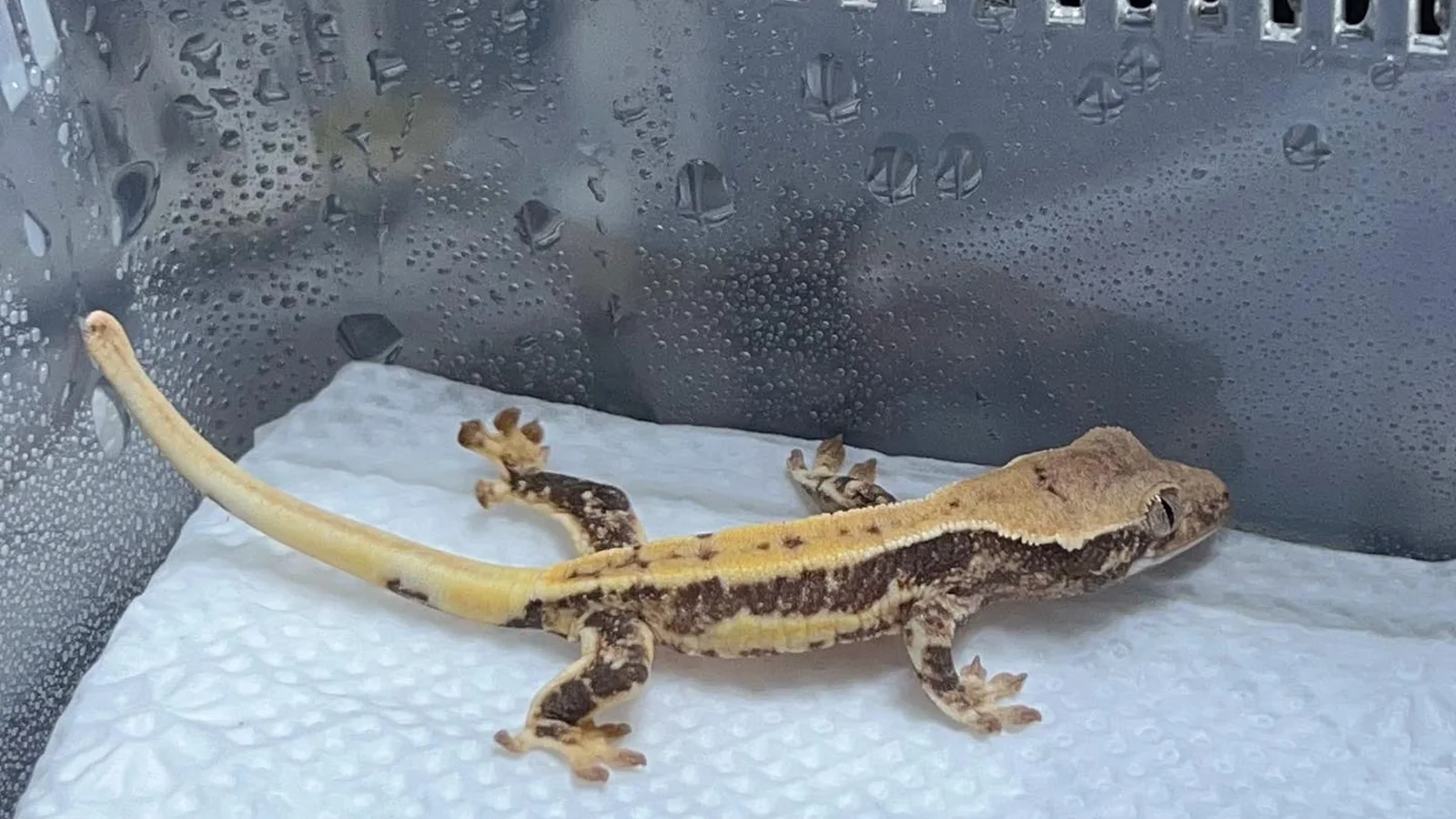
Experienced keepers follow one golden rule: check the droppings before checking the food cup. Because crested geckos feed after dark, their waste acts like a silent overnight lab report—immediately revealing hydration levels, enclosure digestive temps, and potential gut parasites.
Learning to separate normal three-part droppings from true medical red flags helps catch trouble weeks before visible weight loss starts.
What a Textbook Healthy Dropping Looks Like
Like other geckos, crested geckos pass digestive and urinary waste through one cloaca:
- Firm Dark-Brown Fecal Log: Compact, cylindrical, damp but solid (resembling tiny dark modeling clay), holding form without melting into foul puddles.
- Soft Snow-White Urate Cap: Concentrates uric acid waste at one tip of the pellet like soft white toothpaste—cleaner bright white equals healthy hydration.
- Clear Liquid Halo: A modest damp ring soaking harmlessly into clean paper towels alongside the log.
Left: firm brown pellet, white toothpaste-soft urate, and a clear damp halo. Center: chalky yellow urates signal dehydration. Right: watery foul mucus calls for vet testing.
6 Abnormal Dropping Patterns & What to Do Next
| Paper-Towel Clue | Likely Underlying Issue | Urgency | Practical Next Step |
|---|---|---|---|
| Hard, chalky yellow or dark orange urate | Chronic or acute dehydration | Moderate (Hydrate promptly) | Boost 75–85% night misting water beads across leaves, add a clean elevated water bowl, and place a damp moss hide in A/C rooms |
| One isolated loose stool after swapping CGD flavors | Mild digestive adjustment or brief handling tension | Low (Track next 2 stools) | Keep mixing ratio steady (~1:2 ketchup texture) on Pangea/Repashy and re-check the following two bowel movements |
| 3+ consecutive watery, foul-smelling puddles | Internal parasites (coccidia, flagellates, worms) or bacterial enteritis | High (Exotic Vet Fecal) | Move onto plain paper towels immediately; seal an under-24-hour chilled fresh sample in the fridge (never freeze) for float + wet-mount microscopy |
| Whole recognizable undigested insect legs or chitin | Temperatures lingering below 20°C (68°F) or tough oversized mealworms | Moderate (Fix heat & feeders) | Keep daytime perches comfortably within 20–27°C; ditch tough mealworms and offer properly sized small crickets (primary) or occasional soft silkworms |
| Stool packed with coco fiber, or arching/straining with zero output | Substrate ingestion / GI impaction or severe constipation | Moderate-to-High | Switch straight to white paper towels; run a room-temp (20–26°C) humid sauna cup for 10–15 min; never squeeze the abdomen or force mineral oil—see an exotic vet promptly if dull or bloated |
| Bright red blood streaks, or pink tissue poking out of vent | Colitis ulceration or cloacal / hemipenal prolapse | CRITICAL EMERGENCY | Shield exposed pink tissue under clean paper towel soaked in sterile saline (never push/pull forcefully) and head straight to emergency exotic care |
Normal Multi-Day Intervals vs. Dangerous Impaction
Never panic simply because two days pass without waste. Adults fed every 2–3 nights routinely defecate once every 2 to 4 days, often tucked invisibly behind cork flats or broad foliage.
Genuine gastrointestinal impaction combines three overlapping alerts:
- Access to particulate dirt/bark chunks or oversized chitinous bugs paired with dry dehydration;
- Zero passed pellets for 5 to 7+ days paired with straining arches, firm abdominal lumps, or hind-limb drag;
- Complete food refusal, lethargy, or vomiting fresh fluid.
Gentle room-temp damp paper towel hydration loosens mild constipation without thermal stress—never use human-warm water baths.
Avoid soaking a constipated gecko in warm human-bath temps (35°C+ causes heat stroke cleanly); pair room-temp (20–26°C) humid paper-towel hydration with prompt veterinary palpation or X-ray checks.