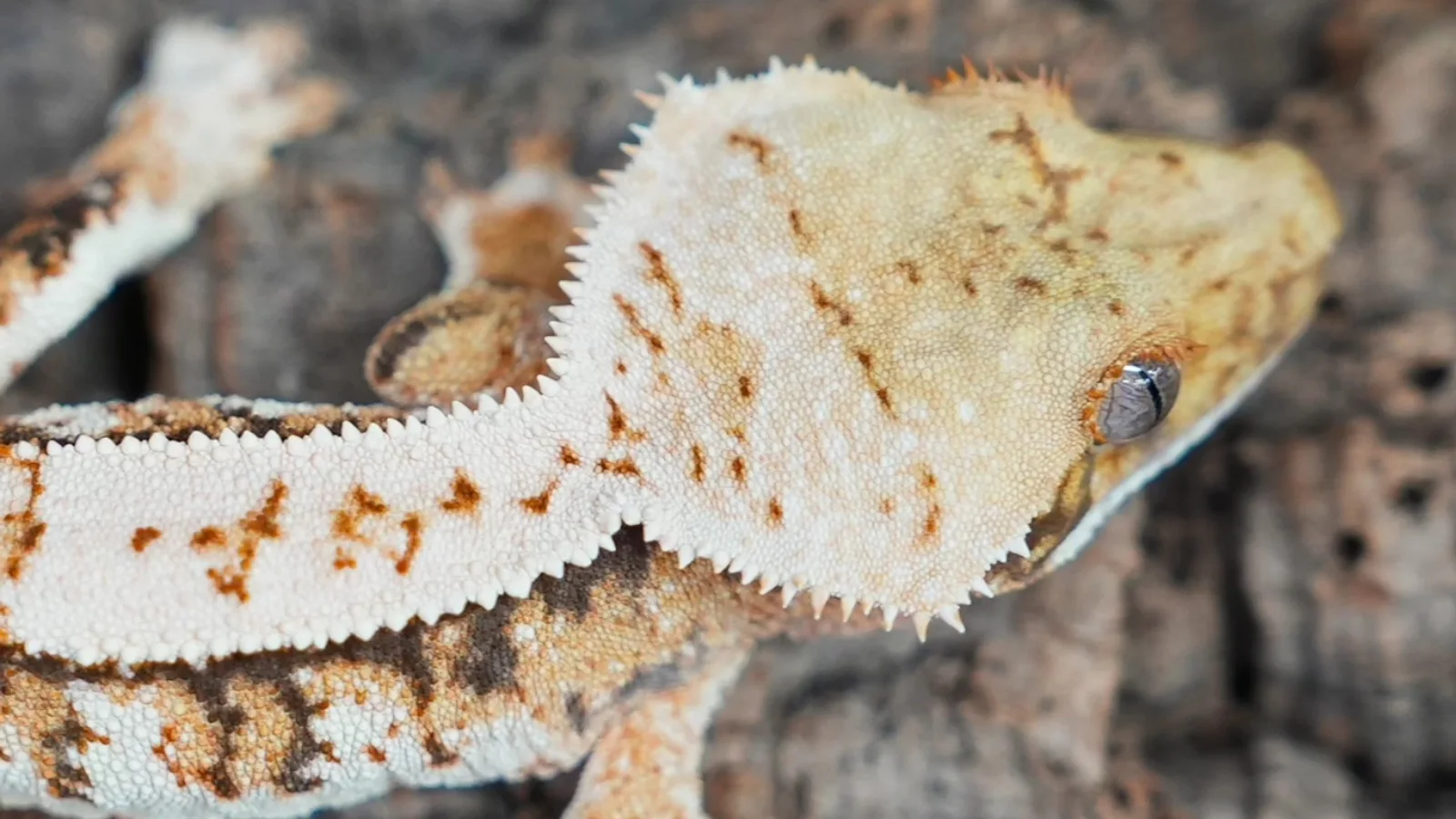
Scroll through gecko photos long enough and a pattern stands out right away: two animals can wear nearly identical cream, harlequin, or white-wall coverage, yet one looks sleek and lightweight while the other carries an unmistakable boxy skull, blunt snout, and thick floppy crests spilling over its neck.
Keepers call those physical build traits structure — the skeletal proportions, crest scale mass, and dorsal ridges underneath the pigment. Because structural quality is polygenic and breeds independently of single-locus color mutations, overlooking build early often leaves keepers wishing their brightly colored juvenile had filled out harder by adulthood.
4 physical traits that define crested gecko structure
Evaluating build accurately takes more than an angled face portrait. Split your eye across top-down skull proportions, temporal crest overhang, dorsal ridges, and overall frame balance:
| Structural feature | Strong structural expression | Narrow / plain expression | Photo checking tip |
|---|---|---|---|
| 1. Skull width & snout ratio | Viewed straight from above, the head reads as a wide rounded triangle or boxy crown with generous eye spacing and a short blunt muzzle | Pinched narrow cheekbones with a longer, pointed triangle snout profile | Always ask for an unangled top-down shot; low front angles fake width easily |
| 2. Lateral & occipital crests | Wide, fleshy crest scales above the eyes sweep past the ear openings and flare outward with soft folded “floppy” edges | Tight, short serrated pins hugging the skull edge with little lateral flare | Crests continue thickening through maturity; 2–3 g hatchlings rarely show full potential |
| 3. Dorsal pinning (Pin-scales) | Paired rows of enlarged white scales along both edges of the back form bold, continuous, raised ridges | Small flat dorsal edges blending smoothly into surrounding body scales | Selectively bred structural lines (such as SPT) often stack dense dorsal pinning alongside wide crowns |
| 4. Neck, limbs & bone frame | Sturdy limbs, substantial jaw mass, and natural throat folds aligned cleanly on a solid body frame | Lean narrow torso and slender limbs relative to age and weight | Judge build alongside weight in grams, never comparing a growing 10 g subadult to a chunky 55 g breeder |
Developed structural cresting vs early hatchling head proportions
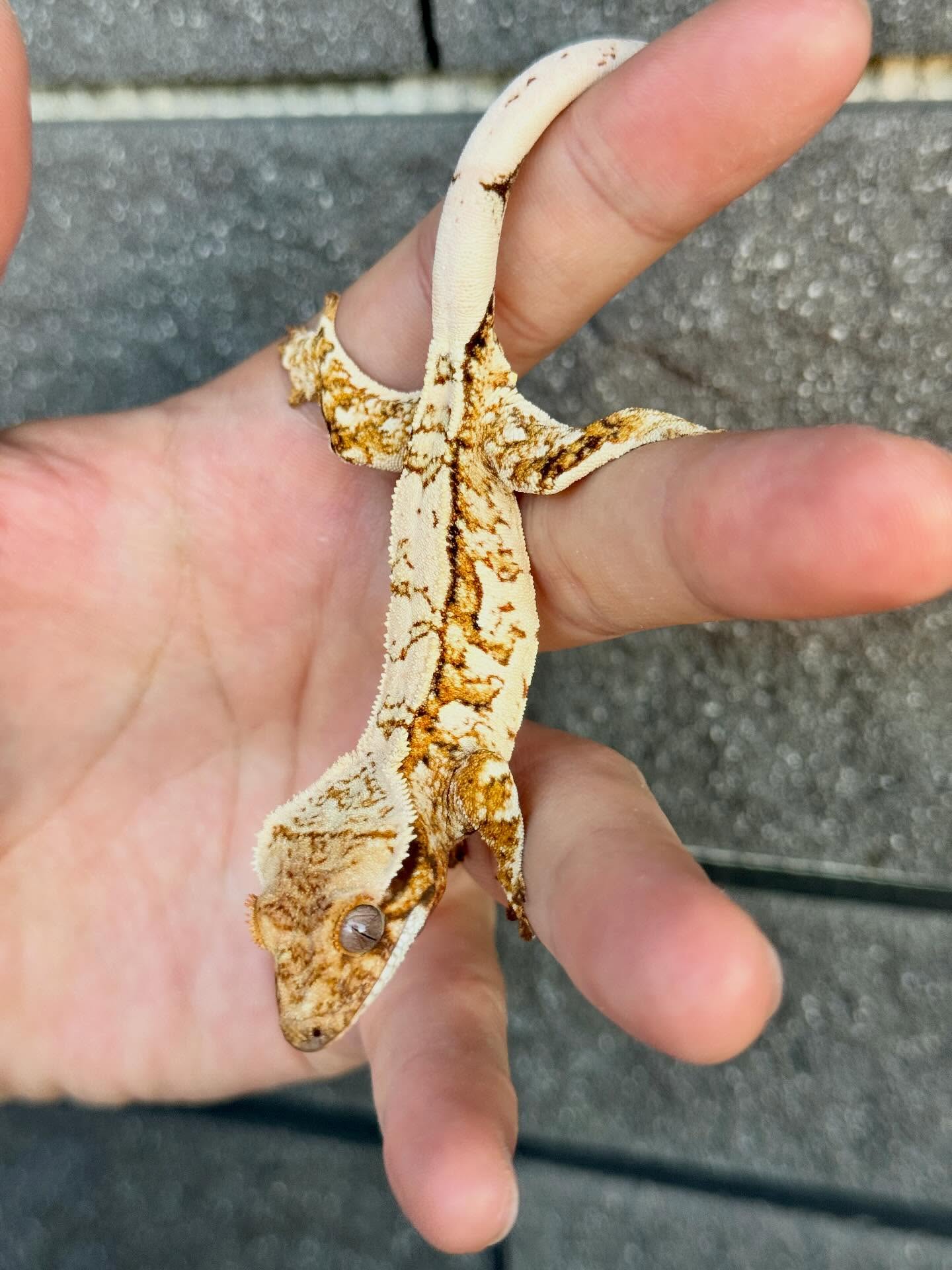
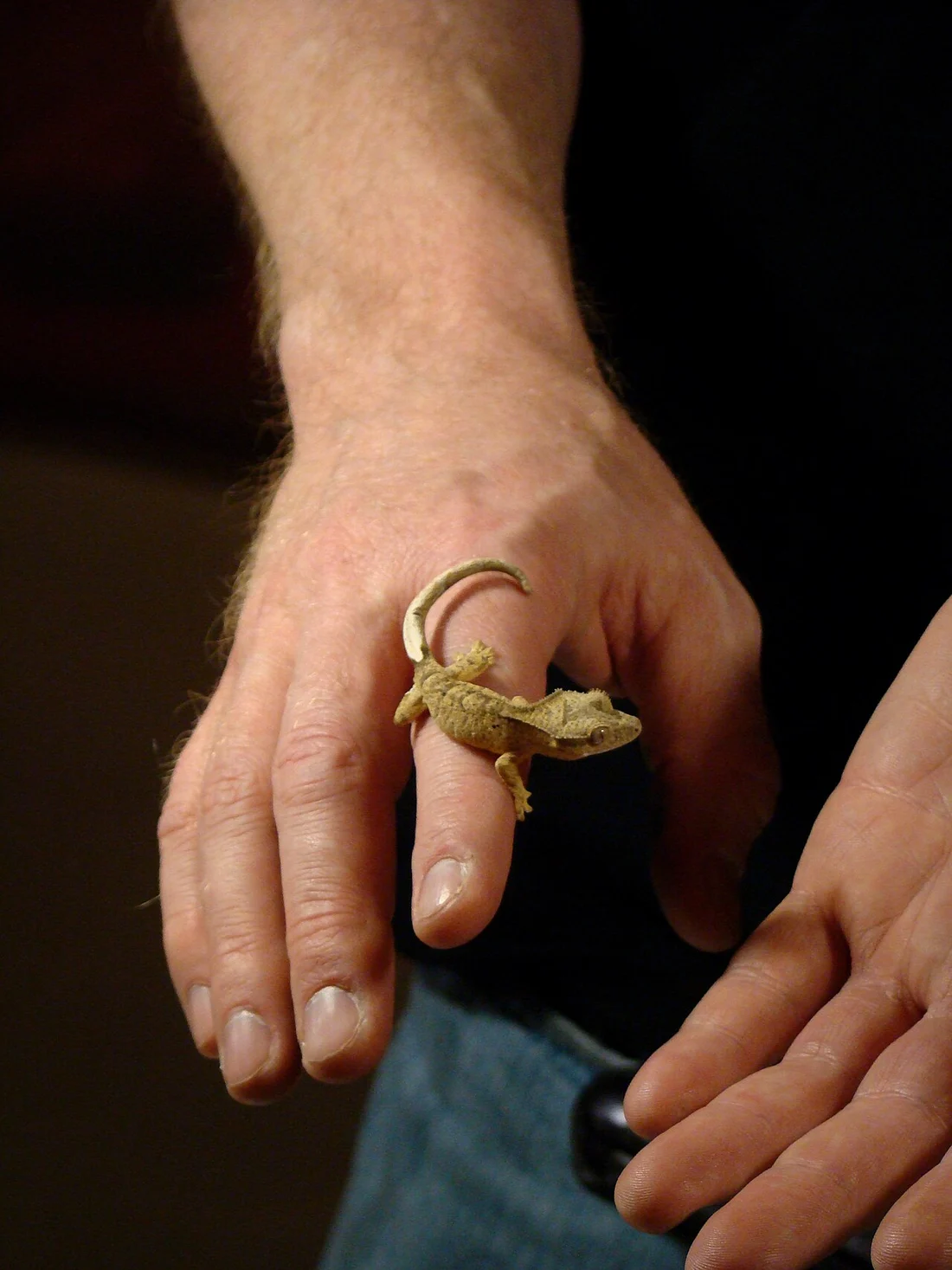
True boxy heads and heavy lateral crests open gradually alongside skeletal growth. High-structure adults display broad overhanging crests and crisp raised dorsal pinning from above, while newly hatched babies naturally look pointier.
Structure lags behind color: the 12-to-24-month timeline
Color contrast and pattern boundaries are usually clear once a gecko passes 15 grams, so many newer keepers expect head shape to lock in just as fast. In reality, structural traits take 12 to 24 months of steady growth to show their final outline.
- 3–8 grams (hatchling phase): Skull length temporarily outpaces cheekbone width; babies look streamlined and sharp-nosed even with strong structural ancestry.
- 15–25 grams (subadult phase): Lateral crest scales thicken outward behind the eyes, while head width begins overtaking muzzle length.
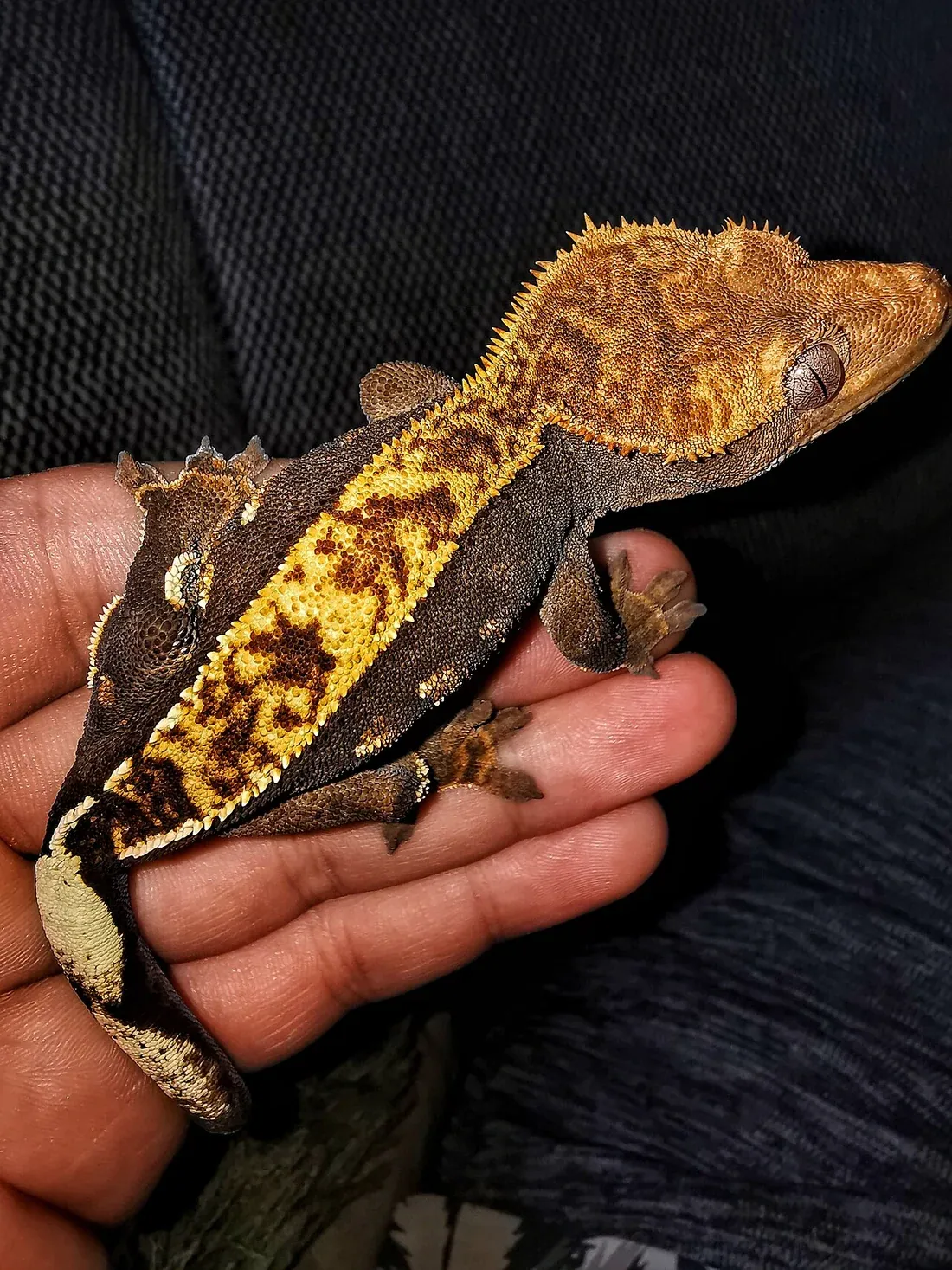
- 35+ grams (mature phase): Adult jaw musculature fills out, dorsal pinning pops clearly along the spine, and the classic wide-crowned silhouette locks into place. Seeing top-down photos of both parents and older holdback siblings tells far more about future head width than guessing on a freshly hatched baby.
Does incubation temperature or growth pace affect build?
Long-term breeding logs consistently show that eggs incubated steadily in the cooler mid-range (21.5–23.5 °C) hatch stronger, fuller-framed neonates than rushed 26 °C+ clutches that pip in under 55 days with slimmer heads and weaker bone density. Likewise, raising youngsters comfortably at 20–27 °C on complete Pangea or Repashy diets paired with moderate cricket feedings produces dense, athletic muscle tone rather than soft excess fat.
Critical trap: do not confuse MBD jaw swelling with “good structure”
One of the riskiest beginner mistakes in the hobby is admiring a puffy, rubbery lower jaw or domed forehead as a “chunky wide head” when the gecko is actually showing fibrous osteodystrophy from Metabolic Bone Disease (MBD).
Healthy firm cranial build vs close-up normal scale texture
Real structural mass comes from firm underlying skull bone, crisp overhanging crests, and flush lip alignment — never soft ballooning around the lower jaw or crown.
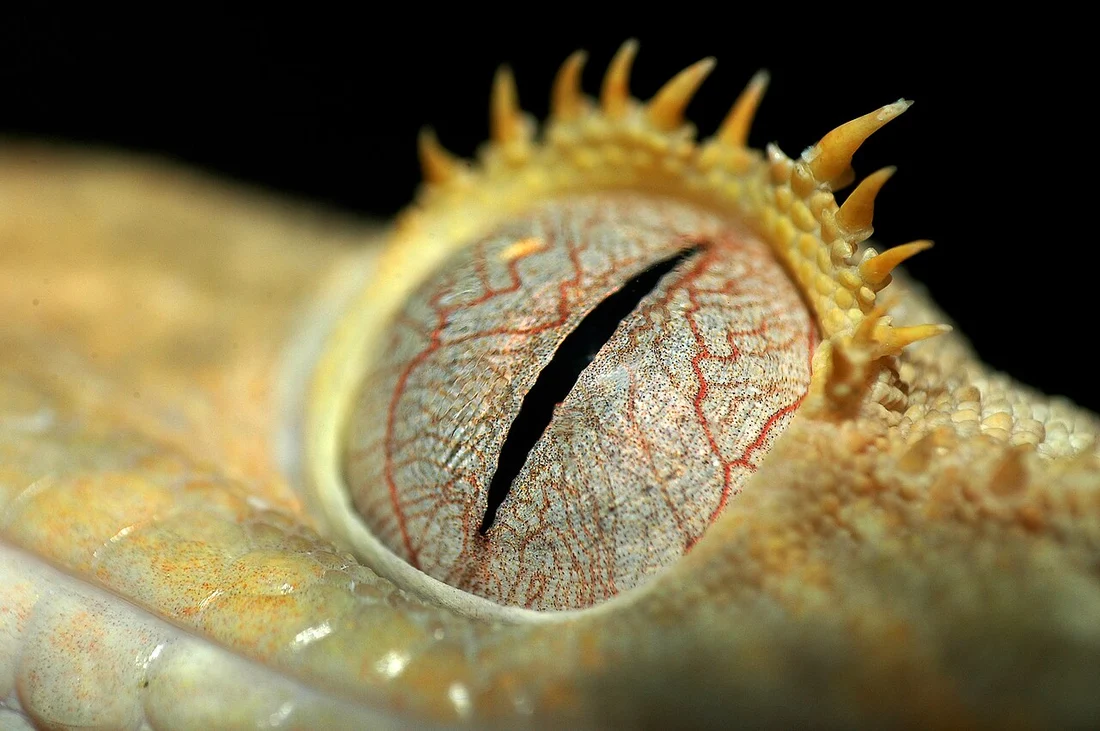
Walk away from any “massive-head” listing and book an exotic vet review if a gecko shows these MBD red flags:
- Misaligned or rubbery jaws: Noticeable overbite/underbite, lips unable to close flush, or a swollen spongy chin.
- Ballooned frontal dome: Soft, fluid-looking bulging between the eyes that pushes eyes slightly outward.
- Kinked spine or wavy tail base: Stiff gait, toe tremors, or a crooked Z-shaped hip bend paired with poor grip.
Keeping nutrition simple prevents that trap: build the staple diet exclusively on complete Pangea / Repashy CGD, dust staple crickets lightly once or twice weekly with Repashy SuperCal MeD (switching to plain calcium only under dedicated optional UVB lighting), and skip unbalanced meaty feeder binges.
3-step checklist before buying for head structure
- Request an unedited overhead shot: View the gecko lying flat on neutral paper or cork bark so camera tilt cannot exaggerate cheekbone width.
- Verify parental structure: Polygenic traits rely heavily on both parents; prioritize documented dam/sire top-down photos over hype adjectives attached to tiny hatchlings.
- Separate build from morph price tags: Strong floppy crests and dorsal pinning can pair onto Lilly Whites, Phantoms, Sables, or clean Harlequins alike — paying extra makes sense only when both true genetic color and verified skeletal structure stand up together.