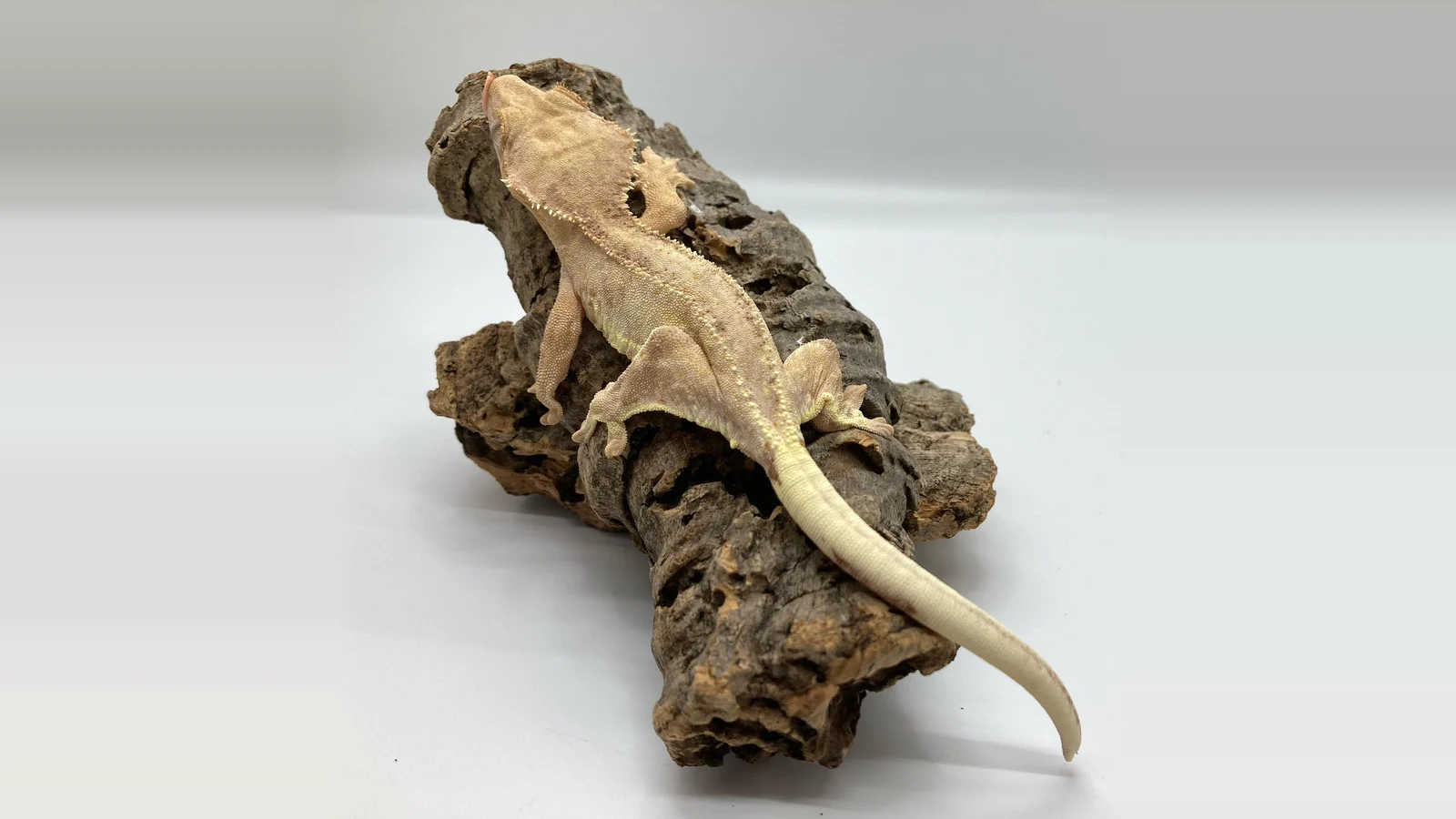
Many new keepers peek into the glass during the day and laugh when they see their crested gecko napping upside down on the front glass with its full tail drooping straight forward over its head like a bent antenna.
Repeat that sleeping posture for weeks or months, though, and daily gravity tugging on an unsupported tail can stretch the ligaments at the tail base and slowly twist growing hip or pelvic bones sideways. In the hobby, this mechanical condition is known as Floppy Tail Syndrome (FTS).
What FTS actually is — and what it is not
Clearing up myths early keeps you from panicking over the wrong thing:
- FTS is not tail rot or an infection: Mild FTS does not normally shorten a gecko’s life or cause active pain. It is simply lax muscle/ligament support and gravity pull at the tail base.
- Chronic severe FTS can twist the pelvis: Over many months, heavy tail leverage hanging upside down pulls the tail root off to one side, creating an asymmetrical “J-hook” curve near the hips. In breeding or egg-laying adult females, significant pelvic narrowing warrants close monitoring and vet input because it can make passing calcified eggs harder.
- Never force a tail drop to “cure” FTS: Deliberately scaring a gecko into dropping its tail is stressful, unnecessary, and treats only a symptom instead of fixing empty enclosure layout and nutritional gaps.
Sleeping upside down on open glass leaves the full tail weight hanging forward against pelvic ligaments. Adding angled cork tubes and horizontal branches lets the gecko wedge comfortably and brace its tail tip.
Why glass-sleeping starts in the first place
| Trigger | What Is Happening Inside the Enclosure | Practical Fix |
|---|---|---|
| 1. Empty upper wall space | The enclosure is tall, yet the upper third is mostly open glass with one thin plastic vine too slick to support body weight | Wedge thick 3–4 cm natural cork bark flats, diagonal cork tubes, and sturdy branches across the upper third |
| 2. Zero elevated foliage hides | Bright room glare hits the upper middle branches, so the gecko hugs dark corner seams upside down to hide | Cluster dense broad leaves (real pothos, schefflera, or heavy silk foliage) right around upper perches |
| 3. Weak bone or tendon tone | Unbalanced homemade diets or undusted insects reduce bone density, letting ligaments and hips warp faster under tail pull | Feed strictly Pangea or Repashy complete CGD; lightly dust primary crickets with Repashy SuperCal MeD (or plain calcium only if optional UVB is installed) |
| 4. Outgrown housing | A subadult or adult cramped inside a small tub lacks comfortable horizontal span to drape its tail flat | Upgrade promptly to an adult tall arboreal footprint (such as 45 × 45 × 60 cm) |
Natural prehensile tail grip vs. tailless reality
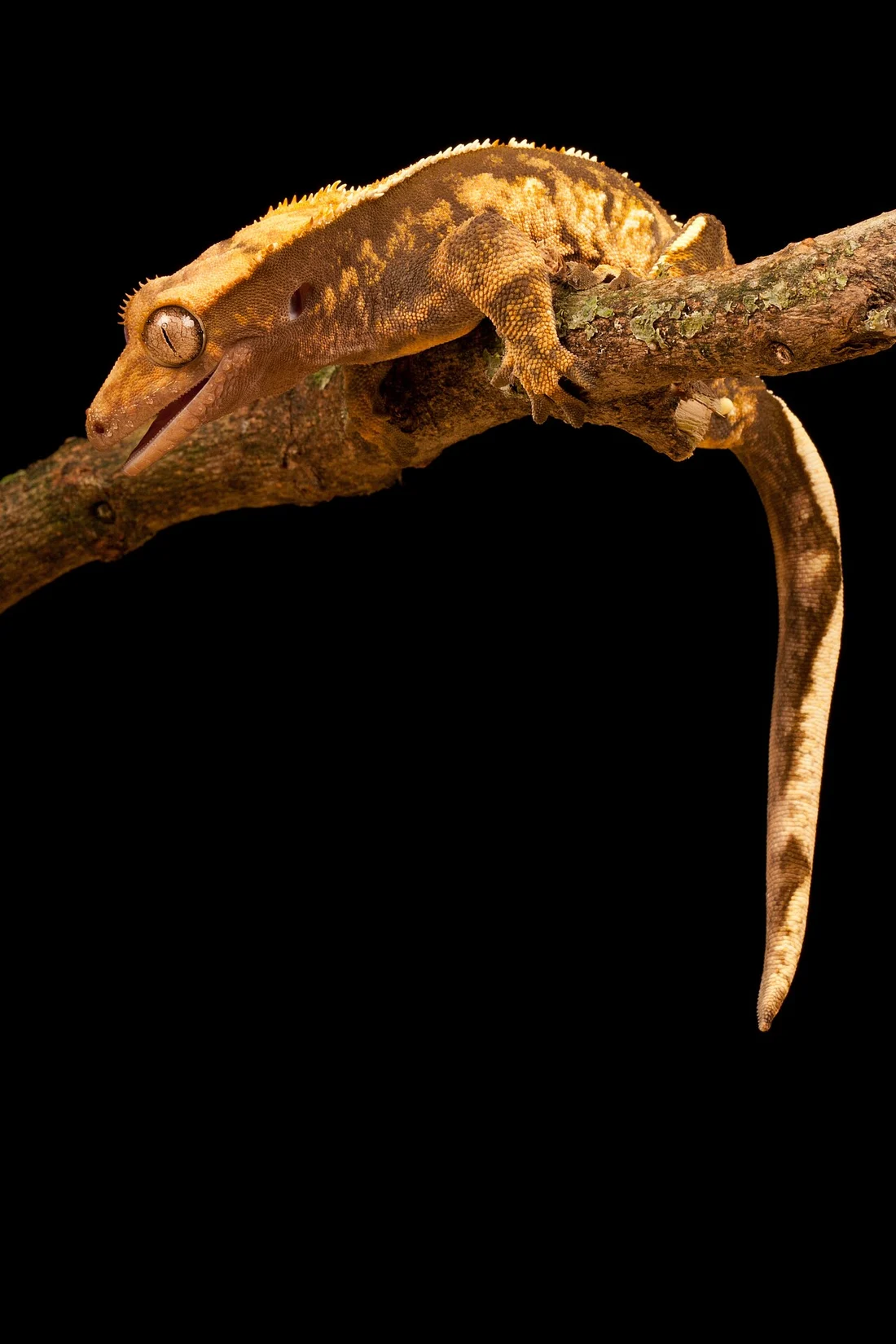
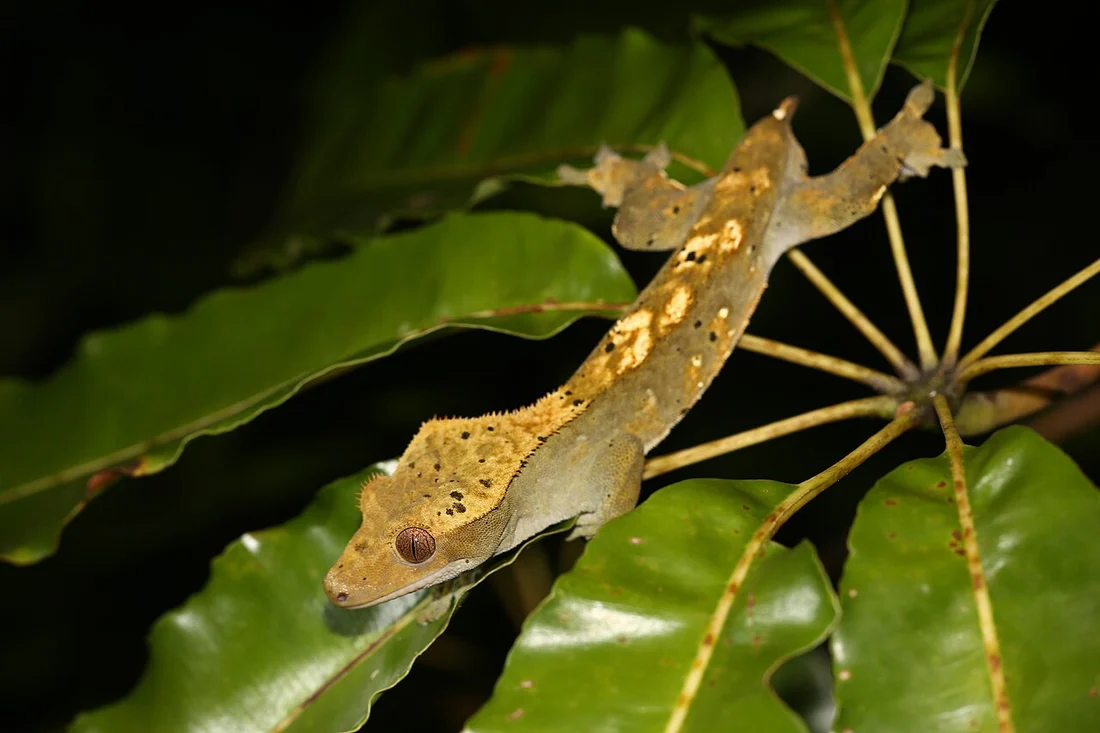
Crested geckos have a sticky tactile pad underneath the very tip of their tail built specifically to hook around twigs—give them usable grip surfaces and the tail anchors itself.
Three fixes you can install tonight
- Interrupt the favorite bare glass wall: Wherever your gecko keeps gluing itself upside down each morning, mount a textured cork bark diagonal or hang a leafy vine right over that pane. Once bare vertical real estate becomes cluttered foliage and sturdy perches, most geckos abandon glass-sleeping within days.
- Give tucked horizontal sleeping slots high up: Crested geckos want darkness and tight flank contact when sleeping. A hollow cork round mounted horizontally or at a 30–45° angle near the top satisfies both security and tail gravity alignment simultaneously.
- Rule out Metabolic Bone Disease (MBD):
- Pure postural FTS: The tail only droops awkwardly when hanging upside down on glass; when walking flat across your arm or resting horizontally on cork bark, the spine looks straight, limbs lift firmly off the ground, and the jaw closes neatly. Early mild FTS stops progressing once perches are fixed.
- MBD warning signs: Soft or spongy lower jaw, fine toe tremors while climbing, wavy kinked tail base even on flat ground, or inability to raise its belly while walking require prompt exotic veterinary evaluation alongside auditing Pangea / Repashy CGD and
Repashy SuperCal MeDdosing.