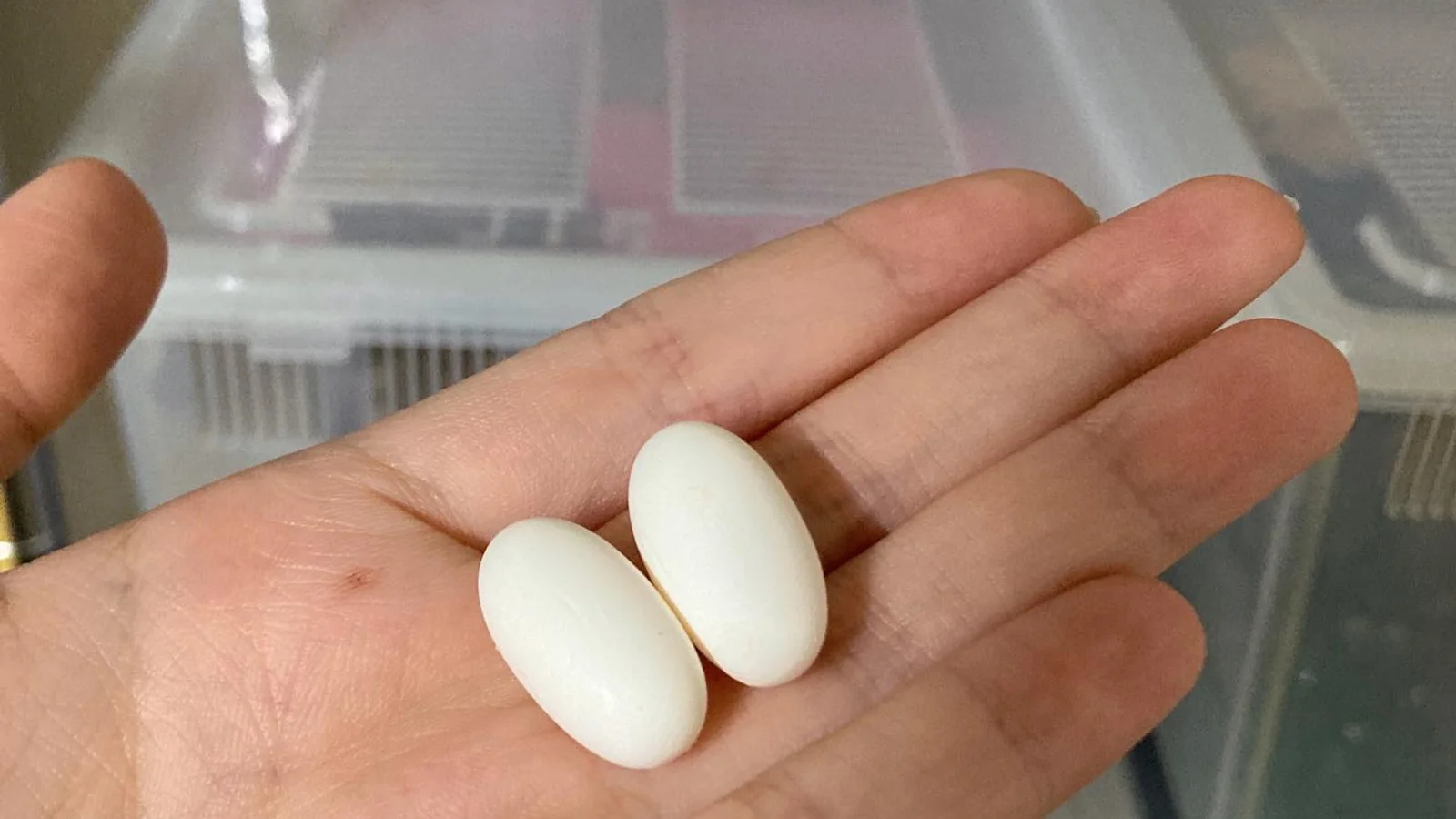
Plenty of keepers house one female completely alone, lift a paper towel or plant pot one morning, and freeze when they spot two oblong white eggs staring back at them. “She has never been near a male — where did these come from?”
Like domestic hens, female crested geckos reaching around 30–35 grams ovulate naturally during warmer months and lay clutches of unfertilized “duds” every 3 to 5 weeks without ever mating. The empty eggs themselves are harmless; what puts a solo female in danger is keeping her on dry bare floor lining with nowhere to dig, or letting repeated ovulation drain her calcium reserves dry.
Why every adult female enclosure needs a lay box
Skipping a lay box just because your female lives alone is one of the easiest ways to trigger preventable egg binding (dystocia):
- No damp digging spot can cause egg retention: Gravid crested geckos instinctively seek cool, loose, slightly damp substrate hidden out of sight before releasing eggs. Flat paper towel or dry cork chips often make a heavy female pace nervously every night until over-retained eggs turn hard, adhere inside the oviduct, or press on internal organs.
- Infertile shells still draw real calcium: Calcifying two shells per cycle still pulls calcium from her roof-of-mouth chalk sacs and skeleton even when zero embryos are inside.
How to build a simple, zero-hassle lay box
You do not need expensive ceramic caves; a food-safe plastic tub works best because you can check soil moisture through the wall without tearing up her hiding spot:
| Component | Recommended Setup | Common Pitfalls to Avoid |
|---|---|---|
| Container size | Roughly 15 × 20 cm footprint, 8–10 cm tall lidded tub placed in a floor corner | Avoid shallow 4 cm dishes (too thin to bury eggs) or giant tubs eating the entire floor |
| Entry hole | Cut one smooth 5 cm circle in the lid or upper side wall and sand/melt down sharp edges | Unsmoothed plastic edges cut bellies; upper-side holes keep substrate inside cleaner than low cutouts |
| Laying substrate | Fill 6–8 cm deep with unscented pure coco coir mixed with chopped sphagnum moss, damp enough to hold its shape when squeezed without dripping | Never use potting soil with fertilizers, perlite, or vermiculite dust; soggy dripping mud suffocates eggs and grows mold |
| Maintenance | Mist lightly every 2–3 weeks to keep dampness even; scoop out eggs after each lay and refresh soiled patches | Do not leave crushed rotten duds buried for weeks, or fungus gnats and bacteria follow quickly |
Paired white chalk sacs inside the upper palate serve as calcium banks during ovulation cycles. Flat or shrinking chalk sacs alongside soft eggs indicate urgent dietary review.
Pre-lay nesting vs. emergency egg binding
Never squeeze or press forcefully on a gravid gecko’s belly to feel for eggs—the internal organs and fragile egg membranes bruise or tear easily. Watch her behavior on a multi-day timeline instead:
- Normal pre-lay routine (leave her undisturbed):
- For 3–5 nights prior, a female who usually sleeps high in cork or pothos comes down onto the substrate, tests holes in the lay box, gets soil crumbs on her snout, and drops off food briefly.
- One morning you notice her abdomen suddenly looks slender again and she is back sleeping in her upper hide—gently sift through the lay box corners to recover 2 eggs (first-time layers occasionally drop 1).
- Critical egg-binding warnings (call an exotic vet immediately):
- Digging desperately or straining her hind legs off and on for more than 3–5 days with zero eggs produced;
- Sudden sunken eyes, dark lethargy sitting open on the floor, trembling hind limbs, or stopping all effort while swollen;
- Any pink/red tissue prolapsing from the vent or protruding torn shell fragments. Never pull a prolapse or squeeze the body to force an egg out—tearing the oviduct or shattering a shell internally is fatal; head straight to an exotic vet.
Balanced nutrition recovery after repetitive laying
Support egg-laying females strictly through proven complete CGD and standardized D3 calcium dusting—never add extra loose powder directly into complete fruit mix.

Inspecting the eggs and spotting calcium trouble
- If she has never lived near a male: Wait a day or two for her to rest cleanly, discard the eggs, and note the lay date in your phone log. If you bought an adult female within the past year from a breeder or group setup, remember crested geckos can store viable sperm for months: shine a flashlight briefly from the side in a dark room before tossing. Pure glowing yellow with zero vascular ring after a week confirms an infertile dud.
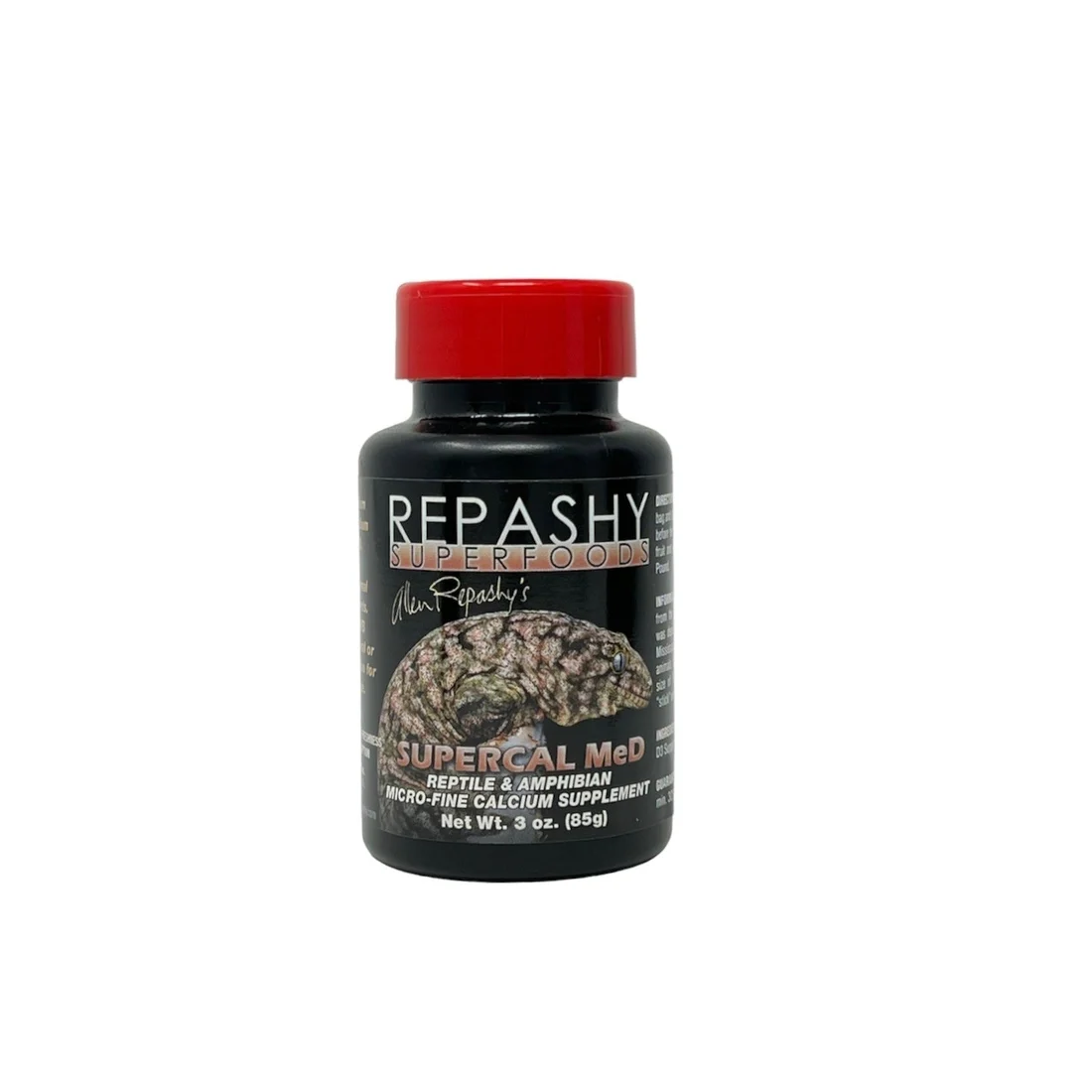
- Check shell firmness every clutch: Paper-thin, translucent, collapsed, or sticky rubbery shells warn you immediately that calcium demand is outpacing intake. Rotate nourishing Pangea or Repashy flavors, offer appropriately sized crickets dusted lightly with
Repashy SuperCal MeDonce or twice weekly (using dubia or BSFL only as secondary backups, avoiding mealworms), and consult an exotic vet if jaw softness or tremors appear.
Quick side-candling in a dark room: solo infertile eggs glow evenly yellow without veins, while stored-sperm surprises develop a pink Cheerio ring and fine blood vessels.
Two weeks after laying: simple recovery habits
- Respect the post-lay rest night: Give a light evening mist (reaching 75–85% night peak while allowing daytime airflow dry-down to 40–65%) and hang a fresh dish of CGD near her favorite upper perch so she rehydrates cleanly without handling stress.
- Use weights as a trend line: Losing 2–3 grams right at lay night is simply egg weight leaving her body; healthy layers bounce right back once eating resumes. Ongoing net drops over two or three clutches signal it is time to examine frequency, calcium reserves, and cooling.
- Avoid trapping excess summer warmth: Keeping a solo female constantly in hot stagnant rooms (29–30°C+ with zero seasonal cool down) pushes nonstop ovulation cycles. Normal 20–27°C indoor comfort with modest seasonal variation naturally gives many females an off-season break.