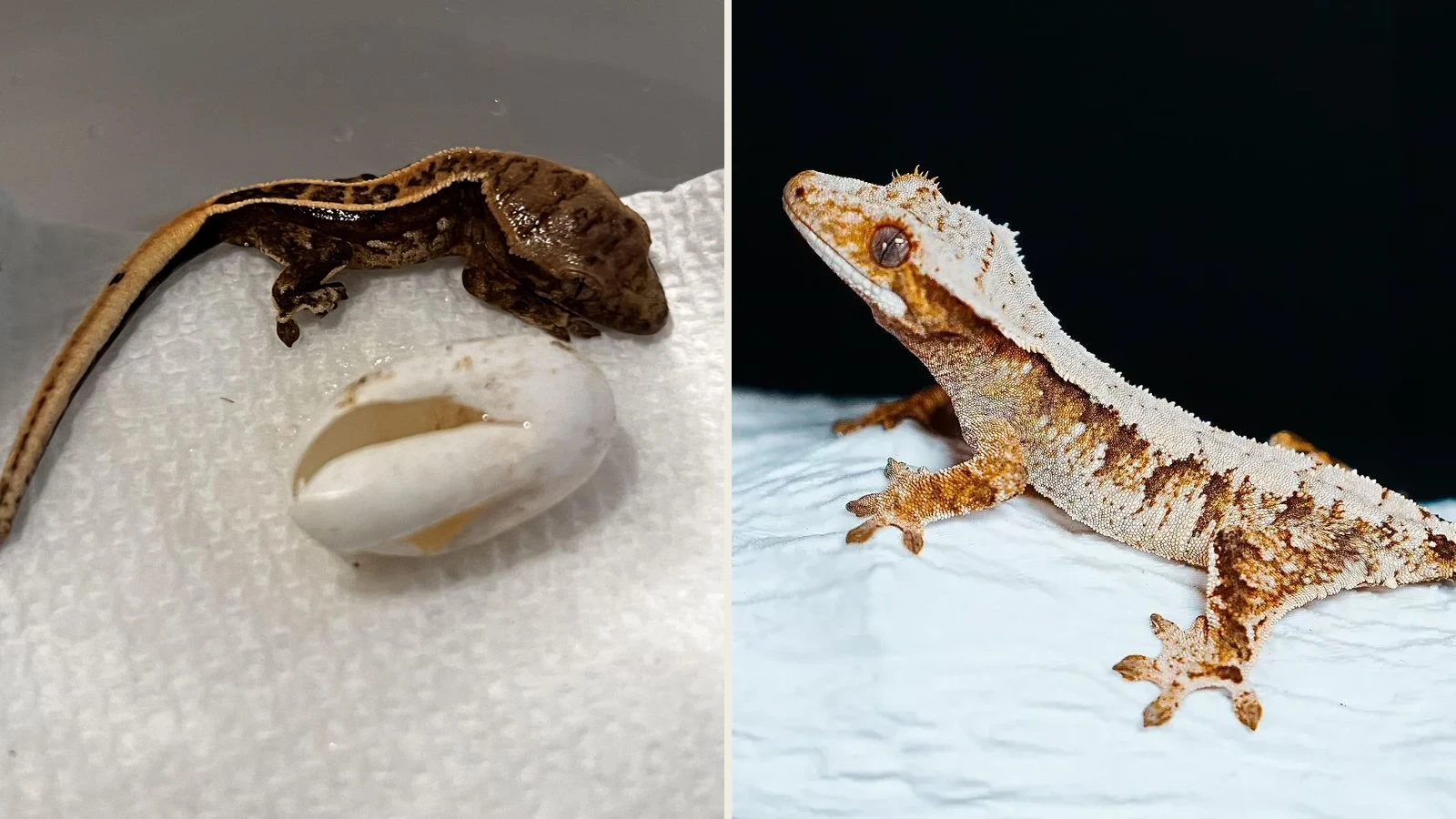
Open an incubator tub to find a brand-new 3-gram baby and your first reaction can easily be mild confusion. Photos of the parents show velvety black sides, explosive cream dorsal walls, or dozens of ink spots, yet the tiny neonate perched on your knuckle looks mostly muddy brick-orange or plain taupe.
Most crested geckos hatch wearing temporary reddish-brown camouflage. Over the next 12 to 24 months, dark melanophores, yellow carotenoids, structural white scales, and spot clusters do not merely scale up linearly — some push dramatically stronger across successive sheds while specific fading traits actively wash high-contrast pattern smooth.
Three major ontogeny tracks: darkening, clearing, and expansion
Knowing which developmental direction a morph follows keeps you from misreading a juvenile’s future appearance:
| Developmental track | Classic morphs & genes | Typical 2–5 g hatchling look | Expected adult progression (12–24 months) |
|---|---|---|---|
| 1. Melanistic darkening & contrast surge | Sable, Cappuccino, Luwak, high-contrast Dark Bases | Often emerges muddy brick-red or cinnamon-brown with muted midtones | Ground color deepens steadily into rich espresso, roasted cocoa, or near-black, locking crisp contrast against white/orange crests |
| 2. Contrast softening & pattern fading | Phantom, Hypo, Patternless | Hatchlings frequently still display faint tiger bars, dorsal mottling, or warm baby tan | Across sheds, Phantom softens bold side markings into muted olive-grey/taupe; Hypo lifts black ink into creamy pastels; Patternless clears juvenile tiger hints into a clean uniform back |
| 3. Spot accumulation & white wall climb | Dalmatian / Super Dalmatian, Lilly White, White Wall | Neonates may show barely a dozen stray specks or broken white lateral dashes | Fresh dark spots and inkblots erupt after repeated sheds across the torso, head, and belly; lateral white thickens upward across flanks and thighs |
Morphs that soften markings and lighten pigment: Phantom vs Hypo
Not every crested gecko gains sharper contrast with age. Recessive Phantom actively dials down stark pattern borders, while dominant Hypo pulls heavy melanin out of the canvas toward dusty pastel shades.
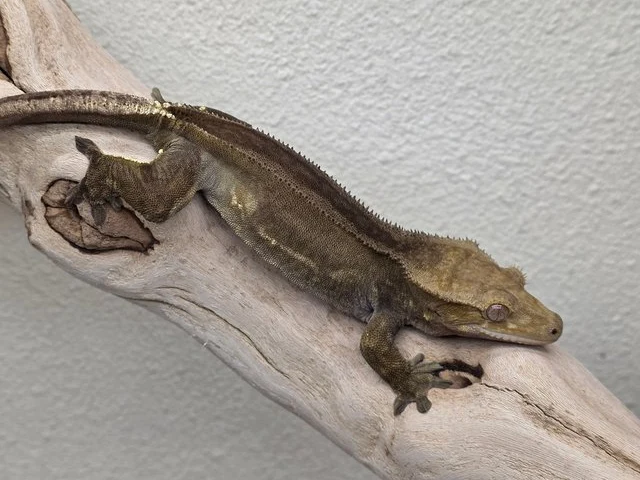
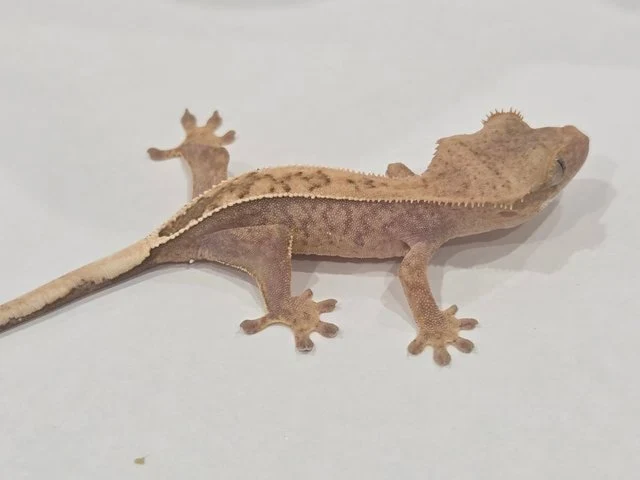
Ugly-duckling transformations: melanistics & Super Dalmatians
At the opposite end sit traits that start subdued in the egg box and save their strongest display for late juvenile and adult weight:
Traits that intensify dramatically with growth: Sable vs Super Dalmatian
Melanistic modifiers and polygenic spotting traits frequently hide their true intensity at 3 grams, revealing jet-dark sides or overlapping inkblots only as sheds stack up.
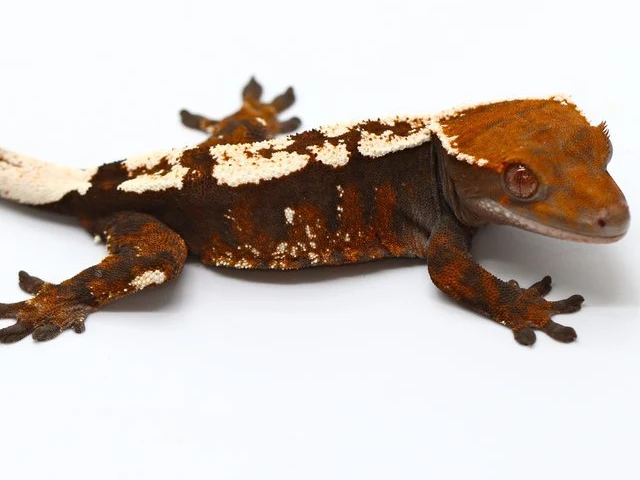
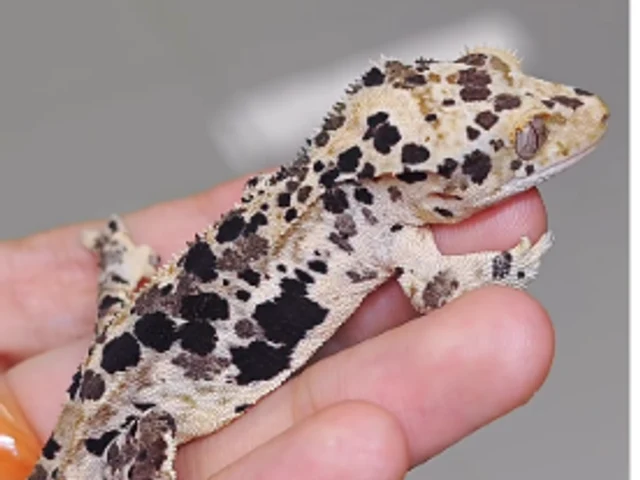
How Lilly White and White Wall expand up the flanks
White pigment coverage in Lilly White and selectively bred White Wall animals commonly trails early growth. Hatchlings under 4 grams may show fragmented white dashes along the lower side before creamy white scales surge upward past 15–20 grams, filling out flanks, hind thighs, and tail bases dramatically.
Tracking whether spots, fading, or lateral white genuinely changed over six months requires holding lighting and background constant:
Monthly growth logs stay reliable only when photographed under fixed 5500K neutral daylight over a matte neutral surface in consistent dry fired states.
3 beginner mistakes and pairing red lines to keep clear
- Gambling on a brief fired-down hatchling snap: Scared or sleepy 3-gram neonates shift shades in minutes. Never buy a washed-out stressed baby expecting genetic Hypo or true Patternless purity without parents and clean fired-up comparison shots.
- Ignoring lethal homozygous combinations in dramatic morphs: Some visually striking dominant/incomplete-dominant mutations carry severe homozygous defects when paired together:
- Never pair: Lilly White × Lilly White (Super Lilly offspring are virtually non-viable with fatal deformities)
- Never pair: Cappuccino × Cappuccino (produces severe neurological/craniofacial defects and fatal Super Cappuccino issues)
- Never pair: Highway × Highway (linked to Cappuccino-line lethal/deformity risk)
- Keep pairings like Super Sable or Super Hypo strictly grounded in sound adult health, structural soundness, and honest lineage records rather than chasing labels blindly.
- Power-feeding fat to rush adult colors early: Stuffing waxworms or fatty feeders forces obesity before bone density catches up. Steadying growth over 18 months on complete Pangea or Repashy CGD with light weekly crickets dusted gently in
Repashy SuperCal MeDlets pigment, spotting, and structure mature cleanly side by side.