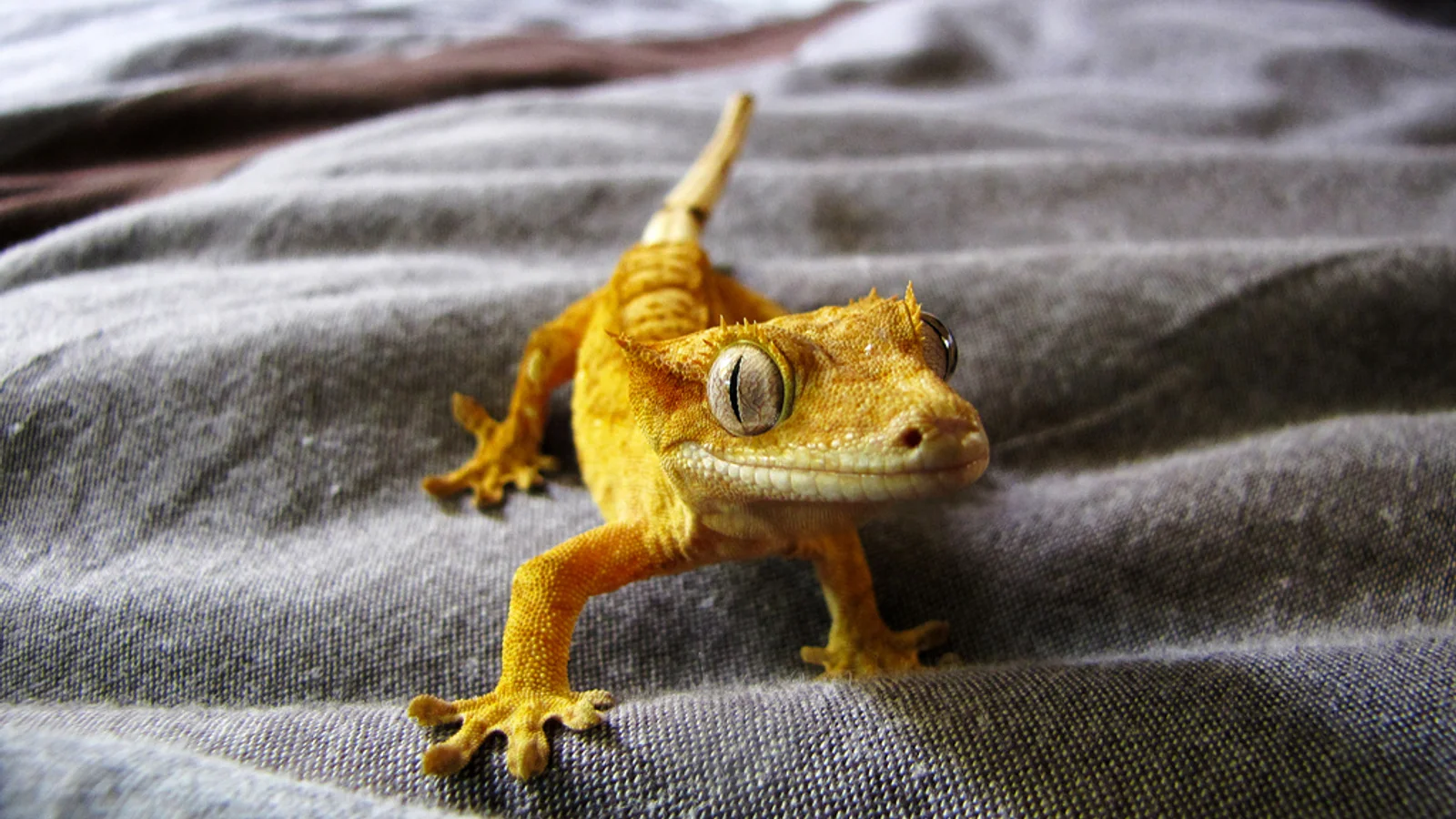
Nothing drops a keeper’s stomach faster than sliding open a glass door at feeding time, realizing a latch sat half-closed all night, and finding an empty cork bark tube.
Take a slow breath before pulling every drawer onto the floor. Most escaped crested geckos do not travel far—they usually cling quietly inside the very same room within a few meters of the enclosure, wedged high behind fabric, shelving, or dark wall seams.
First 5 minutes: isolate the room cleanly
- Shut the bedroom door and pack a towel under the bottom crack: Keep household pets—especially cats, dogs, or robot vacuums—strictly out of the zone immediately. Even a
4–5 gjuvenile squeezes easily under standard door sweeps. - Stop blasting bright lights or loudly sliding heavy furniture: Sudden noise and daytime glare drive nocturnal geckos deeper into furniture crevices and risk crushing them under sliding casters.
- Rule out false alarms first: Carefully check behind foam tank backgrounds, inside hollow cork tunnels, and tucked under loose plant pots—plenty of “escapes” turn out to be geckos wedged silently behind an upper vent lip inside the tank.
Search top-down, inside-out: the top 6 hiding zones
Crested geckos navigate vertically rather than running across bright exposed floors. Sweep with a flashlight angled tightly along surfaces in this priority order:
| Priority Zone | Exact Spots to Inspect with an Angled Torch | Why Geckos Pick It |
|---|---|---|
| 1. Vertical fabrics near the tank | Curtain pleats from eye level up to the rod, hanging coats, and fabric wall tapestries | First tall climbable surface beside most shelves; check the upper folds first |
| 2. Narrow rear shelf & wall gaps | Behind bookcases, rack frames, cable raceways, and framed wall art | Tight 2–4 cm vertical voids mimic tree-bark crevices and stay completely shaded |
| 3. Houseplants & damp pot rims | Pothos vines, monstera leaf undersides, and outer drip trays | Drawn straight toward ambient soil humidity when bedroom air feels dry |
| 4. Warm appliance backs & tops | Behind monitors, Wi-Fi routers, and along AC unit upper trim | Gentle residual warmth draws chilly geckos at night—unplug power bricks carefully before peering behind |
| 5. Bedding pleats & laundry piles | Folds of bedsheets, pillow backs, and open closet hems | Inspect cloth gently layer by layer without sitting or stepping directly onto fabric heaps |
| 6. Baseboards & closet corners | Under dressers, inside shoes left against walls, and dark corner trim | Once moving along wall edges, they follow baseboards until hitting a dark corner pocket |
Night search tactics after 9:00 PM
If daytime sweeps come up empty, dusk gives you the biggest advantage:
- Wait until dark and dim the room completely: Around 9:30 PM, shut overhead lights off, grab a low-lumen flashlight (or shield your phone LED behind a finger), and scan walls slowly—crested gecko eye shine and silhouette outlines stand out starkly once they start moving.
- Lay crinkle aprons + safe scent traps along baseboards: Spread flattened plastic grocery bags or crinkled kraft paper lightly along wall edges so faint nocturnal footsteps rustle audibly. Set shallow misted potted leaves beside small fresh cups of fragrant Pangea or Repashy CGD (and a tiny shallow water dish) on low wall corners. NEVER use glue traps or sticky insect paper anywhere in the house—adhesive rips fragile gecko skin right off the body.
- Sit motionless for 15–20 minutes: With fans and TV muted, a gecko crossing paper or leaping onto curtain fabric makes a surprisingly clear tap.
SAFE NIGHT LURE 
After recovery & permanent escape-proofing
- Hydrate gently, then clean dusty toe pads: Retrieved geckos covered in lint or carpet fluff often lose toe grip and look dehydrated. Set yours inside a clean paper-towel recovery tub lightly misted on the walls first; once settled after 30 minutes, gently roll a lukewarm damp cotton swab over fouled toes to lift trapped dust threads before returning to its enclosure.
- Seal the exact leak points for good:
- Unused cable ports on mesh tops: Plastic slide covers easily budge open when nudged from below—tape or silicone-plug any open wire slots shut.
- Sliding glass door overlap gap: Add thin foam weather-stripping down the center overlap between dual panes and clip on a physical terrarium lock.
- Warped plastic tub lids: Check latch corners thoroughly until they snap flush every single feeding night; heat or heavy clips can lift thin corners just enough for a gecko snout to lever open.